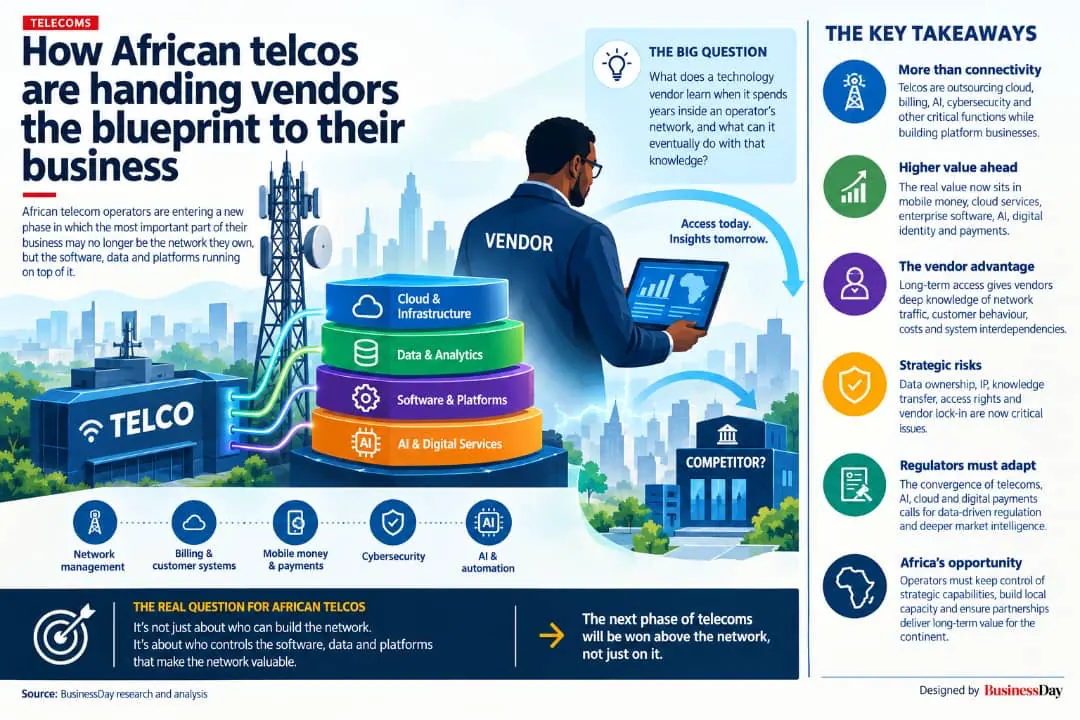
African telecom operators are entering a new phase where software, data, and platforms running on top of their networks may become more important than the networks themselves. This shift raises strategic questions about what technology vendors learn when they spend years inside an operator's network and what they can do with that knowledge. The issue has already played out in Nigeria's digital economy, where TeamApt began building payment infrastructure for banks before launching its own fintech platform, Moniepoint.
Moniepoint is now one of Nigeria's largest fintech companies, processing huge volumes of merchant transactions, providing credit to businesses, and pursuing a commercial banking license. According to Tosin Eniolorunda, Moniepoint's co-founder and CEO, experience in the banking sector provided unique insights that informed the decision to move from serving banks to competing with them. This experience illustrates the potential risks for telecom operators that outsource critical functions to technology vendors, who may eventually use that knowledge to compete with them.
Africa's telecom industry is giving technology companies access to some of the continent's most valuable digital infrastructure, with operators outsourcing functions such as cloud platforms, billing systems, and cybersecurity. At the same time, operators are trying to transform into technology platforms, with Ralph Mupita, MTN Group chief executive, describing this transition as a move towards becoming platform players rather than traditional connectivity businesses.
The shift reflects a fundamental change in where telecom value is being created, with higher-margin businesses like mobile money, cloud services, and enterprise software increasingly sitting above the network. However, this creates a paradox, as operators may be outsourcing parts of the software layer they are trying to build into their next growth engine. Yauheni Dzemyachenka, head of product delivery at Bamboo Agile, notes that operators need to retain control over strategic logic while using external partners where specialized capacity or scale is required.
Data ownership, intellectual property, knowledge transfer, access rights, transition rights, and vendor lock-in have become strategic issues for telecom operators. The calculation around telecom software outsourcing has changed, with security and data-handling practices now taking greater importance alongside cost. Dzemyachenka emphasizes the need for operators to retain control over logic that matters while using external partners where necessary.
African operators know the old connectivity model is under pressure, with voice becoming increasingly commoditized and data growth limited by competition and infrastructure costs. The next battle is taking place around digital platforms built on top of the network, with Airtel Africa's strategy providing one example. Airtel Money has expanded its customer base and transaction volumes, with the business processing transaction values increasing 35.2 percent in constant currency in its 2025/26 annual report.
The strategic message is that the operator is no longer treating mobile money simply as an additional service attached to a SIM card, but as a standalone technology and financial-services business. This creates a paradox, as the telecom operator wants to become a platform company, but some of the software infrastructure required to operate those platforms has historically been built and maintained by external technology companies. The more deeply those vendors become embedded, the more they understand the commercial engine they are helping to build.
Key points
- Telecom operators face strategic questions about what vendors learn and can do with that knowledge as they outsource critical functions to technology vendors.
- The shift in telecom value creation towards software, data, and platforms running on top of networks raises concerns about vendor lock-in and data ownership.
- African operators are trying to transform into technology platforms, but may be outsourcing parts of the software layer they are trying to build into their next growth engine.