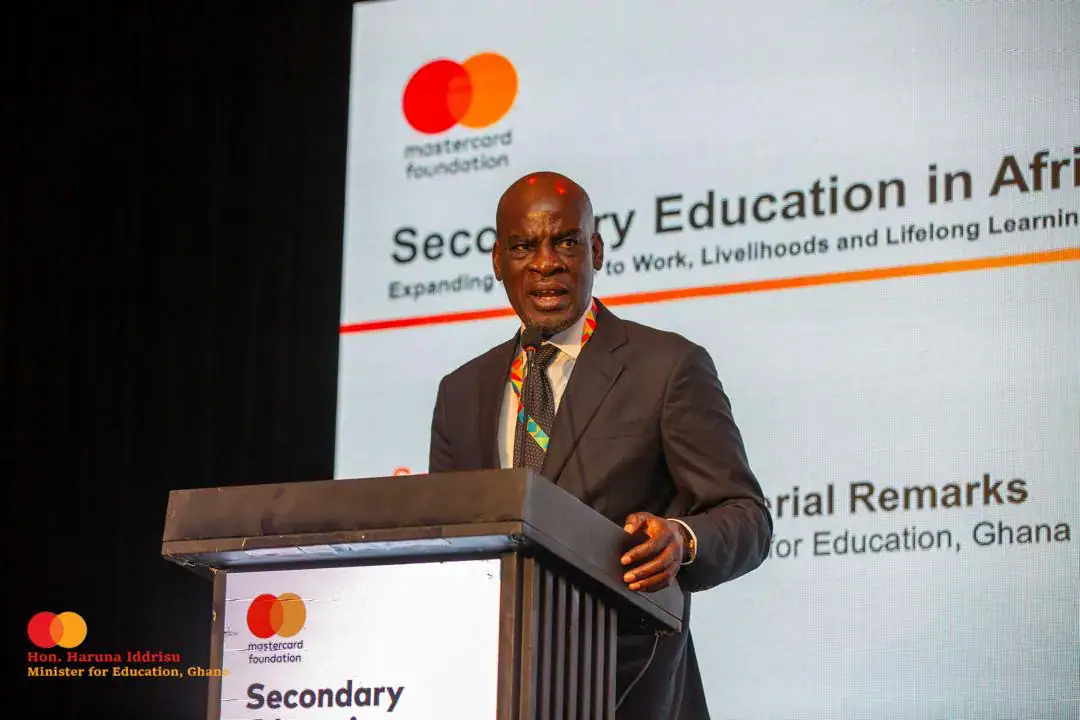
Secondary education systems across Africa require significant transformation to equip young people with relevant skills and prepare them for employment, entrepreneurship, and lifelong learning. A new report by the Mastercard Foundation emphasizes that the continent faces growing pressure to expand access to quality secondary education as millions of young people enter the labour market in the coming years. The report, titled Secondary Education in Africa: Expanding Pathways to Work, Livelihoods, and Lifelong Learning, provides recommendations to guide policymakers and governments in reforming secondary education.
The report notes that more than 330 million young people in sub-Saharan Africa will reach working age by 2035. However, the continent currently creates only about three million formal jobs annually against more than 10 million young people entering the labour market each year. This highlights the need for secondary education systems to provide young people with the skills and knowledge required to pursue different livelihood opportunities. Secondary school enrolment has increased from 95 million learners in 2020 to more than 110 million in 2024.
Despite this progress, an estimated 77 million secondary school-age young people remain out of school, including 31.2 million in crisis-affected settings. Lower secondary completion rates have improved from 41 per cent in 2015 to 48 per cent in 2024, while upper secondary completion rose from 30 per cent to 35 per cent over the same period. However, 85 per cent of recent enrolment growth resulted from larger cohorts progressing through the education system, while only 15 per cent reflected improvements in learner progression.
Ms Sewit Ahderom, President and Chief Executive Officer of the Mastercard Foundation, emphasized that secondary education must provide meaningful opportunities for young people to secure dignified and fulfilling work. She highlighted the importance of supporting teachers, describing them as central to translating educational policies and ideas into practical learning experiences. The Foundation is committed to working with governments and partners to ensure that young people leave school equipped to earn a living and build their futures.
The report was launched in Accra, Ghana, and brought together evidence and recommendations to guide policymakers and governments in reforming secondary education. Mr Haruna Iddrisu, Minister of Education in Ghana, noted that Ghana's Free Senior High School policy had expanded access to secondary education for hundreds of thousands of young people. However, he stressed that access alone was insufficient without quality teaching and learning. He identified teacher professional development as a key priority.
Other ministers of education, including Dr Jarso Maley Jallah from Liberia and Mr Joseph Nsengimana from Rwanda, highlighted the need to ensure that more girls remained in school and acquired the skills needed for dignified and fulfilling work. They also emphasized the importance of flexible learning pathways to provide alternative opportunities for young people unable to follow conventional schooling arrangements.
The report's recommendations and insights are expected to guide governments and policymakers in reforming secondary education systems across Africa. The Mastercard Foundation's efforts aim to support the development of a future workforce equipped with the knowledge, skills, and agency needed to pursue different livelihood opportunities. Key stakeholders, including governments, partners, and educators, must work together to ensure that young people acquire the skills required to succeed in the changing world of work.
Key points
- Secondary education systems across Africa must undergo significant transformation to equip young people with relevant skills and prepare them for employment, entrepreneurship, and lifelong learning.
- The continent faces growing pressure to expand access to quality secondary education as millions of young people enter the labour market in the coming years.
- An estimated 77 million secondary school-age young people remain out of school, including 31.2 million in crisis-affected settings.