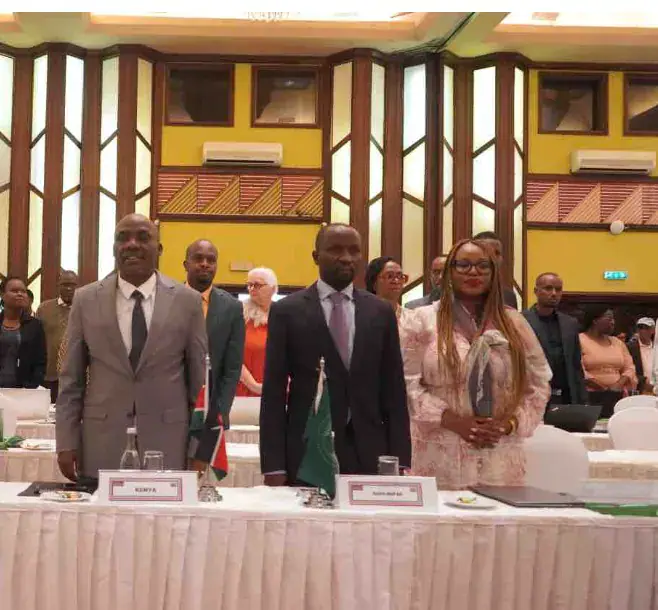
African researchers and policymakers are being urged to translate their findings into practical interventions that deliver measurable results in addressing food insecurity and poor nutrition on the continent. Principal Secretary for Agriculture Paul Rono made the call during the 17th Africa Day for Food and Nutrition Security (ADFNS) in Nairobi, which brought together representatives from more than 20 African countries. The meeting aims to address the disconnect between food availability and access to nutritious diets.
The African continent is home to 310 million people who face hunger and food access challenges, with global statistics showing that 50 percent of the budget goes to expenditure on carbohydrates, while only 12.5% is spent on nutritious food. This has caused challenges, particularly for children in schools and the population, prompting a need for a paradigm shift and a re-examination of the nutrition content in food. Dr. Rono emphasized that Africa must address the issue of hunger and poor nutrition.
The meeting, held under the theme ‘Harnessing Sustainable Water for Resilient Agrifood Systems, Nutrition Security and Inclusive Prosperity in Africa’, aligns with the African Union’s 2026 Theme of the Year on assuring sustainable water availability and safe sanitation systems. Dr. Rono noted that water is critical for crop production, livestock, fisheries, and aquaculture, food processing, food safety, sanitation, healthy diets, ecosystem health, and human wellbeing.
Despite the critical role water plays, Africa continues to experience water scarcity and drought, declining water quality, and biodiversity loss, straining the resilience and productivity of food systems. Climate-resilient water management is therefore not a side agenda but the foundation of resilient agrifood systems, demanding integrated approaches linking water, agriculture, nutrition, WASH, and environmental sustainability.
Dr. Rono emphasized that Africa must shift from food quantity to nutritious food, as the current focus on starchy or carbohydrate food is not sufficient. He noted that Kenya is taking the lead by registering over 9 million farmers who access subsidized fertilizer and other services, including soil testing and value chain utilization. The government is also working on policies to transition from rain-fed agriculture to irrigation agriculture.
The PS noted that discussion on agricultural technologies, soil health, the agricultural value chain, and the involvement of farmers is critical towards achieving the goal of nutrition security. He urged for a paradigm shift in approach by bringing together all actors, including the World Health Organisation, World Food Programme, and the Food and Agriculture Organisation, as well as political goodwill to work towards one goal of achieving food and nutrition security.
The 17th Africa Day for Food and Nutrition Security marks a critical point in the continent’s agricultural development agenda, following the transition from the Comprehensive Africa Agriculture Development Programme (CAADP) Malabo Declaration to the Kampala Declaration and its Agrifood Systems Strategy and Action Plan (2026–2035). The meeting aims to ensure that Africa achieves sustainable water availability and safe sanitation systems.
Key points
- 310 million people in Africa face hunger and food access challenges.
- African researchers are urged to shift focus from food quantity to nutritious food.
- Climate-resilient water management is critical for resilient agrifood systems.