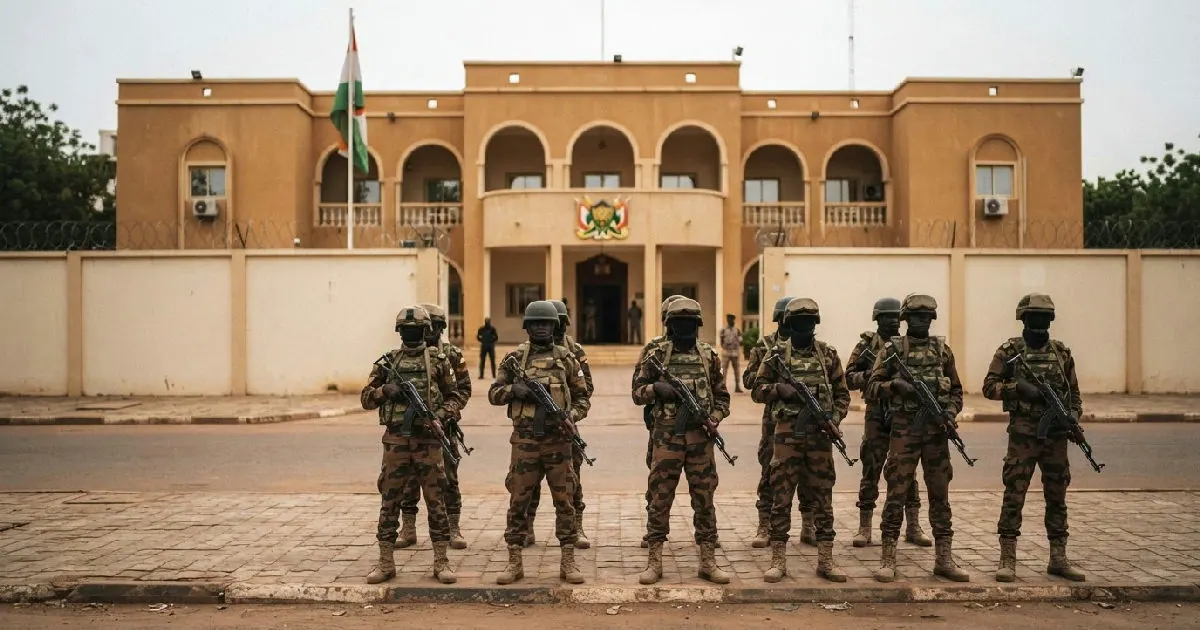
Many believed African military coups offered a swift path to national rejuvenation, but history shows these interventions led to deeper instability, economic decline, and widespread human rights abuses. Economist John Mukum Mbaku's research supports this conclusion, highlighting the detrimental cycle of coups that leave nations worse off than before. Military takeovers, often justified as restoring order, paradoxically introduced profound political instability, dismantling nascent democratic institutions and replacing them with autocratic structures.
The cycle of coups perpetuated a climate of distrust and violence, undermining the very stability they claimed to deliver. Mali experienced two coups in quick succession between 2020 and 2021, illustrating how military interventions can trigger further upheavals. Colonel Assimi Goïta overthrew President Ibrahim Boubacar Keïta in August 2020, only to later depose transitional leaders himself in May 2021. This pattern reverberated across the continent, affecting the legitimacy of state institutions and creating challenges of fragile governance.
When legal frameworks collapsed, political vacuums often emerged, paving the way for further internal strife. This destabilisation became a recurring theme in post-coup nations, impeding long-term development. Economic decline was a significant consequence of military interventions, deterring both foreign and domestic investment, stifling growth, and increasing poverty. A 2026 IMF report indicated that countries experiencing coups suffered a 2.3 percentage point reduction in GDP growth.
Investment also plummeted by an alarming 14.3% in the same year, reflecting a severe blow to economic prospects. The initial appeal of military leaders pledging to combat corruption and improve living standards often evaporated quickly. Instead, these regimes frequently fostered environments rife with their own forms of mismanagement and patronage. Afrobarometer surveys showed high public opposition to coups in several African countries, indicating a growing democratic culture.
Entrepreneurs and businesses found little incentive to invest in environments where legal stability was absent and property rights were precarious. This created a vicious cycle, where economic stagnation further fuelled public discontent and the potential for future unrest. The economic impact wasn’t merely about large-scale investment; it permeated daily life, with increased unemployment and rising inflation frequently following.
Military regimes often operated outside constitutional norms, leading to widespread human rights violations. Constitutions were frequently suspended, and civil liberties curtailed, suppressing dissent and consolidating power. Violent crackdowns on protests, arbitrary detentions, and restrictions on media freedom became common occurrences. The focus on maintaining power often superseded any commitment to the welfare or rights of the populace.
The historical record across Africa clearly illustrates that military coups, despite their initial promises of swift and decisive change, consistently deliver instability, decline, and human rights abuses. Conversely, nations that developed strong democratic institutions and professional armed forces under civilian oversight, such as South Africa, Namibia, Botswana, and Mauritius, largely avoided coups. Their commitment to rule of law and credible elections proved a more robust defence against both internal and external pressures.
Key points
- Military coups in Africa have led to deeper instability and economic decline.
- Coups have resulted in widespread human rights abuses and undermined national sovereignty.
- Strong democratic institutions and professional armed forces under civilian oversight can prevent coups.