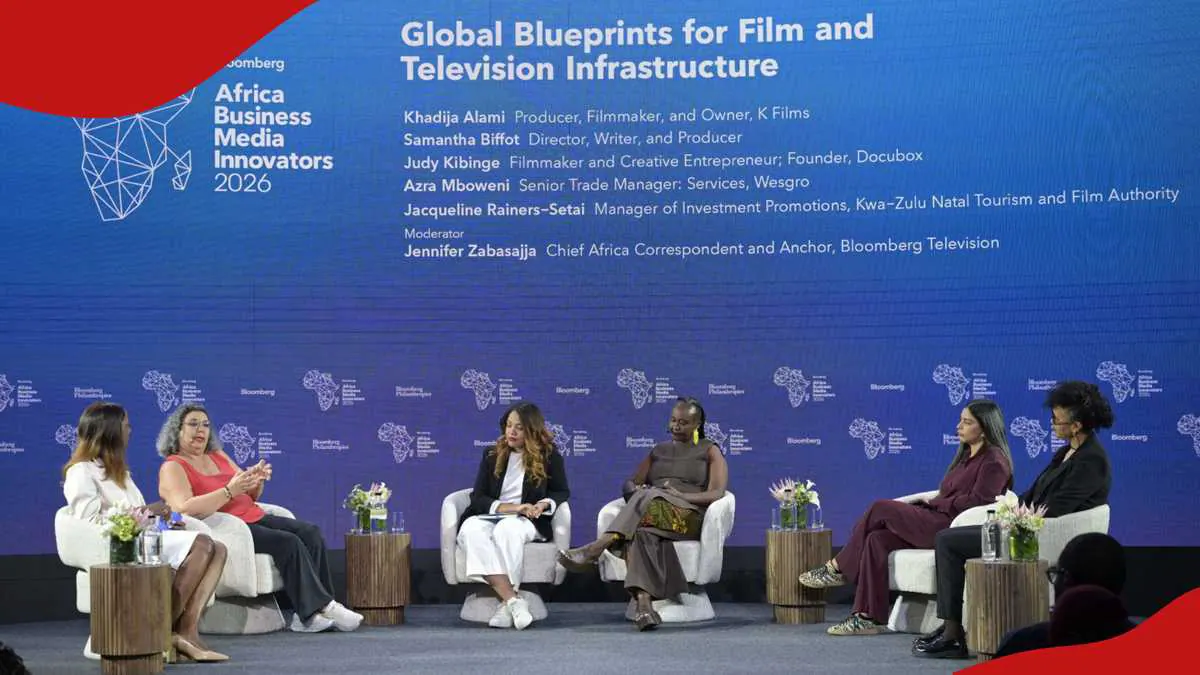
African journalists, media owners, creators, and global partners recently converged in Cape Town for Bloomberg's 2026 Africa Business Media Innovators (ABMI) gathering. Discussions centered on how the continent's media industry can build more sustainable and globally competitive businesses in the age of artificial intelligence. The event, organized under the Bloomberg Media Initiative Africa (BMIA), aimed to advance business journalism, strengthen media capacity, and improve access to reliable financial data.
The convening identified AI adoption, intellectual property ownership, and sustainable monetization as the three most pressing priorities for African media. Delegates agreed on five key priorities for the sector: deploying AI to support editorial decision-making, retaining ownership of African intellectual property and narratives, building payment and distribution infrastructure, supporting the creative economy, and deepening collaboration between traditional newsrooms and new content creators.
South Africa's Deputy Minister of Communications and Digital Technologies, Mondli Gungubele, addressed the convening, highlighting the transformative potential of digitization for African storytelling. He noted that the digital age gives Africa the ability to speak to the world without external validation, allowing African ideas to become global ideas without needing permission.
Bloomberg data presented at the event showed that Africa is among the fastest-growing regions globally, with sub-Saharan Africa's economic growth accelerating beyond that of emerging markets and developing economies combined since 2025. Participants argued that trusted, independent journalism plays a direct role in this growth by providing reliable information and strengthening accountability.
Erana Stennett, Bloomberg Corporate Philanthropy Lead for Africa and the Middle East, emphasized the need for pan-African collaboration to shape the industry's direction. She stated that Africa's media future must be shaped by African journalists, editors, media owners, entrepreneurs, creators, investors, business, and public leaders working together.
Delegates also raised concerns about how African content is distributed and monetized across global platforms, calling for structural changes that allow publishers and creators to capture more of the economic value generated by African intellectual property. East African newsrooms, in particular, face familiar pressures in building digital revenue models that sustain quality journalism while adopting new technology without undermining editorial integrity or public trust.
The event marked the 10th edition of the annual convening, which is part of the Bloomberg Media Initiative Africa (BMIA) launched by Mike Bloomberg in South Africa in 2014. The initiative aims to advance business journalism, strengthen media capacity, and improve access to reliable financial data. The convening brought together media leaders from across the continent to discuss the future of AI and revenue in the African media industry.
Key points
- African media leaders identify AI adoption, intellectual property ownership, and sustainable monetization as top priorities.
- The digital age gives Africa the ability to speak to the world without external validation.
- Pan-African collaboration is crucial to shape the future of Africa's media industry.