As heads of state gather at the United Nations General Assembly in New York, African leaders are expected to invoke colonialism, slavery, apartheid, and climate justice, demanding reparations and moral reckoning. However, critics argue that this narrative has been used as a shield for present incompetence, allowing leaders to avoid accountability for poor governance and corruption. The continent holds significant reserves of natural resources, including cobalt, lithium, gold, and oil, and has the youngest population on earth, yet it remains the poorest continent.
The article argues that African leaders have mastered the blame game, travelling to Western capitals to demand justice for the past while returning home to preside over systems of corruption, tyranny, patronage, and decay that keep their people poor and in squalor. This has resulted in a culture of dependency on a hollow state, breeding a narrative that turns the poor against the poorer. The blame game has paralysed African political life for sixty years, with leaders constantly pivoting to historical injustices such as the slave trade, colonialism, or neocolonialism to avoid explaining cabinet-level theft and present incompetence.
The economic record of African countries such as Nigeria, Ghana, Kenya, and South Africa is cited as evidence that the blame cannot be solely placed on the West. After independence, these countries had GDP levels comparable to South Korea and Malaysia, but today they lag far behind. The article questions whether this is solely the West's doing or if post-independence elites chose cronyism and state capture over institutions and human capital. The result is that African leaders are failing to deliver on their promises, with citizens often turned against one another.
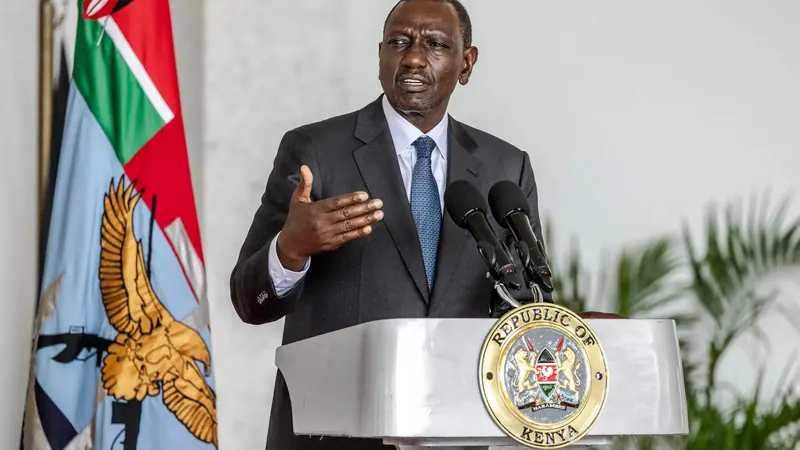
Xenophobia is used as a political tool in countries such as South Africa, Kenya, and Ghana, while young people demanding accountability in Senegal and Uganda are met with scapegoating of the LGBTQ+ community. When leaders such as President William Ruto of Kenya are pressed on their failures, foreigners become the convenient enemy. The economy collapses, and tribalism, religious fanaticism, and homophobia fill the vacuum in Nigeria. Democracy in much of Africa has been hollowed out, becoming a device for legitimising imposed power rather than reflecting popular will.
The article argues that the West, East, and Middle East share responsibility for extraction, arbitrarily drawn borders, and a lingering architecture of dependency, but there is a statute of limitations on using history as a shield for present incompetence. The West is accountable for the past, but African leaders are accountable for the present. They cannot keep shouting "colonialism" to avoid explaining cabinet-level theft or "slavery" while children starve and young people are wasted under their watch.
The narrative of the permanently victimised continent cannot remain the staple of kleptocratic rule, and African leaders cannot keep using the past to steal the future. Africans must reject the infantilisation of their own leadership and demand leaders who care about the starving child, the boy who has been turned into a soldier, the trafficked girl, the men crossing the Atlantic for a "better" future, and the unemployed youth. The United Nations and the international community should hold African leaders to the same standards of governance expected elsewhere.
Ultimately, African leaders must take responsibility for their own failures and stop blaming the West for their own incompetence. The article concludes that this week in New York, the United Nations, the West, and the East should stop treating African heads of state as victims who need coddling and instead hold them accountable for their governance. Africans must demand more from their leaders and reject the narrative of perpetual victimhood.
Key points
- African leaders are urged to stop blaming the West for their own failures and take responsibility for poor governance and corruption.
- The narrative of the permanently victimised continent has been used as a shield for present incompetence and kleptocratic rule.
- Africans must demand leaders who care about the welfare of their citizens and hold them accountable for their governance.