African higher education leaders gathered at the inaugural Higher Education Transformation Convening in Accra, Ghana, to discuss reforms needed to make higher education more relevant and impactful. The event, hosted by the Mastercard Foundation, brought together representatives of higher education institutions, the African Union, government ministries, financial institutions, industry, development partners, and young people. The theme of the convening was "Reimagining Higher Education for Africa's Human Capital Development." The meeting aimed to address the challenges facing higher education in Africa and explore ways to transform universities into drivers of economic growth and development.
Ms. Sewit Ahderom, President and Chief Executive Officer of the Mastercard Foundation, emphasized the need for universities to align curricula with the needs of employers and national economies. She called for institutions to equip graduates with relevant skills, develop credentials that reflected competencies, and prepare young people to lead emerging technologies shaping African economies. Ahderom also stressed the importance of stronger links between universities, industry, and government to ensure that research moved beyond campuses to support enterprise development, employment creation, and community development.
Dr. John Nkengasong, Executive Director of Higher Education and Strategic Initiatives at the Mastercard Foundation, highlighted the opportunity presented by Africa's growing youth population. He emphasized that higher education transformation should be treated as an economic imperative requiring collaboration among governments, universities, industry, investors, and development partners. Nkengasong's remarks underscored the need for a collective effort to address the challenges facing higher education in Africa and harness the potential of the continent's youth.
Professor Saidou Madougou, Director of the African Union Department of Education, Science, Technology and Innovation, discussed the African Union's Decade of Education and Skills Development, 2025-2034. He emphasized the need for stronger education systems and skills aligned with the continent's development priorities. Madougou called for African countries to strengthen collaboration among universities, expand faculty and student mobility, and create systems that allowed talent, knowledge, and innovation to move across borders.
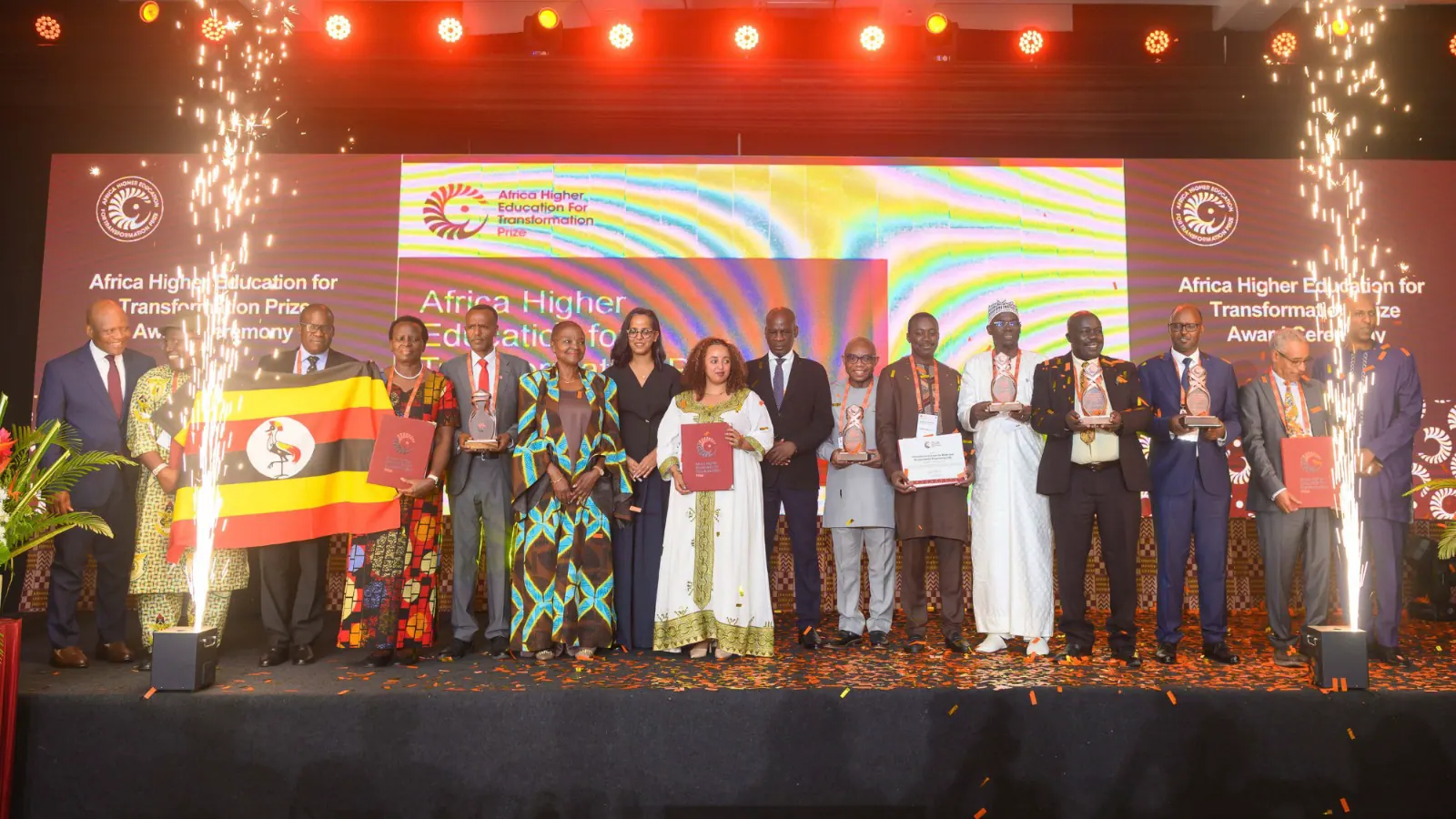
The convening also featured the inaugural Africa Higher Education for Transformation (AHEFT) Prize, which recognized institutions implementing sustained, institution-wide transformation in teaching, research, innovation, and graduate employment. The 2026 laureates were Addis Ababa University of Ethiopia, the International Institute for Water and Environmental Engineering of Burkina Faso, Kwame Nkrumah University of Science and Technology of Ghana, Muni University of Uganda, and the University of Rwanda. The prize is backed by a $500 million commitment and aims to recognize at least 150 institutions across Africa over the next decade.
Madam Susan Chomba, Chair of the AHEFT Jury, noted that the inaugural laureates demonstrated different approaches to transforming higher education. She emphasized that the examples provided practical lessons that could be adapted by other institutions seeking to improve their contribution to Africa's development. Chomba's remarks highlighted the importance of sharing best practices and collaborating to address the challenges facing higher education in Africa.
Participants at the convening emphasized the need for young people to be actively involved in decisions affecting education, employment, and opportunities. They called for stakeholders to translate shared commitments into action by strengthening the links between education, employment, research, and investment to equip more young Africans to learn, earn, and lead. The convening concluded with a renewed commitment to transforming higher education in Africa and harnessing the potential of the continent's youth to drive economic growth and development.
Key points
- African higher education leaders call for a shared vision to transform universities into drivers of human capital development, innovation, research, and economic growth.
- The Africa Higher Education for Transformation (AHEFT) Prize was launched to recognize institutions implementing sustained, institution-wide transformation in teaching, research, innovation, and graduate employment.
- The Mastercard Foundation has committed $500 million to support the AHEFT Prize, aiming to recognize at least 150 institutions across Africa over the next decade.