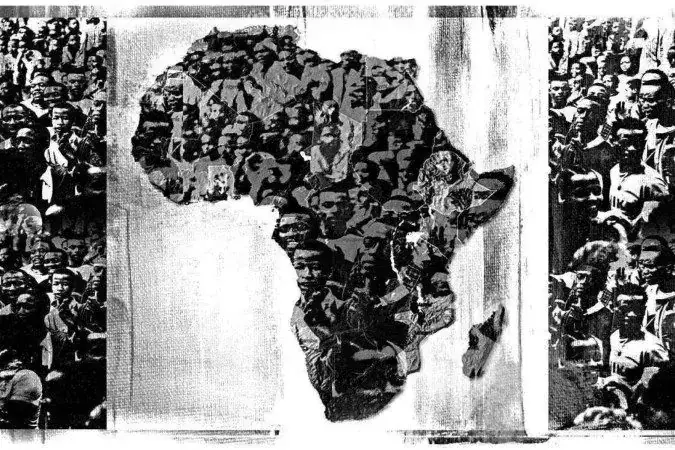
In recent weeks, three significant events have taken place in Dakar, Senegal; Kigali, Rwanda; and Saint John's, Antigua and Barbuda, highlighting the ongoing quest for historical reparations in Africa and its diaspora. At the second congress of the Latin American and African Studies Association (LASA Africa) in Dakar, experts from Africa and the Afro-diaspora convened to discuss the theme of historical reparations. The event, which ran from November 4 to 7, brought together specialists to examine the concept of reparations and their significance in the context of African and Afro-diasporic experiences.
Meanwhile, in Kigali, the 15th Annual Conference of the African Society of International Law (AfSIL) focused on the critical issue of accountability for historical injustices. The conference centered on discussions about who bears responsibility for past wrongs, what justice requires beyond mere acknowledgment of wrongdoing, and how international law can provide meaningful solutions for damages that have spanned generations. These events reflect the agenda of the African Union (AU), which has launched the "Decade of Reparations (2026-2036)" to address a range of historical injustices.
The African Union's initiative acknowledges that the issue of reparations encompasses various injustices, including deportations, massacres, looting of natural resources, and nuclear testing during the colonial era. However, not all countries have been receptive to the idea of reparations. The Prime Minister of the United Kingdom, Andy Burnham, recently stated that the British people should not be required to pay for the mistakes of slavery, sparking controversy. Burnham's comments were published in The Guardian, and he argued that the issue should be limited to a simple apology for slavery and the transatlantic slave trade.
Critics argue that Burnham's stance ignores the fact that slave owners were compensated when slavery was abolished, and that states inherit historical liabilities and assets. Furthermore, the crimes of slavery and the transatlantic slave trade are considered imprescriptible, allowing for the prosecution of those who benefited from these crimes and the pursuit of reparations for direct descendants of victims. Pierre Sané, a former UNESCO deputy director-general, emphasized that the responsibility of states and institutions does not expire with the passage of time.
The issue of reparations has gained significant attention globally, with various countries and organizations advocating for justice and compensation. The Community of Caribbean States (CARICOM) has developed a 10-point plan for reparations, which includes public health, education, cultural restoration, psychological rehabilitation, technology, debt cancellation, and monetary compensation. Ghanaian President John Mahama, who serves as the AU's procurator-general for historical reparations, has called for a structured dialogue involving African countries, the Caribbean community, and the diaspora to achieve concrete measures for reparatory justice.
The British government's stance on reparations has been met with criticism from various quarters. UK MP Dawn Butler argued that time does not legitimize past injustices, and that the benefits of historical wrongs continue to be enjoyed by oppressors. The selective stance of countries like the UK, which has acknowledged the Holocaust but not the transatlantic slave trade, has been noted. In contrast, the UN General Assembly recently passed a resolution classifying slavery and the transatlantic slave trade as the most serious crimes against humanity.
The push for historical reparations is a critical step towards achieving justice and accountability for past wrongs. The African Union and its partners continue to advocate for a comprehensive approach to reparations, encompassing various forms of justice, including symbolic, practical, and financial measures. As the Decade of Reparations unfolds, it is likely that the conversation around historical injustices will continue to gain momentum globally.
Key points
- The African Union has launched the "Decade of Reparations (2026-2036)" to address historical injustices.
- The UK Prime Minister has faced criticism for rejecting financial reparations for slavery.
- The UN General Assembly has passed a resolution classifying slavery and the transatlantic slave trade as crimes against humanity.
Reporting sources
- Tunda Mu Njila: Responsabilidade pela escravatura não... · novojornal.co.ao