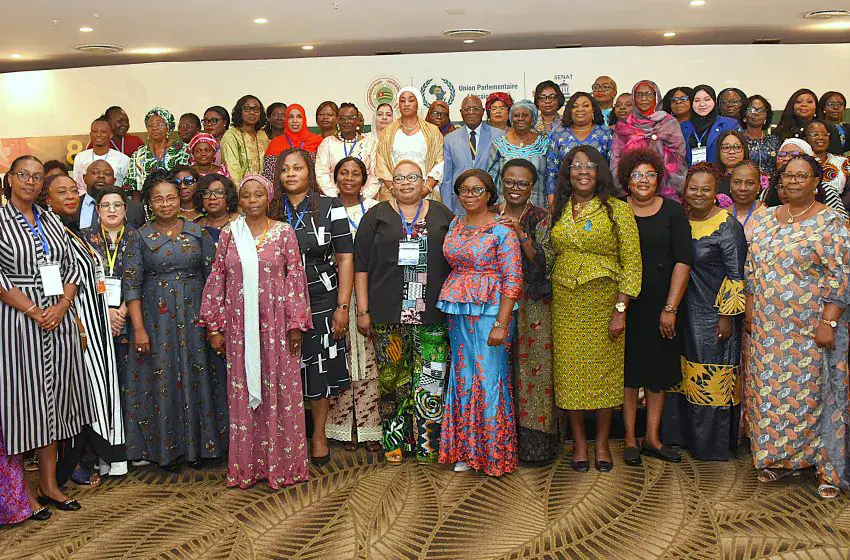
Women parliamentarians from across Africa converged in Lomé, Togo, for the 86th session of the Executive Committee and the 48th Conference of Presidents of Parliaments of the African Parliamentary Union (UPA). The event, which took place on November 12, 2026, focused on promoting women's leadership, economic empowerment, and protection of their rights. These issues are critical to the development of the African continent. The women parliamentarians acknowledged that while women's presence in decision-making bodies is essential, it is no longer sufficient. They emphasized the need for effective participation, real influence in policy-making, and equal access to leadership positions.
The participants identified several challenges that hinder women's progress, including sociocultural barriers, limited access to political financing, inadequate mentorship networks, and lack of tailored leadership training. They also highlighted the prevalence of gender-based violence, sexual harassment, cyber harassment, and defamation campaigns as significant obstacles to women's political engagement. To address these challenges, the parliamentarians recommended developing capacity-building programs focused on political leadership, negotiation, communication, and parliamentary diplomacy. They also advocated for strengthening mechanisms to prevent and sanction all forms of violence against women in politics.
Economic empowerment was a central theme in the discussions. The participants stressed that women's economic empowerment should not be limited to income-generating activities alone but must also include equal access to productive resources, financing, land ownership, markets, and new technologies. They recommended facilitating access to financing mechanisms for women-led businesses and promoting the allocation of 30% of public markets to these enterprises. The parliamentarians also recognized the potential of digital technologies, such as e-commerce and digital financial services, as accelerators of opportunities for women.
The parliamentarians emphasized the importance of protecting women's rights through robust legal and institutional frameworks. They called for the adoption and effective implementation of laws that guarantee gender equality and protect women from all forms of violence. They also advocated for better access to justice for women and accelerated implementation of the Maputo Protocol and other African instruments related to women's rights. The establishment of annual monitoring mechanisms to track progress was also recommended to ensure accountability for state commitments.
The recommendations adopted by the Caucus of Women Parliamentarians of the UPA are aligned with continental and international commitments, including the African Union's Agenda 2063 and the Sustainable Development Goals (SDGs), particularly Goal 5 on gender equality. The parliamentarians reiterated their commitment to contributing to the creation of an Africa where women have genuine opportunities for access to leadership, economic resources, and decision-making mechanisms.
A total of 19 recommendations were formulated during the Caucus, focusing on three key areas: promoting women's leadership and participation in governance, enhancing economic empowerment, and protecting women's rights. These recommendations aim to address the multifaceted challenges hindering women's empowerment and development in Africa. The parliamentarians acknowledged that the effective implementation of these recommendations requires the collective efforts of governments, civil society, and other stakeholders.
Bernadette A. Gnamso, a representative of the UPA, highlighted the significance of the recommendations, emphasizing that they represent a critical step towards creating an enabling environment for women's empowerment and leadership in Africa. The Caucus's recommendations are expected to inform policy and legislative reforms at national and continental levels, ultimately contributing to the achievement of gender equality and women's empowerment in Africa.
Key points
- The recommendations focus on promoting women's leadership, enhancing economic empowerment, and protecting women's rights.
- Women parliamentarians emphasize the need for effective participation, real influence in policy-making, and equal access to leadership positions.
- The implementation of the recommendations requires collective efforts from governments, civil society, and other stakeholders.