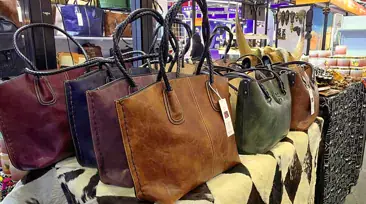
African businesses are exhibiting at China's ninth International Import Expo, seeking buyers and investment. However, they face challenges such as high transport costs, complex export procedures, and difficulties in securing commercial partners. Despite these obstacles, they hope to turn the event into lasting business relationships. The expo features exhibitors from various African countries, including Zambia, Ghana, and Sudan.
China recently extended zero-tariff treatment to 20 additional African countries, adding to an existing arrangement for 33 African least developed countries. This expansion covers 53 of the 54 African countries that maintain diplomatic relations with Beijing. The measures aim to encourage African exports to China, but exhibitors at the Shanghai fair say lower tariffs alone do not guarantee orders or access to customers.
For South Sudan, the arrangements could offer an opportunity to expand exports beyond its dependence on oil. Chinese Ambassador to South Sudan Ma Qiang said in September that more South Sudanese products were expected to enter the Chinese market under the zero-tariff policy. South Sudan was already among the 33 African least developed countries covered by China's earlier zero-tariff arrangement.
Exporters must still meet rules of origin and other Chinese import requirements. South Sudan has also called for stronger economic cooperation with China in trade, investment, agriculture, and agro-processing. Senior Presidential Adviser Kuol Manyang Juuk said such cooperation could support value addition, create jobs, and promote industrial development.
Teresa Stumbeko, chief executive of Zambian company Colourful Culture, is exhibiting malachite and amethyst at the expo. She said Chinese customers showed interest in the stones, but transporting larger quantities to China remained difficult. Stumbeko currently brings products by air in her luggage and leaves some stock in China between visits.
Other exhibitors, such as Eric Agbozo from Ghana, are seeking to introduce African products to Chinese and international consumers. Agbozo's company, Sekoko Enterprise, combines cocoa with ingredients like nuts, seeds, and dates to create a healthier chocolate. Thomas, an exhibitor from Sudan, is presenting handmade products, including wooden carvings and leather goods.
Despite the challenges, some Chinese visitors are showing interest in African products. A visitor named Zainu said she had tried a product from Namibia and liked it. However, the difficulties of converting exhibition exposure into business are not limited to African companies. Helen Song, who runs a Canadian food business, said she had not secured new customers or business agreements through previous editions of the expo.
Key points
- African exporters face challenges despite China's tariff-free access, including high transport costs and difficulties in securing commercial partners.
- China's expansion of tariff-free access aims to encourage African exports, but lower tariffs alone do not guarantee orders or access to customers.
- African businesses are seeking stronger economic cooperation with China in trade, investment, agriculture, and agro-processing to support value addition and industrial development.