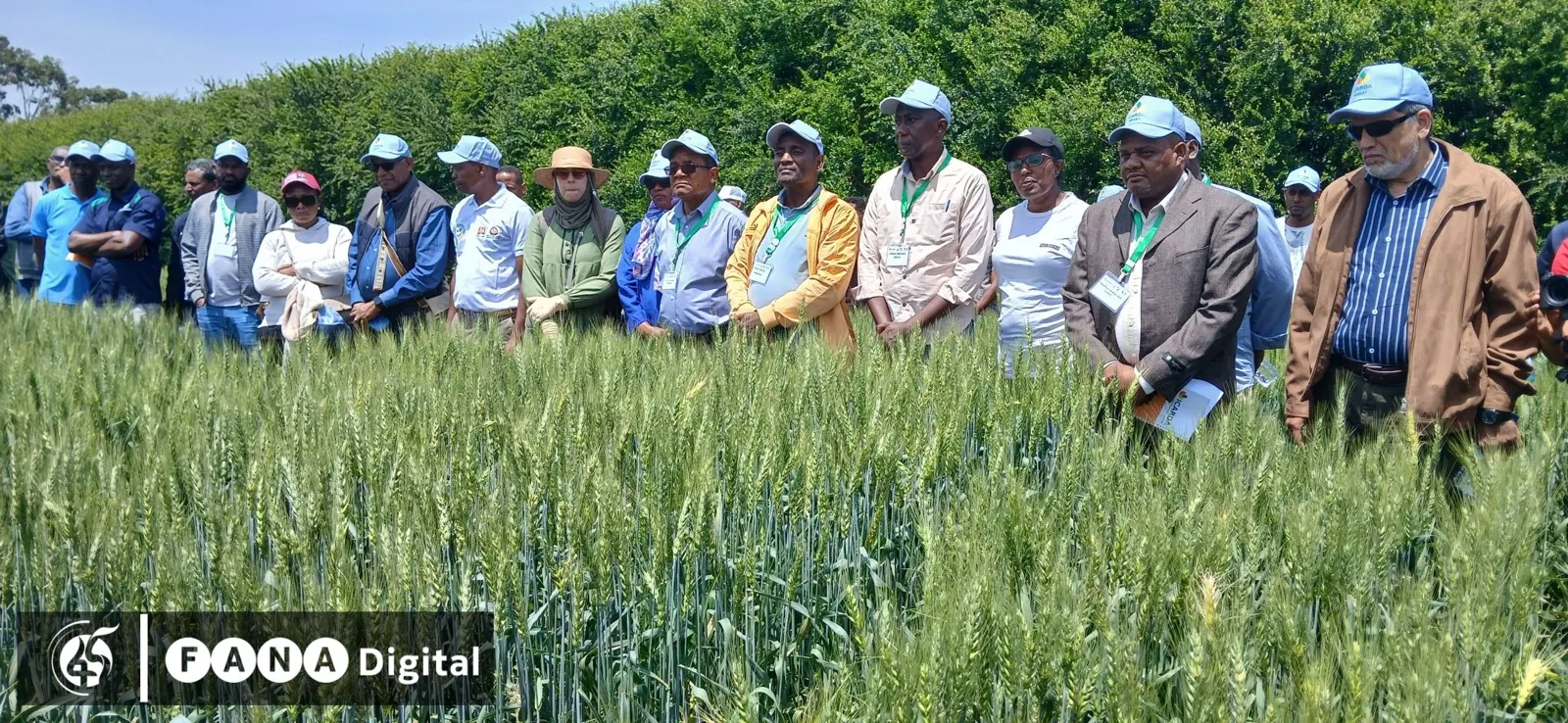
A group of African researchers and experts have visited Ethiopia to witness firsthand the country's progress in wheat development. The visit was part of an international workshop focused on accelerating sustainable wheat transformation in Africa, expanding technologies, and strengthening national breeding systems. The workshop brought together representatives from various African countries, researchers, and experts in the field. During their visit, they toured the Qulluunsa Agricultural Research Center in Assela and inspected wheat farms.
The African experts expressed their admiration for Ethiopia's achievements in wheat development, describing it as impressive and a model for other countries to follow. They noted that Ethiopia's efforts to become self-sufficient in wheat production have yielded tangible results, which they witnessed during their visit. This success has sparked hope for the rest of Africa, they said. The experts emphasized that a coordinated approach between governments and institutions is crucial for achieving food self-sufficiency and replacing imported wheat with domestic production.
The Qulluunsa Research Center has played a vital role in providing farmers with high-quality seeds and technologies, and its strong partnership with farmers has been particularly noteworthy. The center's efforts have contributed significantly to Ethiopia's progress in wheat development. The experts highlighted the importance of such partnerships in driving agricultural growth and development.
The international workshop aims to accelerate sustainable wheat transformation in Africa by sharing knowledge, expertise, and best practices. The event provides a platform for researchers, experts, and policymakers to discuss challenges and opportunities in wheat development and explore ways to address them. Ethiopia's experience in wheat development has been cited as an example of success, and other countries are looking to learn from its approach.
Ethiopia's wheat production has increased significantly in recent years, driven by government support, investment in research and development, and the adoption of new technologies. The country's efforts to become self-sufficient in wheat production have been driven by a desire to reduce reliance on imports and improve food security. The progress made so far has been encouraging, with wheat production increasing by over 90% in the past few years.
The African experts who visited Ethiopia emphasized that the country's success in wheat development is not limited to the agricultural sector but has broader implications for the economy and food security. They noted that Ethiopia's experience could be replicated in other countries, provided that governments and institutions work together to create an enabling environment for agricultural growth and development.
The visit by African experts and researchers to Ethiopia highlights the growing interest in the country's agricultural sector, particularly in wheat development. The success achieved so far has sparked hope for the rest of Africa, and many countries are looking to learn from Ethiopia's experience. As the continent continues to grapple with food security challenges, Ethiopia's story serves as a beacon of hope and a model for sustainable agricultural development.
Key points
- Ethiopia's wheat development success has sparked hope for the rest of Africa, with many countries looking to learn from its experience.
- A coordinated approach between governments and institutions is crucial for achieving food self-sufficiency and replacing imported wheat with domestic production.
- The Qulluunsa Research Center's partnership with farmers has been instrumental in driving Ethiopia's progress in wheat development.