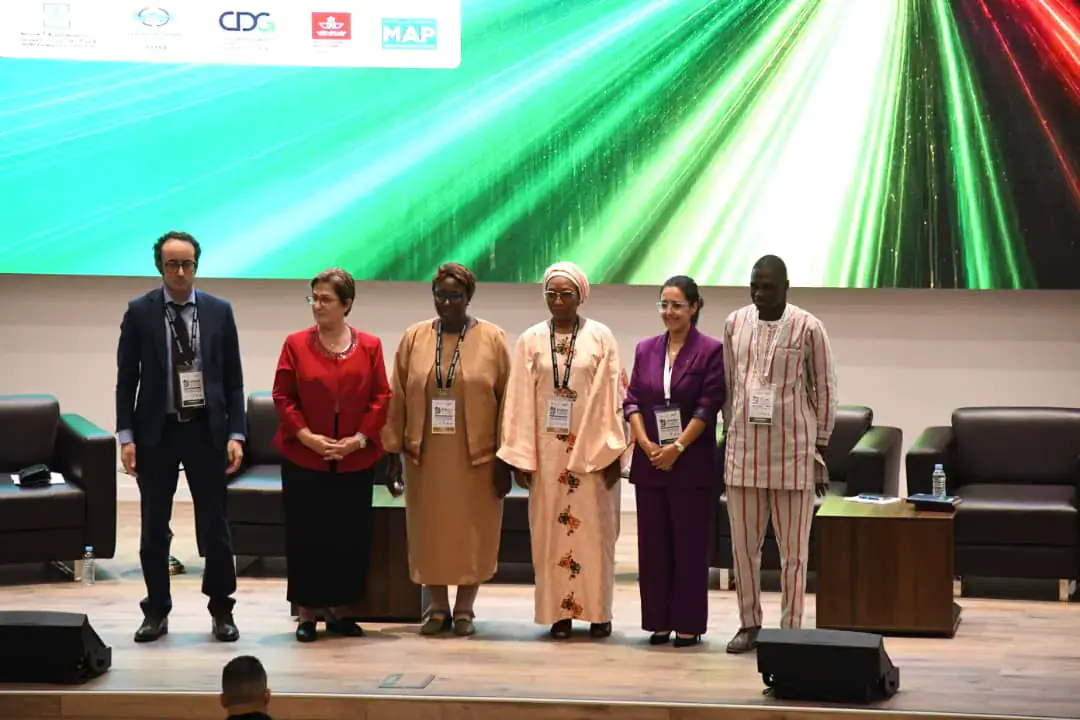
The Dakhla Global Summit 2026 recently convened in Morocco, bringing together experts to discuss pressing health issues affecting women in Africa. Professors Rajae Aghzadi from Morocco and Abdou Zouré from Burkina Faso presented on the challenges of breast and cervical cancer, emphasizing the need for early detection, diagnosis, and access to innovative treatments. They highlighted the disparities in cancer care across the continent, where late diagnoses and interrupted care pathways hinder effective treatment.
According to the World Health Organization (WHO), Africa records approximately 200,000 breast cancer cases and over 90,000 deaths annually. Professor Aghzadi noted that while screening alone is not enough to save lives, a comprehensive care pathway can significantly improve survival rates. In Morocco, for instance, breast-conserving surgery and reconstructive surgery have become more prevalent, allowing for better preservation of patients' bodies and quality of life.
Professor Aghzadi proposed the creation of an African women's health observatory, under the auspices of the Mohammed VI Foundation for Health Sciences, to monitor, connect, guide, and act on women's health issues. She emphasized the importance of reliable data, stating that what is not measured cannot be improved. Her seven priorities for addressing breast cancer include sustainable prevention financing, rapid care pathways, territorial equity, access to innovations, training and research, South-South cooperation, and a culture of accountability.
Cervical cancer, caused by the human papillomavirus (HPV), is another significant concern in Africa. Professor Zouré highlighted the paradox that while vaccination can prevent over 90% of cases, the disease continues to claim many lives, particularly in low- and middle-income countries. He noted that 90% of cervical cancer deaths occur in these countries, with Africa's regional fatality rate standing at 68%. Zouré attributed this high mortality rate to late diagnoses and emphasized the need for more effective screening and treatment methods.
Professor Zouré presented several approaches to accelerate cervical cancer elimination, including the HPV DNA test and the "screen and treat" approach. He also discussed potential innovations, such as artificial intelligence, liquid biopsies, therapeutic vaccines, and gene editing. Zouré argued that investing in cervical cancer elimination is a sound economic strategy, generating a return of $3.20 in direct economic benefits and up to $26 in social benefits for every dollar invested.
Both experts stressed the importance of equitable access to healthcare innovations, warning that these advancements must not become a privilege limited to certain geographical or economic groups. They called on policymakers to prioritize women's health, proposing commitments such as sustaining national financing for HPV vaccination, integrating molecular screening and precancerous lesion treatment into primary healthcare, and strengthening cooperation among African researchers.
The experts concluded their presentations by emphasizing the need for measurable progress in women's health. Professor Aghzadi stated that the true measure of progress is not what medicine can achieve, but how many women benefit from these advancements. With these calls to action, the Dakhla Global Summit 2026 aims to drive meaningful change in women's cancer prevention and care across Africa.
Key points
- Experts at the Dakhla Global Summit advocate for equitable access to women's cancer prevention and care in Africa.
- The African women's health observatory is proposed to monitor and address women's health issues.
- Investing in cervical cancer elimination is a sound economic strategy, generating significant returns in direct economic and social benefits.