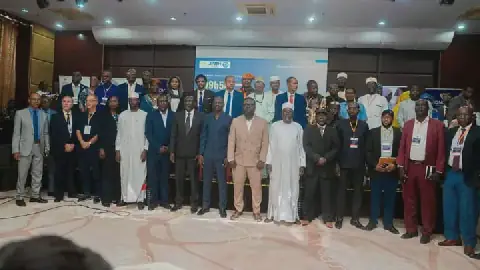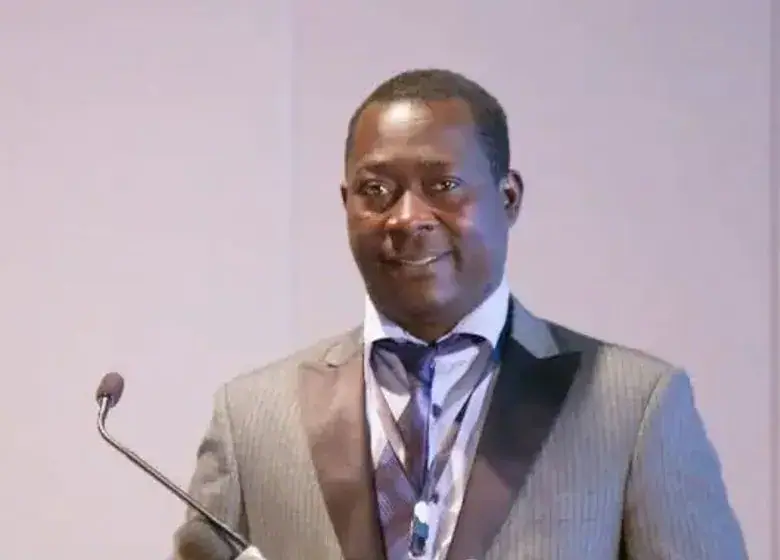
Dr. Abdoul Karim Ganamé, a renowned expert in cybersecurity and founder of StreamScan, has emphasized the need for Africa to take concrete actions to develop its digital economy. Speaking at the sixth edition of the Cyber Africa Forum in Cotonou, Benin, on November 17, 2026, Ganamé stressed that the continent has the skills and researchers to design cutting-edge technologies, but lacks the will to provide them with the means to transform their ideas into commercializable solutions.
Ganamé highlighted the importance of revising the approach to financing research and innovation in African countries to have a significant impact on the global digital economy. He noted that international data can be used as a basis for detecting threats in Africa, but must be complemented with local scenarios, particularly when it comes to targeted attacks against administrations or organizations holding sensitive information. According to Ganamé, 99% of cyberattacks in Africa are carried out by automated bots that target vulnerable machines without geographical distinction.
The expert identified one of the main obstacles to African innovation as the difficulty in transforming university research results into commercializable products. He observed that many researchers develop functional prototypes that are abandoned in laboratories due to lack of funding to test, improve, and market them. Ganamé advocates for closer collaboration between universities, private companies, and governments to overcome this challenge. He suggests that companies submit their technological needs to researchers, finance part of the work, and participate in the development of solutions adapted to their activities.
Ganamé also recommends that governments reposition innovation as a driver of economic growth and provide significant funding beyond fundamental research. He cited examples of countries that have attached innovation to their Ministry of Economy or Industry, enabling them to achieve significant growth. The expert emphasizes that innovation must be considered a key factor in economic development and not just a marginal aspect of research.
The researcher advocates for strengthened cooperation between African countries to develop research and innovation. He notes that technological research requires significant investments in infrastructure, data centers, and simulation environments. Instead of multiplying modest and isolated equipment, states could pool their resources to build more efficient infrastructure. However, this cooperation must be based on a common vision, with countries working together to achieve shared goals.
Ganamé also addressed the issue of hosting African data on the continent, supporting the principle of digital sovereignty. However, he emphasizes that building local data centers is not enough to guarantee technological independence; reliable infrastructure and permanent electricity supply are also essential. He warns that repeated power outages can lead organizations to transfer their data to foreign infrastructure perceived as more reliable.
Finally, Ganamé stressed the importance of preparing companies to face cyberattacks by having an incident response plan that enables them to identify compromised machines, isolate them, and restore systems and activities in secure conditions. His company, StreamScan, develops this expertise in Canada and several African countries. The expert's message is clear: Africa has the necessary skills to develop its own digital solutions, but must create an environment that finances ideas, supports researchers, and transforms innovations into effective development tools.
Key points
- Dr. Abdoul Karim Ganamé calls for increased investment in research and innovation to boost Africa's digital economy.
- The expert advocates for closer collaboration between universities, private companies, and governments to overcome the challenges of innovation in Africa.
- Ganamé emphasizes the importance of reliable infrastructure and permanent electricity supply to guarantee technological independence and digital sovereignty in Africa.