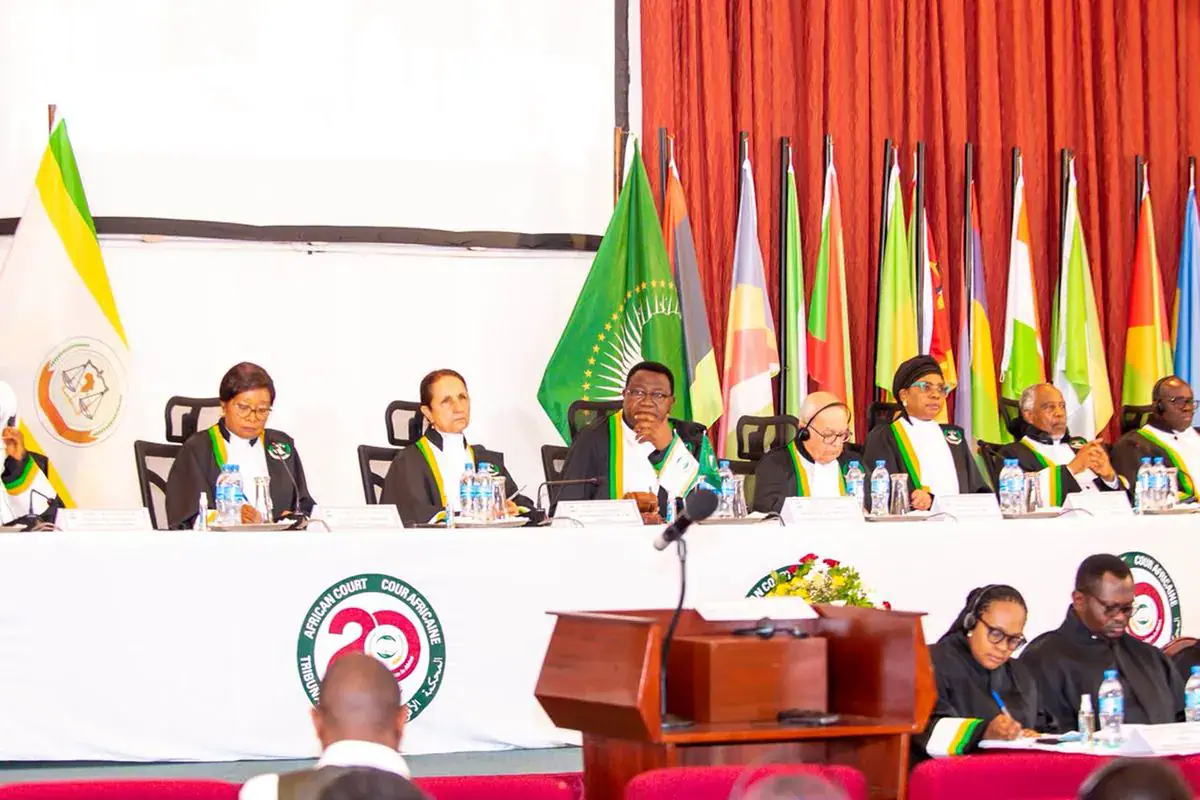
The African Court on Human and Peoples' Rights has dismissed an application by Malian citizen Babarou Bocoum challenging the country's March 2020 parliamentary elections. Bocoum filed the case on June 16, 2020, arguing that his name had been omitted from the voters' register, denying him the opportunity to participate in the elections. He claimed this omission violated his fundamental rights as a Malian citizen, particularly his right to vote and participate in governance.
Bocoum's application, numbered 023/2020, sought to annul the parliamentary elections and a decision by Mali's Constitutional Court on April 30, 2020, confirming the final results of both rounds of voting. However, a panel of 10 judges ruled that Bocoum had failed to demonstrate that he had exhausted available legal remedies in Mali before approaching the continental court. This failure led the court to declare the application inadmissible.
The court's ruling emphasized that litigants must first pursue available remedies within their national legal systems before seeking redress at the African Court. The judges noted that Mali's electoral laws provided administrative and judicial procedures through which Bocoum could have challenged his exclusion from the voters' register. These remedies were deemed available, effective, and capable of providing adequate redress.
According to the court, there was no evidence that Bocoum had attempted to use domestic remedies. The requirement to exhaust domestic remedies was considered mandatory and had to be fulfilled before an application could be brought before the African Court. This ruling was delivered by a panel presided over by Justice Blaise Tchikaya, the court's President.
Bocoum had accused the Malian government of violating his fundamental electoral rights by failing to correct his details in the voters' register. This failure resulted in his exclusion from the March 29, 2020 parliamentary elections. He sought not only the annulment of the elections but also constitutional and legal reforms to strengthen Mali's electoral system.
The proposed reforms included establishing an independent national electoral commission and an impartial mechanism for resolving electoral disputes. Additionally, Bocoum asked the court to order the Malian government to pay him 100 million CFA francs in compensation for alleged financial, material, and non-material harm.
The African Court's decision was based on the fact that Bocoum did not meet the admissibility requirements due to his failure to exhaust domestic remedies. The court concluded that it could not hear his application without this prerequisite being met, leaving Bocoum without a legal recourse at the continental level.
Key points
- The African Court on Human and Peoples' Rights dismissed Bocoum's application due to his failure to exhaust domestic remedies in Mali.
- Bocoum's exclusion from the voters' register led him to seek annulment of the 2020 parliamentary elections and reforms to Mali's electoral system.
- The court's ruling emphasized the mandatory requirement for litigants to exhaust domestic remedies before seeking redress at the African Court.
Reporting sources
- Why African Court rejected Malian’s election petition · The Citizen