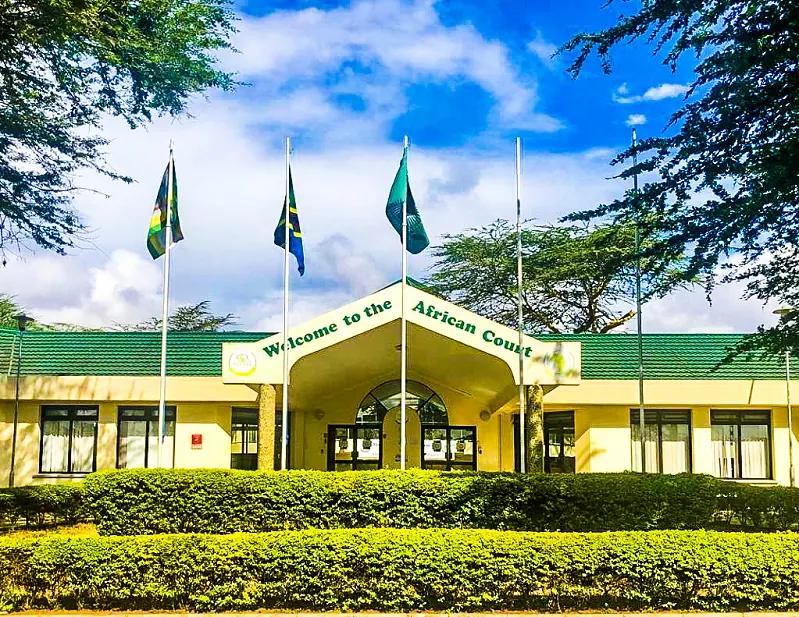
The African Court on Human and Peoples' Rights, based in Arusha, Tanzania, is celebrating its 20th anniversary. Established to uphold the rights enshrined in the African Charter on Human and Peoples' Rights, the court has adjudicated over 150 cases in two decades. This caseload is several times larger than that handled by the International Criminal Court in The Hague over a comparable period. The court's performance report highlights its institutional resilience and promising trajectory for advancing human rights across the continent.
Despite being a regional judicial body, the African Court on Human and Peoples' Rights remains overshadowed by the International Criminal Court (ICC). However, the court's rulings carry greater potential for enforcement, as domestic judges can invoke the African Charter and cite the court's interpretation as binding precedent. This allows national jurisprudence to align with the regional standard. The court's decisions are also increasingly cited by other regional jurisdictions, such as the ECOWAS Court of Justice.
One of the significant advantages of the African Court is its willingness to address issues specific to the continent. Unlike the ICC, which has concentrated its caseload on Africa and faced accusations of bias, the African Court tackles unique challenges confronting the continent. The African Charter enshrines collective rights, including the right of peoples to freely dispose of their natural resources and the right to economic and social development. This approach makes the African Court the most progressive among international institutions on these issues.
The African Court's practice of prescribing concrete remedial measures and specific obligations for states in its rulings is another distinguishing feature. In contrast, the ICC functions largely as a political body, with mechanisms for victim compensation and punishment of perpetrators remaining largely inoperative. The African Court's judgments lay out detailed reparation frameworks and articulate clear demands on respondent states. For example, in a case heard in Tanzania last year, the court ruled that states bear extensive obligations toward persons with albinism.
The court's report highlights its independence from the political will of member states as a notable advantage. When a case is brought against a state, the judge who is a national of that state recuses themselves. This is in contrast to the ICC, which has faced controversies over alleged political bias. Former ICC chief prosecutors have faced accusations of lobbying on behalf of individual states, while member states have selectively disregarded the court's rulings.
The African Court's report concludes that sustained political backing, broader ratification of the relevant protocols, and alignment of national laws and practices with the African Charter would strengthen the regional judicial architecture. This would enable steady progress on human rights across the continent. Supporting robust regional judicial mechanisms is essential for political sovereignty, not only for Tanzania but for African states at large.
The African Court on Human and Peoples' Rights has demonstrated its commitment to advancing human rights in Africa. With 34 of the African Union's 55 member states having ratified the protocol establishing the court, there is potential for further growth and impact. As the court continues to mark milestones, its unique approach and commitment to enforcing human rights make it an essential institution for the continent.
Key points
- The African Court on Human and Peoples' Rights has adjudicated over 150 cases in its 20 years of operation.
- The court's rulings carry greater potential for enforcement due to its unique approach and the African Charter.
- The African Court's willingness to address issues specific to the continent makes it a progressive institution for human rights.