Millions of African families rely heavily on sheep and goats for essential resources such as food, school fees, and medical care. In rural communities, these animals play a crucial role in household resilience. To mitigate the threat posed by Peste des Petits Ruminants (PPR), a contagious viral disease affecting livestock across the continent, efforts are being intensified to eliminate it.
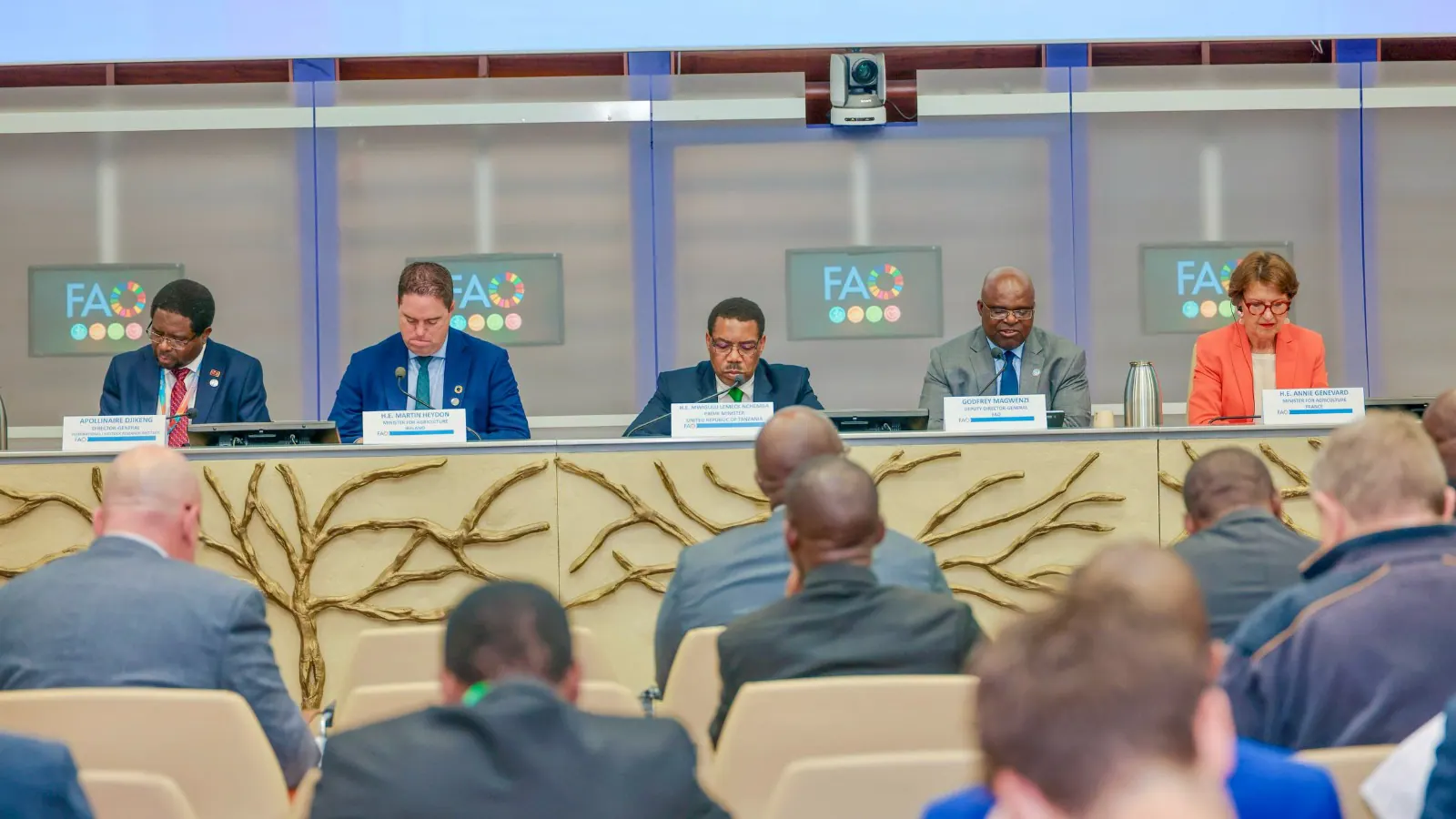
On September 22, 2026, political leaders and animal health experts convened at the Food and Agriculture Organisation (FAO) headquarters in Rome. The discussions centered on converting political commitments into actionable funding for PPR eradication, on the sidelines of the FAO Global Conference on Agrifood Systems Transformation. Tanzania’s Prime Minister, Dr Mwigulu Nchemba, highlighted his country’s investment in vaccination and veterinary systems as part of a broader strategy to transform agrifood systems.
Tanzania has made significant progress in controlling PPR, initially focusing on cattle but now concentrating on sheep and goats, which are vital for many rural households. In the 2025/26 financial year, over 16.8 million sheep and goats were vaccinated against PPR, with continued funding allocated for further phases of the campaign. Dr Nchemba emphasized that Tanzania’s efforts go beyond mere vaccination, with the government enhancing livestock identification, disease surveillance, and veterinary services to create proactive disease prevention systems.
Recognizing PPR as a transboundary disease, Dr Nchemba stressed the necessity for regional cooperation, as livestock movements across borders can facilitate disease spread. He noted that coordinated efforts are crucial for effective control, illustrating this with the rapid movement of animals compared to political discussions on regional integration. Over 70 countries report PPR, which severely impacts household incomes and food security, despite not posing a threat to human health.
A 2016 global study suggested that a 15-year PPR eradication programme could yield $76.5 billion in economic benefits for an investment of approximately $2.26 billion. The discussions in Rome led to a commitment for a 2040 PPR eradication target, with a strong emphasis on crafting viable investment plans. The European Union pledged an additional €50 million for PPR eradication, further encouraging collaboration and financial contributions from other partners.
Leaders stressed that vaccination alone would not suffice for eradication, emphasizing the need for a comprehensive approach that includes strong surveillance systems and cross-border cooperation. Countries are encouraged to build on existing strategies to close financing gaps and accelerate implementation efforts. For Tanzania, aligning investment in vaccination with broader livestock health systems is crucial for achieving the eradication goal.
For pastoralists and smallholder farmers, the goal of eradicating PPR transcends animal health, encompassing food security and community resilience. As Africa moves toward the 2040 PPR eradication goal, maintaining political focus, securing sustainable funding, and enhancing cross-border cooperation will be vital. Eliminating PPR represents a critical step towards ensuring stable livelihoods and food security for the millions dependent on livestock.
Key points
- A 15-year PPR eradication programme could yield $76.5 billion in economic benefits.
- The European Union pledged an additional €50 million for PPR eradication.
- A comprehensive approach, including strong surveillance systems and cross-border cooperation, is essential for PPR eradication.