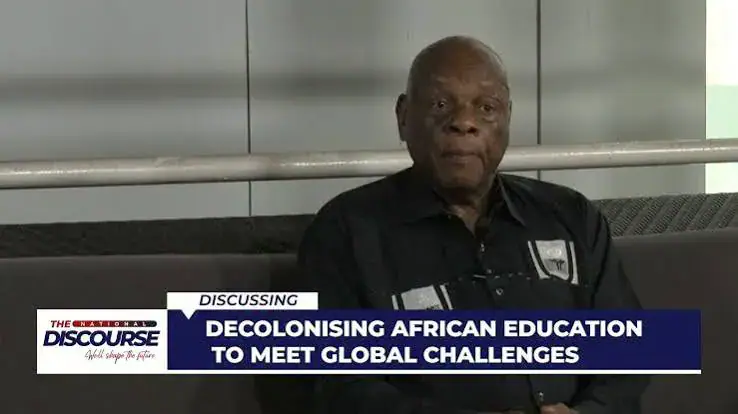
Professor Molefi Kete Asante, a renowned philosopher, cultural historian, and founder of the Theory of Afrocentricity, has emphasized the need for African nations to take control of their historical narrative to achieve meaningful development. He argues that Africa's inability to establish a common narrative about its identity and history is a major obstacle to continental unity.
According to Professor Asante, Africa's story should not be left in the hands of external powers, but rather determined by Africans themselves. He recalled the vision of Ghana's first President, Dr. Kwame Nkrumah, who believed that Ghana's independence would have little meaning if it was not connected to the liberation and unity of the entire African continent.
Professor Asante noted that Nkrumah's vision of a united Africa remains relevant, but achieving it requires an Afrocentric ideological foundation that brings Africans together around a shared understanding of their history and identity. He stressed that Africa's narrative is its own, and there is nothing more significant than the narrative that Africans tell about who they are as a people.
To reclaim its narrative, Professor Asante suggested that Africa needs to transform its educational system, particularly the way African history is taught to children. He argued that African education should give prominence to ancient civilizations such as Kemet, present-day Egypt, and Nubia, along the Nile Valley, just as European education places ancient Greece and Rome at its center.
Professor Asante highlighted Imhotep, the ancient Egyptian architect, physician, and scholar, as a historical figure whose contributions deserve greater recognition in African classrooms. He maintained that African children should learn about their ancestors' achievements in architecture, medicine, philosophy, and literature to nurture brilliance and help them believe in their potential.
Teaching African history from an Afrocentric perspective is, according to Professor Asante, a revolutionary approach to education that helps young Africans develop a stronger sense of identity, pride, and historical consciousness. He noted that while there are many African universities run by Africans, he has never seen an Afrocentric university.
Professor Asante concluded that understanding Africa's history from its earliest documented civilizations would help explain the continent's current challenges and opportunities, ultimately contributing to the development of a shared ideological foundation that strengthens continental unity.
Key points
- Professor Molefi Kete Asante advocates for an Afrocentric education system that prioritizes African history and culture.
- Africa's inability to establish a common narrative about its identity and history hinders continental unity.
- Teaching African history from an Afrocentric perspective can help young Africans develop a stronger sense of identity and pride.