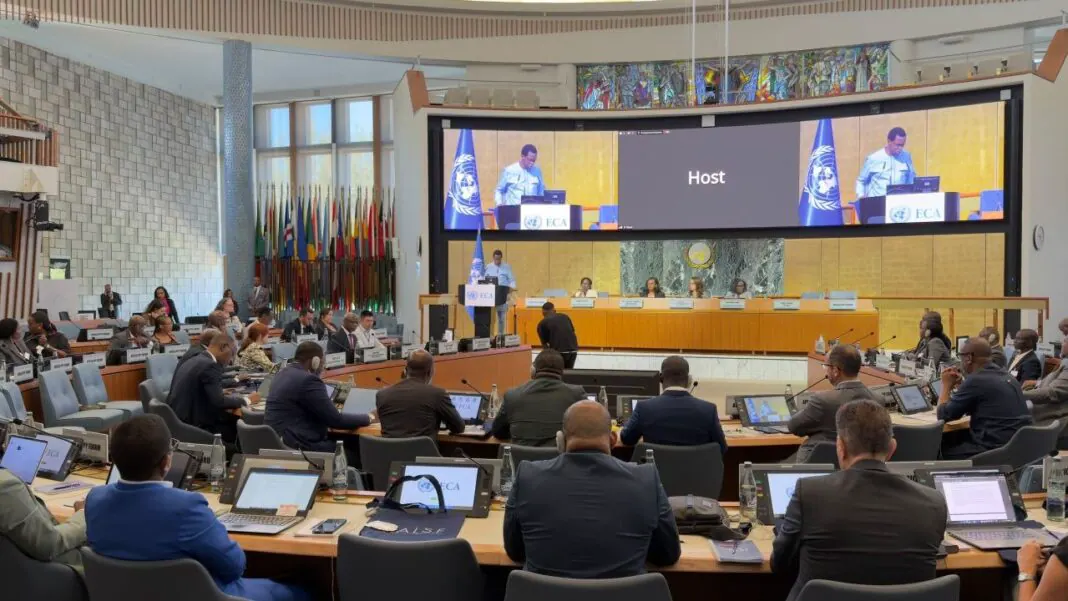
African governments must improve project preparation, deepen capital markets, and adopt new financing models to expand access to affordable social services through public-private partnerships (PPPs). Officials at a continental forum in Addis Ababa emphasized the need for innovative approaches to attract private capital and expertise while ensuring essential services remain affordable, accessible, and fiscally sustainable. The Second Forum for Public-Private Partnership Units in Africa was held under the theme, “Making Social Sector PPPs Work: From Policy Ambition to Effective Service Delivery.”
The two-day hybrid event was co-organized by the United Nations Economic Commission for Africa (ECA), the African Development Bank (AfDB), and the African Legal Support Facility (ALSF). It brought together government officials, PPP specialists, development-finance institutions, and legal experts to discuss how private capital can support essential public services. The forum builds on the first PPP Units Forum, held in 2024, which focused on climate-resilient infrastructure and convened more than 30 PPP units from across the continent.
This year’s discussions focused on social sectors, where conventional PPP structures can be more difficult to apply. Investments in public health, education, affordable housing, sanitation, and water supply may not generate enough revenue from user fees to attract private investors on their own. Hanan Morsy, ECA’s Deputy Executive Secretary for Programme, said social-sector PPPs should not be assessed solely by the amount of capital they mobilize. “Success means services that are accessible, affordable and sustainable, and that genuinely improve people’s lives,” Morsy said.
Robert Lisinge, Chief of the Energy, Infrastructure and Services Section in ECA’s Private Sector Development and Finance Division, said Africa’s infrastructure shortage includes both economic and social infrastructure. The continent needs roads, railways, airports, and ports to support economic activity, but it also needs reliable electricity, water, schools, and health facilities. Lisinge said a sound financial environment is central to attracting private investment, and developers need access to long-term finance through capital markets, bonds, and other instruments.
Governments are considering mechanisms such as availability payments, viability-gap funding, targeted subsidies, concessional finance, and blended-finance arrangements to balance private-sector profitability with the ability of communities to afford services. Lisinge said governments also need stronger technical ownership of projects, and ministries responsible for education, health, water, and energy must have the expertise to identify priorities, prepare projects, conduct feasibility studies, negotiate contracts, and manage long-term partnerships.
Olivier Pognon, Director of the African Legal Support Facility, said African governments require strong legal and financial advice when negotiating complex contracts with private companies. The ALSF assists governments in areas ranging from mining licences and independent power-producer agreements to debt restructuring and infrastructure transactions. Pognon said this year’s focus on housing, healthcare, and education reflects the fact that private capital does not naturally flow into many social sectors.
The Addis Ababa forum examined risk allocation, financing mechanisms, community-level PPP models, contract management, and monitoring systems. Participants also worked through country-level cases during technical project clinics. The organisers said the forum would produce an action-oriented follow-up framework, with participating countries appointing focal points to monitor progress and take part in future peer exchanges.
Key points
- African governments must improve project preparation and deepen capital markets to attract private investment in social services.
- Social-sector PPPs should be assessed by their impact on accessibility, affordability, and sustainability, not just the amount of capital mobilized.
- Innovative financing mechanisms, such as availability payments and blended-finance arrangements, can help balance private-sector profitability with community affordability.