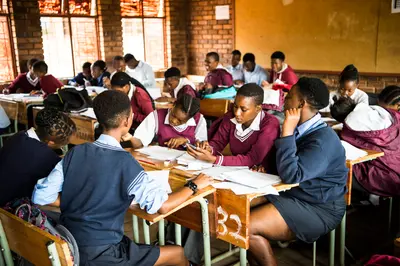
Africa's young population is one of the continent's most talked-about assets, but not necessarily its most powerful group. Nearly 60 percent of Africans are under 25, and by 2050, one in four people on earth will be African. This demographic trend has the potential to create one of the world's largest consumer markets. However, a large young population does not automatically produce innovation, economic growth, or political accountability.
The concept of a "demographic dividend" suggests that a young population can drive economic growth and stability, but only if accompanied by investments in health, education, skills, and jobs. The African Union dedicated 2015 to "Harnessing the Demographic Dividend through Investments in Youth." However, demography is not destiny, and the difference lies in how this demographic trend is harnessed.
In 2026 and 2027, over 20 African countries are expected to hold elections, providing a practical test of whether demographic potential can be turned into civic power. Young people's ability to assess candidates' promises, follow public budgets, and hold elected officials accountable will matter as much as their ability to cast ballots. These skills are essential for effective civic participation and should be treated as an investment.
Social media has democratized voice, allowing young people to speak to thousands or millions without needing permission from institutions. However, voice is not always influence, and visibility is not power. Participation does not necessarily produce change. Young Africans need to understand how advocacy works in their context to exercise agency and influence change.
A survey by ONE found that 83 percent of young people want to create change, but only 53 percent have taken part in advocacy. This gap highlights the need for young people to acquire practical advocacy skills. These skills should be treated as infrastructure, similar to education, skills, or financial infrastructure, to enable young people to become productive and economically secure.
Organizations like ONE have developed initiatives like ONE Academy, a free learning platform designed to help young Africans develop practical advocacy skills. This approach deserves more attention and investment, as it can help young people turn their concerns into action. By making knowledge of how change happens accessible, institutions can support young people's capacity to become change agents.
The development sector has spent billions delivering solutions for African citizens, but the next focus should be on citizens' capacity to demand better solutions, shape them, and hold institutions accountable. Governments, foundations, and development partners can support organizations that equip young people with practical advocacy and leadership skills, allowing them to participate meaningfully in decisions that affect their lives.
Key points
- Africa's young population needs more than just a voice; they need the power to influence change through practical advocacy skills and civic capability.