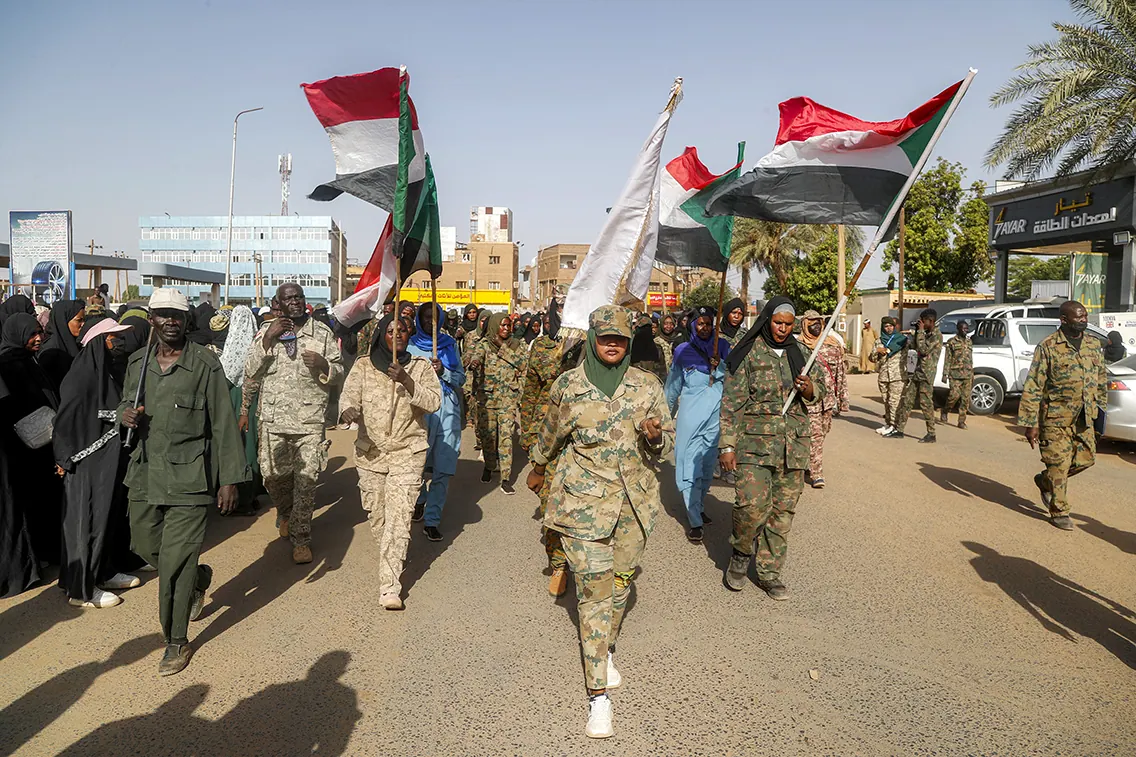
The African continent is grappling with a severe security crisis, with various countries facing threats from terrorism, insurgency, and foreign interference. According to Ivor Ichikowitz, a prominent advocate for African security, the continent's reliance on foreign powers for defence has proven to be a flawed approach. The recent fall of El Fasher, the capital of North Darfur, Sudan, and the ongoing jihadist insurgency in the Sahel region, are stark reminders of the need for Africa to develop its own security apparatus.
Ichikowitz argues that Africa's security crisis is not just about the availability of deadly weapons, but also about the character of war, which has changed significantly in recent years. The use of drones, artificial intelligence, and other advanced technologies has become increasingly prevalent, making it essential for Africa to adapt and develop its own capabilities. The uncomfortable truth, Ichikowitz notes, is that Africa has become a proving ground for other people's technology and rivalries, with foreign powers arming proxies and influencing local conflicts.
A recent survey conducted by the Ichikowitz Family Foundation, which interviewed 4,901 young people across 16 countries, provides valuable insights into the perceptions of African youth on security and development. The survey found that 70% of young Africans feel safe in their country, and satisfaction with police and security services is at its highest level since the survey began. However, when asked about the biggest threats to safety, 54% of respondents cited unemployment and poverty, rather than terrorism or invasion.
The survey also revealed that young Africans prioritize job creation and economic development over military investment, with 56% saying that governments should focus on creating jobs for young people. At the same time, 78% of respondents expressed concerns about armed groups crossing borders, and 80% about human trafficking. These findings suggest that African youth understand that security and development are intertwined, and that a secure country needs both the ability to defend its territory and the economic and institutional foundations to make society resilient.
Ichikowitz emphasizes that building defence and security capability at home is crucial for Africa's security and development. He argues that a sovereign defence industrial capacity can guarantee that African armies can sustain, repair, and adapt their own equipment without relying on foreign patrons. This approach can also create skilled industrial jobs, particularly in engineering, electronics, software, and advanced manufacturing, which are in high demand among young Africans.
Ichikowitz cites his own experience of over three decades in promoting African defence industrial capacity, demonstrating that technology can be transferred, and production can be localized. African engineers can design and build aircraft, armoured vehicles, and unmanned systems that compete with anything in the world. However, what has been missing is the political will to treat defence industrialisation as a development strategy rather than an indulgence.
As African leaders gather in New York, Ichikowitz's message is clear: Africa is not asking for protection, but for partnership on its own terms, including investment, technology transfer, and respect for its resources. The continent needs to organize and prioritize regional cooperation, standardisation of equipment, and pooled procurement to address the security challenges it faces. By taking a self-reliant approach to defence and security, Africa can build a more resilient and prosperous future for its citizens.
Key points
- African leaders must prioritize local defence industrial capacity to address the continent's security crisis.