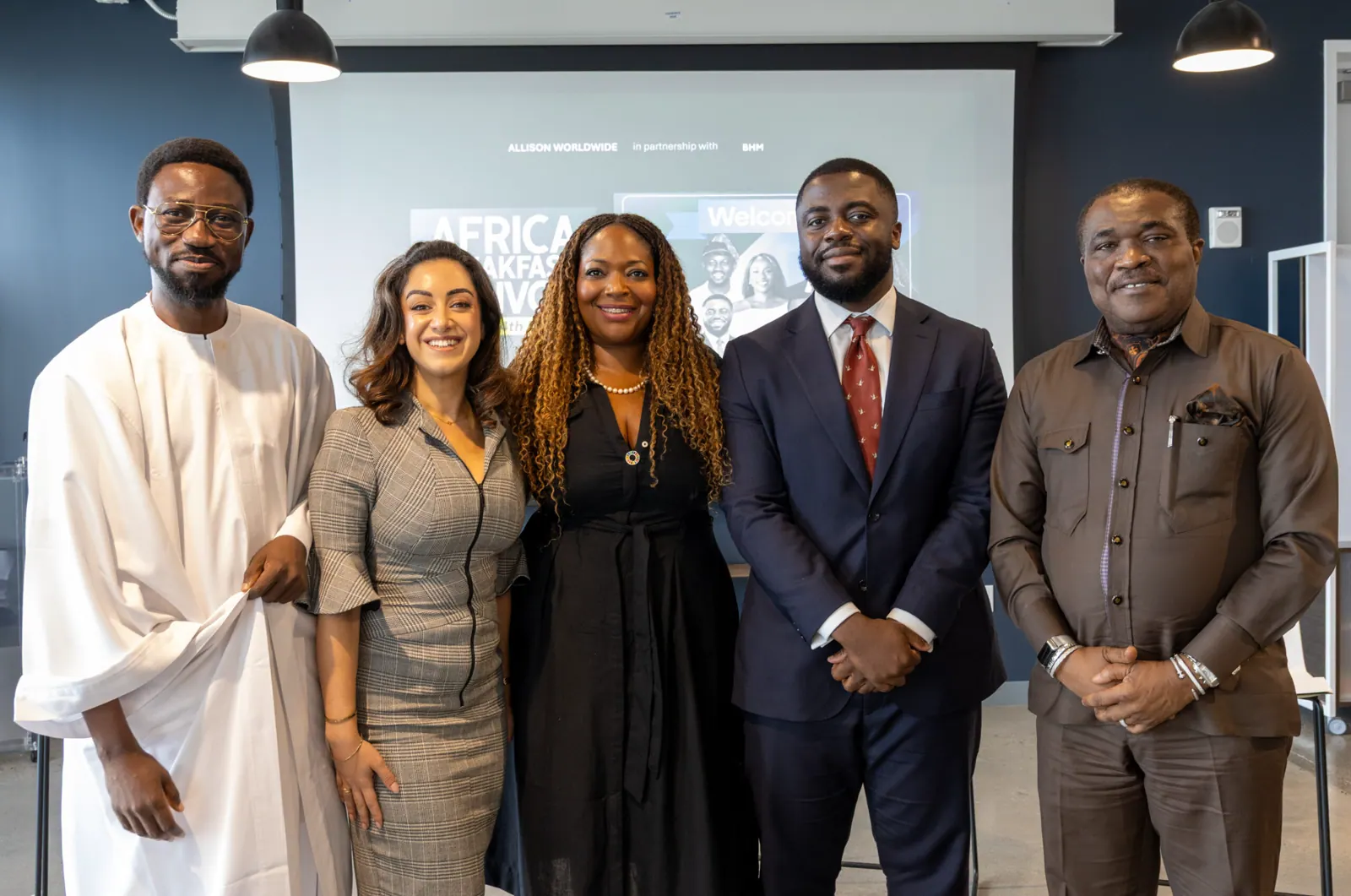
Business leaders, investors, policymakers, and entrepreneurs from Africa, the US, and other global markets have called for stronger commercial partnerships to translate Africa's growing global influence into increased trade and investment opportunities. This call was made at the fourth edition of the Africa Breakfast Conversations (ABC 2026), held at the World Trade Center in New York on September 25. The event, convened by Allison Worldwide and African media and communications company, BHM, examined Africa's evolving economic relationship with the US and global markets.
The discussions at ABC 2026 focused on trade, investment, entrepreneurship, policy, and the continent's ability to convert its growing influence into tangible commercial value. The event comes against the backdrop of over $79 billion in total US trade in goods and services with Sub-Saharan Africa. However, African exports account for less than one percent of total US imports. Participants also examined the opportunities presented by the African Continental Free Trade Area (AfCFTA), which brings together 55 African countries, over 1.3 billion people, and a combined GDP of about $3.4 trillion.
The speakers noted that deeper intra-African trade, stronger connections with international markets, and increased investment could help African businesses scale beyond their domestic markets. They also drew attention to the continent's technology ecosystem, with African startup funding reported to have rebounded to $4.1 billion, representing a 25 percent year-on-year increase. However, participants identified access to capital, infrastructure, and supportive policies as critical requirements for sustaining the continent's economic growth.
The estimated $100 billion annual trade finance gap across Africa was also highlighted as one of the challenges limiting the ability of businesses to participate fully in regional and international trade. Claudine Moore, Managing Director, Africa at Allison Worldwide, emphasized the importance of stronger commercial partnerships as the economic relationship between Africa, the US, and other global markets evolves. The event provided an opportunity to bring business leaders, policymakers, investors, and entrepreneurs together to identify areas where collaboration could unlock greater commercial opportunities.
Ayeni Adekunle, Chief Executive Officer of BHM Holdings, noted that Africa's future economic potential would depend on sustained investment and the ability to build businesses capable of competing internationally. He emphasized the need to focus on the possibilities available to African entrepreneurs despite the challenges confronting businesses across the continent. Adekunle imagined a future where 10 or 20 global companies could be built out of Nigeria, highlighting the potential for African entrepreneurs to build businesses across borders.
The event featured speakers including Hackim Abdul, Director, Africa Public Sector Banking at Citi; Yasamin Alttahir, Director of Global Marketing, Communications and External Affairs at The King's Trust International; and Akunna Cook, former Deputy Secretary of State for African Affairs in the Biden-Harris Administration. Other speakers included Kayode Akintemi, Managing Director and Editor-in-Chief of News Central TV, and Otunba (Dr.) Bimbola Ashiru, Chairman, Blackcod Group and Group Director, Odu'a Investment Company Limited.
The Africa Breakfast Conversations has become a platform for African, American, and global business leaders to engage on economic and commercial issues on the sidelines of the UNGA. The 2026 edition focused on the future of economic collaboration between Africa, the US, and global markets, with particular emphasis on trade, investment, partnership, and Africa's growing global influence. The event aims to turn Africa's growing global influence into tangible economic value through stronger commercial partnerships.
Key points
- Business leaders call for stronger US-Africa trade and investment ties at Africa Breakfast Conversations in New York.
- The African Continental Free Trade Area (AfCFTA) presents opportunities for deeper intra-African trade and stronger connections with international markets.
- Access to capital, infrastructure, and supportive policies are critical requirements for sustaining Africa's economic growth.