A new report by the World Wide Fund for Nature (WWF) has revealed that Africa's monitored wildlife populations have declined by an average of 80% between 1970 and 2022. The report, titled the Living Planet Report 2026, points to severe pressure on nature across the continent. However, it also states that recovery is possible when conservation is sustained and communities have a direct stake. The report draws on nearly 35,803 population trends covering 5,790 vertebrate species worldwide.
The Living Planet Index (LPI), produced by the Zoological Society of London (ZSL), shows that the 80% figure for Africa reflects the cumulative average proportional change in the sizes of monitored animal populations at sites. It does not mean Africa has lost 80% of all individual wild animals or 80% of its wildlife species. According to the report, there has been a stark 73% decline globally in the average size of monitored wildlife populations over the 52-year period.
The report highlights that the steepest declines in monitored wildlife populations were recorded in Latin America and the Caribbean (95%), Africa (80%), and the Asia-Pacific (49%). North America registered an average decline of 28%, while Europe and Central Asia registered a decline of 23%. Across the world, habitat loss and degradation remain the most frequently reported threats affecting monitored wildlife populations, followed by overexploitation, climate change, pollution, invasive species, and disease.
Despite the overall negative trend, around half of the populations included in the global LPI are stable or increasing. The report highlights recoveries involving green turtles, bluefin tuna, tigers, and some populations of southern African elephants. These recoveries demonstrate that clear goals, adaptable plans, sustained action, and long-term resilience can produce measurable results. Yvonne Godo, WWF regional director for East and Southern Africa, said recovery is possible, but it must work for people as well as wildlife.
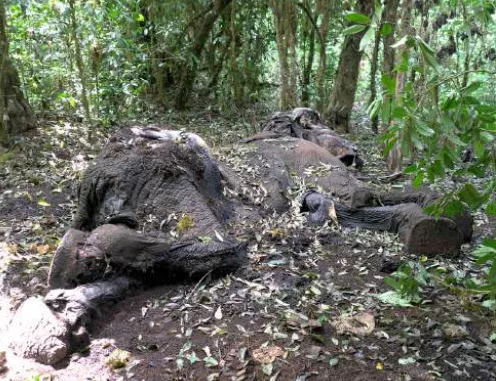
African savannah elephants are declining across much of their range and remain endangered overall. However, some populations in southern Africa are increasing where legal frameworks give local communities a direct stake in managing the land and wildlife they share. These gains took decades and were reinforced by anti-trafficking work, judicial reform, and efforts to reduce corruption. In contrast, the Congo Basin, home to forest elephants, great apes, bonobos, and okapis, is under growing pressure from agricultural expansion, logging, mining, roads, and other infrastructure.
The report cautions that encouraging recoveries must accelerate action rather than induce complacency. Conservation interventions remain essential, but they cannot reverse biodiversity loss on their own while underlying economic systems continue to destroy habitats and intensify climate change. Biodiversity underpins Africa's economies and societies, providing food, water, clean air, medicine, and resilience to climate shocks. The financial system must stop financing harmful activities, recognize nature and climate as material risks, and help close the annual US$942 billion biodiversity finance gap.
Countries can accelerate these shifts by delivering the commitments already agreed under the Kunming-Montreal Global Biodiversity Framework and the Paris Agreement. With UN conferences on biodiversity and climate taking place in the coming months, governments have an opportunity to move decisively from ambition to implementation. Durrel Halleson, WWF Africa Head of Policy and Partnerships, said African countries must advance a coherent agenda that connects biodiversity, climate, land, and development priorities.
Key points
- The report highlights that recovery is possible when conservation is sustained and communities have a direct stake.
- The Living Planet Index shows a 73% decline globally in the average size of monitored wildlife populations over the 52-year period.
- The report cautions that encouraging recoveries must accelerate action rather than induce complacency.