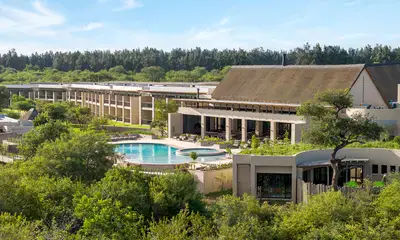
The Radisson Safari Hotel in Hoedspruit, South Africa, has become Africa's first verified net-zero hotel. The hotel, which opened in February 2024, has implemented various sustainable measures, including solar power, smart sensors, and waste reduction initiatives. According to Inge Huijbrechts, Radisson Hotel Group's chief sustainability and security officer, the hotel's net-zero status was achieved through a combination of renewable energy, energy efficiency, and carbon offsetting. The hotel's owner, Gerrit Jan van der Grijn, worked with Radisson Hotel Group to develop the property, which has become a model for sustainable tourism in the region.
The hotel's sustainable features include 602 solar panels that produce approximately 374,000kWh of electricity per year, which accounts for about 20% of its energy needs. The remaining energy is matched with renewable energy certificates. The hotel also uses smart sensors to optimize energy consumption, including a sensor on the patio door that turns off the air conditioning when the door is opened. Additionally, the hotel has implemented a waste reduction program, which includes compostable coffee pods and tea bags, plastic-free toothbrushes, and a refillable shampoo system.
The hotel's food and beverage operations have also been optimized for sustainability. The menus now carry carbon labels, which are calculated by a platform called Klimato. The chef works with the software to adjust the menu to ensure that most dishes have a low carbon footprint. According to Radisson Hotel Group, about three-quarters of restaurant dishes and 81% of buffet items now have a low carbon footprint. Food waste is also minimized, with 9.3 tonnes of waste collected since July and sent to Egg Brothers, which supplies the hotel's eggs and takes back its wet waste.
The hotel's wastewater treatment plant is also a notable feature. The plant uses natural filtration systems, including three ponds, to treat grey and black water. The treated water is then used to irrigate gardens planted with indigenous species. The hotel's electric golf carts and garden tools also contribute to its sustainable operations. According to Sandra Kneubuhler, Radisson Hotel Group's managing director for Africa, the hotel's sustainability features are designed to be seamless and invisible to guests.
Radisson Hotel Group has committed to achieving net-zero status across its 1,600 hotels by 2050. The group started with two pilot hotels in 2025 and aims to have 100 net-zero hotels by 2030. According to Tim Cordon, Radisson Hotel Group's chief operating officer, the group's net-zero hotels have earned up to four percentage points more in revenue per available room. The group claims that its sustainable operations not only benefit the environment but also contribute to its bottom line.
The hotel's sustainable operations are also driven by guest demand. According to a Booking.com survey, 84% of travelers consider sustainable travel important. The survey found that corporate travelers are driving the demand for sustainable accommodations, with listed companies having carbon targets that extend to travel and conference budgets. The hotel's net-zero status is seen as a competitive advantage in the market.
The Radisson Safari Hotel in Hoedspruit is seen as a model for sustainable tourism in Africa. The hotel's owner, Gerrit Jan van der Grijn, worked with Radisson Hotel Group to develop the property, which has become a showcase for sustainable operations. According to Huijbrechts, the hotel's net-zero status is a result of a collaborative effort between the hotel's staff, management, and partners.
Key points
- Radisson Hotel Group aims to have 100 net-zero hotels by 2030.
- The hotel's sustainable features include solar power, smart sensors, and waste reduction initiatives.
- The hotel's net-zero status was achieved through a combination of renewable energy, energy efficiency, and carbon offsetting.
Reporting sources
- Africa’s first net-zero hotel · Mail & Guardian