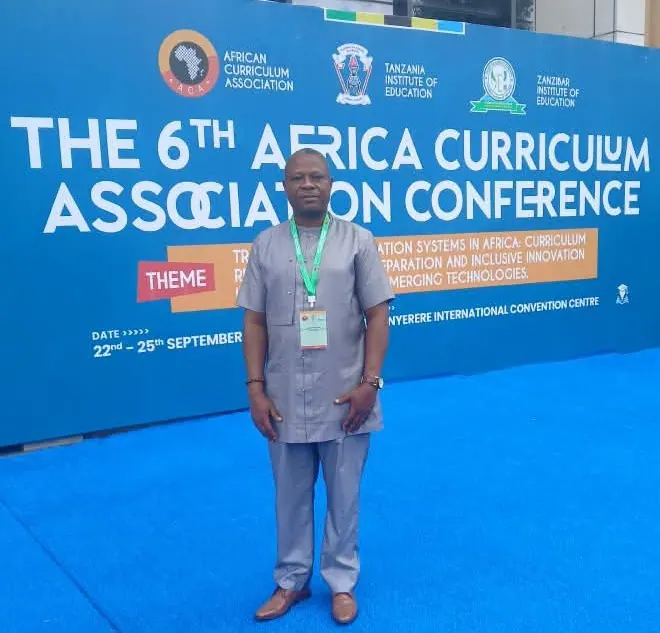
A Ghanaian curriculum development expert, Thomas Osei-Kumah, has emphasized the need for a fundamental transformation of African education systems. He made this call at the 6th Annual Conference of the African Curriculum Association held in Tanzania. The conference had the theme "Transforming Education Systems in Africa." Mr. Osei-Kumah, from the National Council for Curriculum and Assessment (NaCCA) in Ghana, presented a paper on "Policy and Practice Consistency in Curriculum: Lessons from Africa."
Mr. Osei-Kumah argued that African countries must move beyond incorporating elements of indigenous knowledge into school curricula. Instead, they should develop endogenous education systems that connect scientific knowledge with Africa's indigenous knowledge, local expertise, and natural resources. He noted that many African formal education systems are influenced by external models that do not respond adequately to local socio-economic realities. Africa is endowed with rich cultural heritage, diverse natural resources, and generations of indigenous expertise.
The expert identified a continuing gap between curriculum policy and classroom practice in several African countries. He drew on a qualitative analysis of curriculum frameworks, policy documents, and scholarly literature from Ghana, Mali, Ethiopia, and Tanzania. These countries have made progress in incorporating indigenous knowledge, local languages, oral traditions, and community values into their curricula. However, Mr. Osei-Kumah highlighted assessment systems as an area requiring urgent transformation.
Many assessment practices in African education systems favor imported academic standards, Eurocentric forms of literacy, and rote memorization. This limits the extent to which indigenous knowledge and African ways of knowing can influence learning outcomes. Mr. Osei-Kumah called for a shift from "symbolic inclusion" to systemic transformation. African epistemologies and indigenous knowledge should be reflected meaningfully in teaching, learning, and national assessment systems.
The presentation attracted strong interest and applause from conference participants. It reinforced the need for African countries to rethink the purpose and orientation of education in the context of the continent's development aspirations. Mr. Osei-Kumah's central message was that Africa's educational transformation must enable Africans to create solutions, generate wealth, and build sustainable prosperity from within.
The conference brought together curriculum scholars, education policymakers, practitioners, and experts from across Africa and beyond. They deliberated on strategies for transforming education systems on the continent. The event provided a platform for experts to share knowledge and experiences in education development. Participants discussed ways to address the challenges facing African education systems.
The call for transformation of African education systems highlights the need for a new approach to education development. This approach should prioritize the use of indigenous knowledge and natural resources to drive sustainable development and wealth creation. The African Curriculum Association's conference provided a timely platform for experts to discuss this critical issue.
Key points
- Thomas Osei-Kumah calls for a fundamental transformation of African education systems.
- African education systems should harness indigenous knowledge and natural resources for sustainable development and wealth creation.
- There is a need for a shift from "symbolic inclusion" to systemic transformation in African education systems.