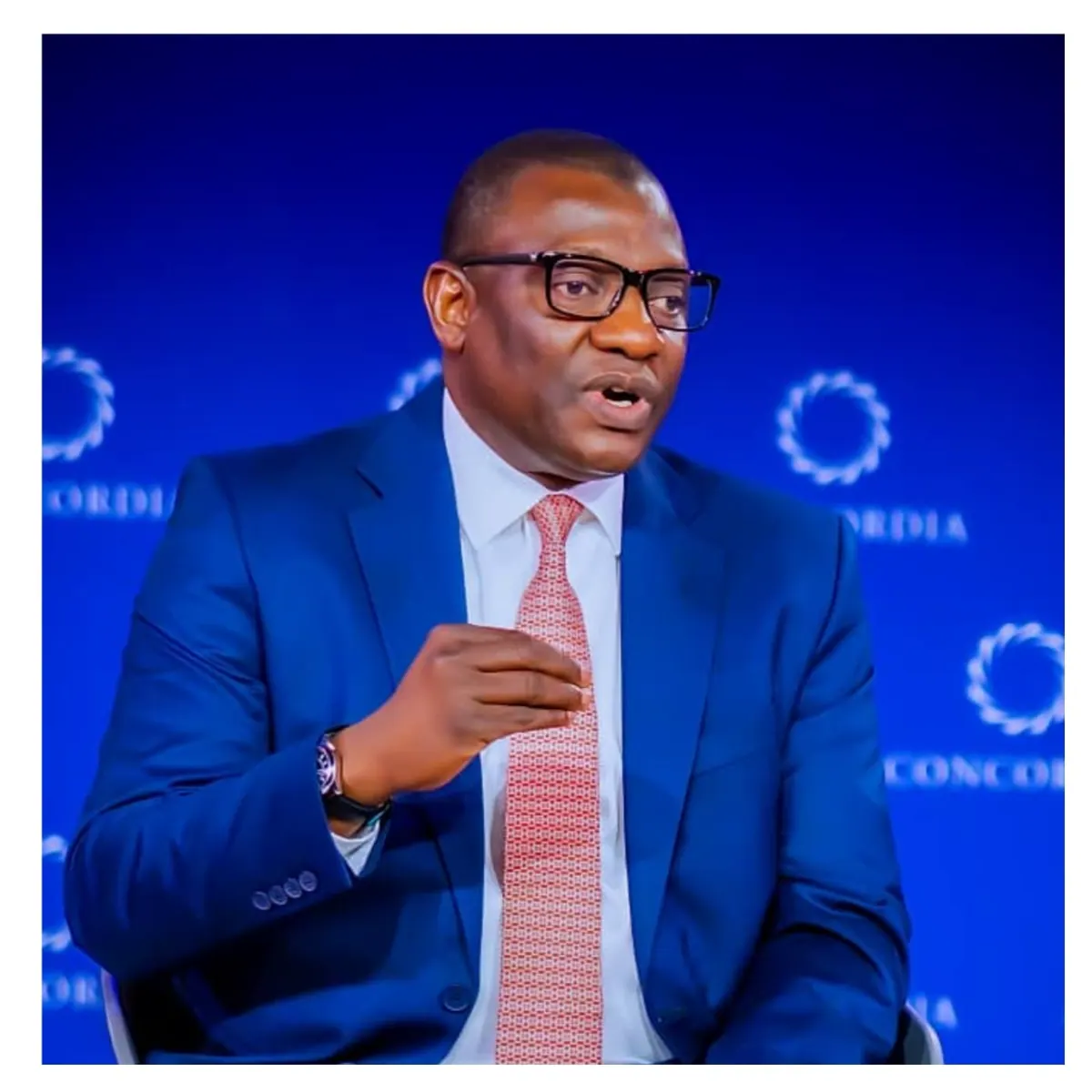
The Chief Executive Officer of World Energy Council Nigeria, Mr. Bala Wunti, has warned that Africa must not repeat with lithium, cobalt, and rare earth elements the costly economic model under which the continent exported crude oil and imported refined petroleum products. Wunti emphasized that Africa must move beyond serving as a source of raw materials and position itself as a competitive processing and manufacturing partner within the emerging global critical minerals economy. This warning was made during the 2026 Concordia Annual Summit in New York.
The summit, held from September 20 to 23 at the Sheraton New York Times Square alongside the United Nations General Assembly, brings together heads of state, senior government officials, and business leaders from more than 100 countries. Wunti participated in a panel discussion titled, “Rare Currency: Critical Minerals in a Shifting Global Economy,” alongside other industry experts. The session examined the increasing dependence of the United States on imported critical minerals, China’s dominance of global processing capacity, and the implications for defence, electricity, grid transmission, technology, and industrial competitiveness.
Wunti, who has more than three decades of experience in developing and financing large-scale energy systems, previously served as Chief Upstream Investment Officer at the Nigerian National Petroleum Company Limited. During the panel discussion, he stressed that the global economy was moving from an era dominated by hydrocarbons to one in which strategic minerals would shape industrial development and international power. Wunti linked energy security directly to mineral security, emphasizing that the next global industrial order would be defined by control of critical minerals.
Wunti cautioned African governments against allowing the continent’s critical minerals to be exported permanently in their raw form, describing this as “colonial economics.” He emphasized that Africa’s opportunity lies in building processing capacity, attracting investment, and creating employment through local value addition. According to Wunti, Africa must not remain merely a source of raw materials but become a processing partner in the emerging global critical minerals economy.
Responding to questions about why Nigeria had not fully developed its 44 identified critical minerals, Wunti identified the central problem as the difference between mineral potential and an investable project. He listed six requirements for attracting capital into the sector, including reliable geological data, clearly defined projects, enabling infrastructure, predictable regulation, credible developers, and viable routes to market. Wunti also highlighted the Nigerian Solid Minerals Company as the country’s flagship investment platform, established to transform mineral resources into commercially viable projects.
Wunti welcomed recent measures introduced by the United States, including Executive Order 14241, development finance initiatives, export controls, and bilateral mineral agreements. He cited the $110 per kilogram price floor for neodymium and praseodymium products under the MP Materials agreement as an example of government intervention capable of giving investors greater commercial certainty. However, Wunti emphasized that African governments must respond to such international developments with sound policies and commercial discipline to attract private capital.
Wunti concluded that governments could improve the bankability of mineral projects but could not permanently transform economically unviable ventures into profitable investments. He listed JORC compliant geological data, commercially viable prices, stable and competitive fiscal systems, and credible buyers as the four essential requirements for attracting investment. Ultimately, Wunti emphasized that private capital must do the heavy lifting, but governments must make projects investable by addressing risks that investors cannot solve independently.
Key points
- Africa must not repeat the costly economic model of exporting raw materials and importing refined products with lithium, cobalt, and rare earth elements.
- The continent must move beyond serving as a source of raw materials and position itself as a competitive processing and manufacturing partner within the emerging global critical minerals economy.
- African governments must respond to international developments with sound policies and commercial discipline to attract private capital.