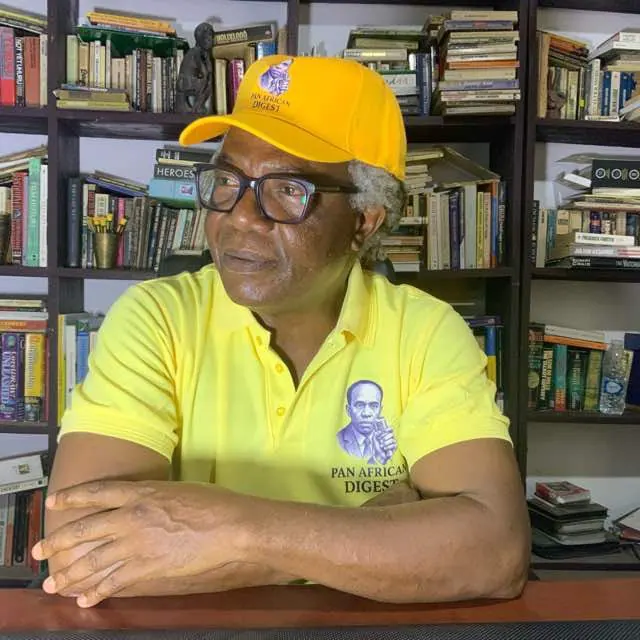
Renowned author Femi Akomolafe has written an article titled "Africa Must Decolonize Its Mind," calling on Africans to re-examine their colonial past and its ongoing impact on their minds and cultures. Akomolafe argues that despite gaining independence, Africa has not truly become free, as colonialism's deepest conquest was not the land, but the imagination. He asserts that Africans have been trained to see themselves through the eyes of their colonizers, measuring their worth by European standards.
Akomolafe cites examples of how colonialism has influenced Africa's language, culture, and history, such as the use of European names for African landmarks and the description of slave dungeons as "castles." He argues that this sanitized language is not neutral and perpetuates colonialism's legacy. Akomolafe emphasizes that decolonization is not about rejecting foreign influences, but about rejecting foreignness as the measure of worth. He draws inspiration from Ngũgĩ wa Thiong'o's book "Decolonizing the Mind," which advocates for a similar approach.
The author notes that many Africans have adopted European customs and languages, often at the expense of their own traditions. For instance, African weddings are often considered incomplete without European-style white gowns and veils. Akomolafe argues that this perpetuates a colonial psychology, where Africans prioritize European approval over their own cultural heritage. He emphasizes that confidence borrows, but insecurity imitates, and that Africa needs to recover its languages, names, histories, and philosophies.
Akomolafe criticizes the education system for perpetuating colonialism's legacy, with many Africans able to name European football clubs but not their own historical kingdoms. He argues that this is not education, but brainwashing, and that it has resulted in a civilizational rupture. Akomolafe asserts that decolonization must reach the classroom, pulpit, newsroom, and other areas of African life, and that Africans must start treating Europe as one civilization among many.
The author emphasizes that decolonization is not a call to hate Europe or other foreign cultures, but rather to stop treating them as the tribunal before which Africans must continually present their credentials. Akomolafe argues that Africans need to recover their confidence and self-worth, and that this can be achieved by embracing their own languages, cultures, and histories. He draws inspiration from examples of other countries, such as Japan and India, which have successfully borrowed from foreign cultures while preserving their own.
Akomolafe notes that the process of decolonization will require Africans to subject their own traditions to honest scrutiny, but emphasizes that this judgment must be theirs to make. He argues that Africans cannot build a civilization while living intellectually from the pantry of their colonizers, and that they must stand upright on their own terms. Akomolafe's article has sparked a necessary conversation about the ongoing impact of colonialism on African cultures and minds.
Ultimately, Akomolafe's call for Africa to decolonize its mind is a call for sovereignty and self-determination. He argues that Africans must take control of their own narrative, embracing their languages, cultures, and histories, and that this is the only way to achieve true freedom and confidence. As Akomolafe notes, "a people cannot be sovereign while requiring the former master to certify who they are."
Key points
- Africa must decolonize its mind and shed its colonial legacy to achieve true freedom and confidence.
- Colonialism's deepest conquest was not the land, but the imagination, and Africans have been trained to see themselves through European eyes.
- Decolonization is not about rejecting foreign influences, but about rejecting foreignness as the measure of worth.