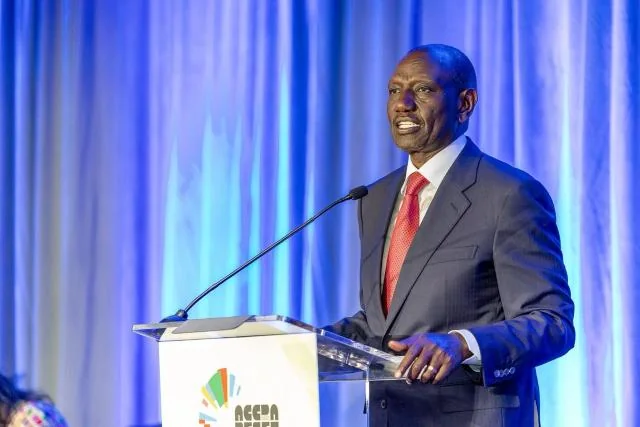
President William Ruto addressed the United Nations General Assembly on September 23, 2026, stating that Africa has incurred significant financial losses due to subjective credit ratings. He cited a UNDP estimate that puts the loss at $75 billion, equivalent to approximately Sh9.71 trillion. This loss is attributed to higher interest charges and missed lending opportunities. Ruto emphasized that developing countries face higher borrowing costs than developed economies, making it challenging to finance development projects.
Ruto argued that the current system of sovereign credit ratings is unfair and raises questions about the assessment of risk for developing countries. He stated that risk must be measured fairly and that lenders should not unfairly increase the cost of capital. The President emphasized that a fair global economy cannot be achieved if nations with the greatest development needs face the highest cost of development finance. He called for a system that accounts for risk without allowing prejudice to influence lending decisions.
The President pointed out that developing countries have recently borrowed at rates two to four times higher on average than developed nations. This has significant consequences for the ability of developing countries to carry out major infrastructure projects. Ruto cited road and electricity projects as examples of investments that should not face higher costs simply because of their location in African countries. He emphasized that a commercially viable project should not lose its viability due to its location.
Ruto's statement highlights the impact of sovereign credit ratings on the interest rates paid by countries and the volume of finance available to them. He emphasized that the debate over access to international finance should consider the terms under which countries receive loans, including interest rates, repayment periods, and risk assessments. The President called for a fairer risk assessment, which would enable developing countries to access finance at a lower cost.
The UNDP research cited by Ruto indicates that African countries could save $75 billion if credit ratings became less subjective. This could be achieved through lower borrowing costs and increased access to lending. Ruto's statement emphasizes the need for a more equitable system of credit ratings, which would enable developing countries to access finance at a lower cost and accelerate their development.
Ruto's address to the UN General Assembly highlights the challenges faced by developing countries in accessing international finance. He emphasized that the current system of sovereign credit ratings perpetuates inequality and that a more equitable system is needed. The President's statement has significant implications for the global economy and the ability of developing countries to achieve sustainable development.
The President's call for a fairer risk assessment and a more equitable system of credit ratings has significant implications for Africa's economic development. The loss of Sh9.71 trillion due to unfair credit ratings is a significant blow to the continent's development prospects. Ruto's statement emphasizes the need for a more equitable global economy, where developing countries have access to finance at a lower cost.
Key points
- Africa has lost approximately Sh9.71 trillion due to unfair sovereign credit ratings.
- President Ruto urges fairer risk assessment and a more equitable system of credit ratings.
- The UNDP estimates that African countries could save $75 billion if credit ratings became less subjective.