The African continent is grappling with a severe shortage of midwives, with an estimated 435,000 additional professionals needed across Eastern and Southern Africa, North Africa, and the Arab region. This shortage has significant implications for maternal and newborn healthcare, with evidence suggesting that expanding access to midwife-delivered care could prevent 67% of maternal deaths, 64% of newborn deaths, and 65% of stillbirths by 2035.
According to Lydia Zigomo, UNFPA Regional Director for East and Southern Africa, Eastern and Southern Africa face an estimated shortage of 307,000 midwives, while North Africa and the Arab region need another 128,000. The shortage is particularly pronounced in rural communities, fragile settings, and areas where women struggle to access qualified professionals.
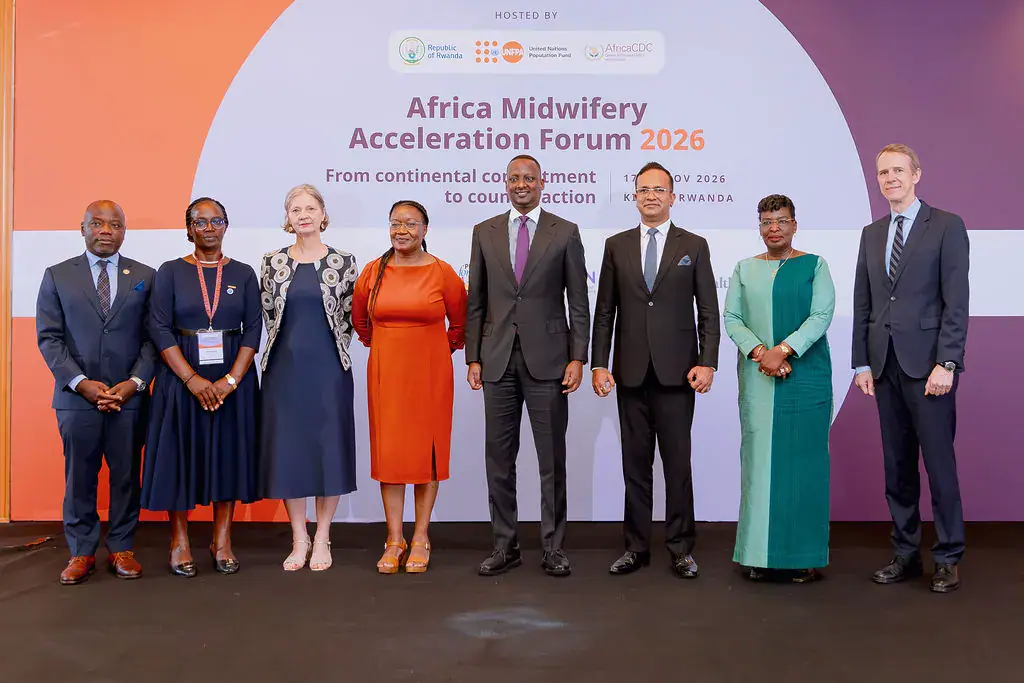
The Africa Midwifery Acceleration Forum, currently underway in Kigali, aims to address this shortage by bringing together policymakers, health professionals, midwifery leaders, and development partners from across the continent. The forum seeks to validate the Continental Midwifery Acceleration Roadmap for Africa 2026–2035, providing a framework for countries to strengthen midwifery education, regulation, leadership, financing, and deployment.
Investment in midwifery has been shown to have significant economic returns, with an estimated US$241 million investment in Zambia potentially generating US$2.3 billion in economic benefits. Moreover, midwives can deliver approximately 90% of essential sexual, reproductive, maternal, newborn, and adolescent health interventions, making them central to preventing deaths and improving access to healthcare.
Rwanda, which is hosting the continental gathering, offers an example of how expanding midwifery education and access to skilled birth attendance can change maternal health outcomes. The country has increased its midwifery training capacity from one institution to 11 and has seen a significant rise in the proportion of women giving birth in health facilities with assistance from skilled health professionals, from one in four 25 years ago to 98% today.
Despite progress, challenges persist, with neonatal deaths accounting for nearly half of all deaths among children under five in Rwanda. The country has launched a 4×4 Health Workforce Strategy, which seeks to quadruple the country’s health workforce, including a significant expansion of midwifery training.
The success of efforts to address the midwifery shortage will depend on whether governments translate commitments into employment opportunities, adequate budgets, and better working conditions for midwives. As Jean Kaseya, Director-General of the Africa Centers for Disease Control and Prevention, noted, “A trained midwife without employment cannot save a mother. And an employed midwife without essential supplies cannot deliver the quality of care that every woman deserves.”
Key points
- Africa needs an estimated 435,000 additional midwives to address maternal and newborn healthcare crisis
- Expanding access to midwife-delivered care could prevent 67% of maternal deaths, 64% of newborn deaths, and 65% of stillbirths by 2035
- Investment in midwifery has significant economic returns, with potential benefits including a US$2.3 billion economic benefit in Zambia.