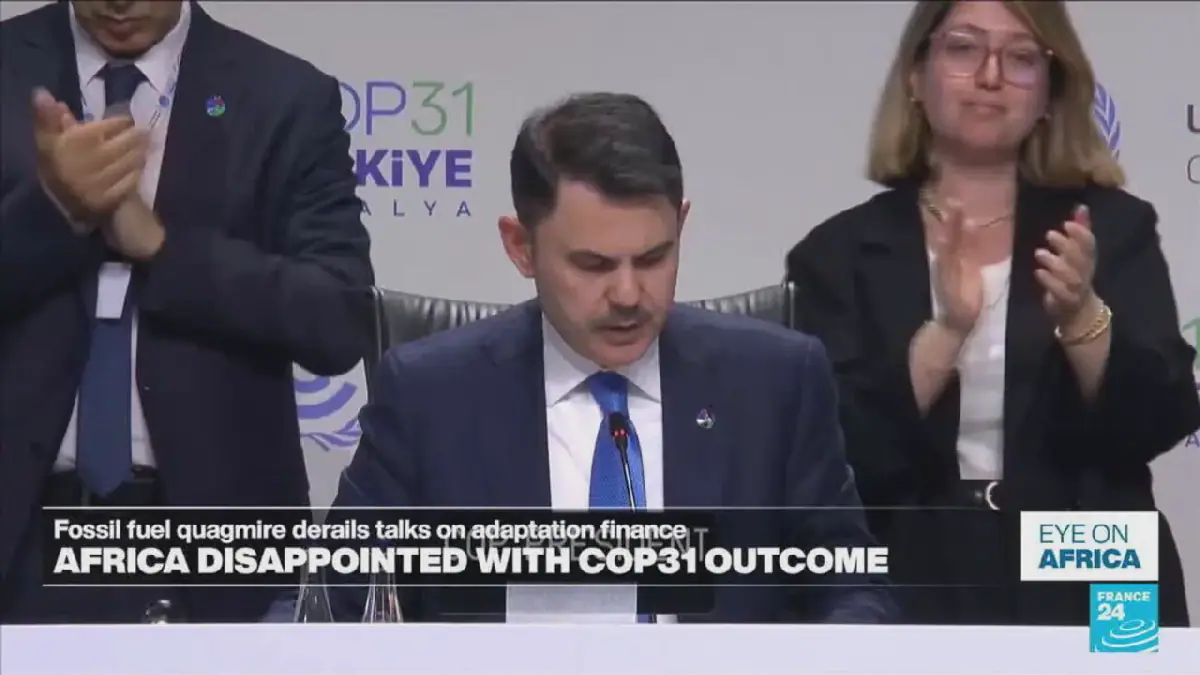
The recently concluded COP31 climate summit in Turkey has been met with widespread disappointment from African nations. The summit failed to reach a significant agreement, exposing deep divisions over fossil fuels and climate finance. Many had high hopes for the summit, but the outcome has left several countries feeling let down. African representatives had been vocal about the need for more ambitious climate action and substantial financial support to help mitigate the effects of climate change.
The COP31 summit was closely watched by many African countries, which are disproportionately affected by climate change. Rising temperatures, changing precipitation patterns, and increased frequency of extreme weather events are having a significant impact on the continent's ecosystems, economies, and human populations. African nations had been pushing for more substantial commitments from developed countries to reduce greenhouse gas emissions and provide financial support to help them adapt to the changing climate.
One of the key areas of contention at COP31 was the issue of fossil fuels. Many African countries are rich in fossil fuel reserves, and some are reluctant to give up these resources due to their economic importance. However, this has put them at odds with other countries that are pushing for a more rapid transition to renewable energy sources. The summit's failure to reach an agreement on this issue has been seen as a major setback.
Climate finance was another major point of contention at COP31. African countries need significant financial support to help them adapt to the impacts of climate change and transition to more sustainable development pathways. However, developed countries have been slow to provide the necessary funding, leading to frustration and disappointment among African nations.
The outcome of COP31 has been described as a "worst-ever" COP summit by some observers. The failure to reach a significant agreement has left many feeling disillusioned and concerned about the prospects for global climate action. African nations are now calling for more ambitious action and greater commitment from developed countries to address the climate crisis.
In response to the disappointing outcome of COP31, African nations are likely to continue pushing for more substantial climate action and financial support. They are also likely to strengthen their partnerships with other countries and international organizations to advance their climate goals. The Kenyan government, for example, has been actively engaging with other countries to promote climate action and sustainable development.
The disappointment expressed by African nations over the COP31 outcome highlights the need for greater urgency and ambition in global climate action. The continent's leaders are calling for more substantial commitments from developed countries to address the climate crisis and provide the necessary financial support to help them adapt to its impacts.
Key points
- COP31 failed to reach an agreement on fossil fuels and climate finance.
Reporting sources
- Africa disappointed with COP31 outcome · France 24 Africa