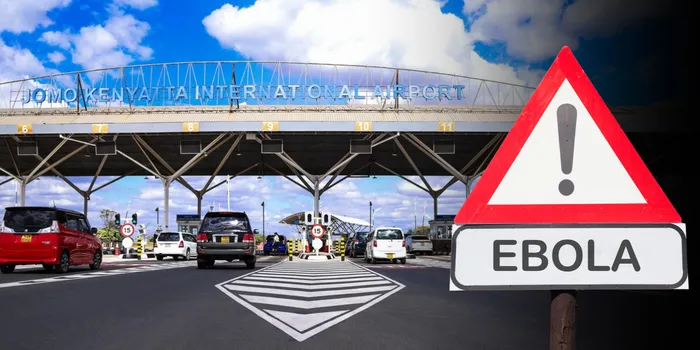
The Africa Centres for Disease Control and Prevention reported that a 40-year-old Kenyan businessman died on October 5 after a delayed Ebola diagnosis. He had been ill for a month, travelling across three countries before his infection was confirmed. The patient had been living and working in the Democratic Republic of Congo when he fell ill in September with the Bundibugyo strain of Ebola.
In the DRC, early symptoms were missed, and he received varied diagnoses at several health facilities. Clinicians initially assessed the patient, noting fever and rash, and suspected a staphylococcal infection, starting treatment. However, his condition did not improve, prompting him to visit multiple clinics. The patient was eventually treated for nearly a month in the DRC before deciding to travel.
The patient's journey took him from Buta to Kisangani, then he flew domestically to Beni, a known Ebola hotspot. He then crossed into Uganda by road, despite official border closures. In Uganda, he took a public bus to Kampala, proceeded to Entebbe, and boarded a commercial Jambojet flight to Nairobi on October 3. Remarkably, he passed through airport thermal scanners without detection.
Kenyan health officials attributed the patient's undetected passage through airport scanners to medication taken during his prolonged illness, which temporarily masked symptoms. Upon arrival in Nairobi, he was driven to Nairobi Hospital, where clinicians observed advanced signs such as skin bleeding. This led to an Ebola test, which returned positive, confirming the diagnosis.
The case has prompted scrutiny of disease surveillance protocols, given the patient's cross-border movement before his infection was confirmed. The Africa CDC detailed the patient's movements, highlighting potential weaknesses in the current disease surveillance systems. The incident raises concerns about the ability to detect and respond to infectious disease outbreaks in a timely manner.
The patient received his diagnosis and treatment in Nairobi; however, he succumbed to the disease on October 5. The Africa CDC and other health organizations are likely to review and revise their disease surveillance protocols to prevent similar incidents in the future. This incident emphasizes the need for enhanced coordination and communication among health authorities across borders.
The Africa CDC's investigation into the patient's journey and the circumstances surrounding his diagnosis is ongoing. Health officials are working to identify individuals who may have come into contact with the patient during his travels.
Key points
- A 40-year-old Kenyan man travelled across DRC, Uganda, and Kenya while infected with Ebola, evading detection until hospital admission in Nairobi.
- The patient's infection was initially misdiagnosed in the DRC, and he received varied treatments at multiple health facilities before travelling.
- The incident has prompted scrutiny of disease surveillance protocols and raised concerns about the ability to detect and respond to infectious disease outbreaks.