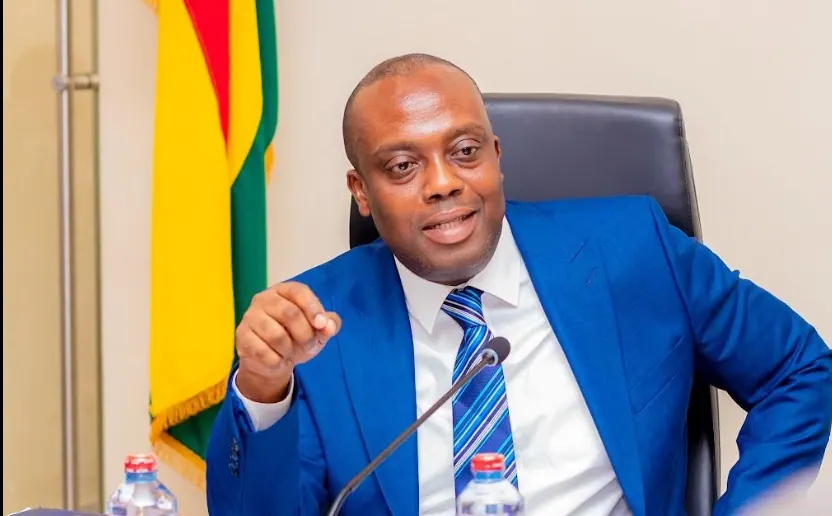
Deputy Finance Minister Thomas Nyarko Ampem has cautioned that Africa cannot depend solely on government budgets to finance its climate ambitions. He made this statement at the opening of the Green Climate Fund's Regional Dialogue for West and Central Africa in Accra, Ghana. Mr. Ampem emphasized that governments face growing pressure on their public finances, with multiple demands on their budgets, including education, healthcare, infrastructure, and social protection.
The Deputy Finance Minister highlighted the significant financial challenge posed by climate change, with Africa needing an estimated $2.7 trillion between 2020 and 2030 to implement its climate commitments, according to the African Development Bank. He stressed that public and concessional funds must be used strategically to reduce investment risks and attract private capital. This approach would enable governments to leverage limited public resources to unlock larger volumes of private investment.
Mr. Ampem emphasized that it is not feasible to fund every climate investment from the public purse. He stated that the national budget cannot be the only engine pulling the climate finance train. Instead, public funds should be used to de-risk investments and attract private capital. This strategic approach would help maximize the impact of limited public resources and mobilize the significant investments needed to address climate change.
The Green Climate Fund (GCF) has committed about $20 billion towards its $50 billion target for 2030, representing roughly 40 percent of the target. GCF Director for the Africa Region, Catherine Koffman, provided an update on the Fund's progress. She also noted that 40 percent of the GCF's commitments, amounting to $7.6 billion, have been allocated to the Africa region.
The GCF has committed about $2.9 billion across 80 projects in West and Central Africa. This regional dialogue, being held in Accra, brings together governments, financial institutions, and private-sector partners from 25 countries. The meeting aims to discuss ways of scaling up access to climate finance, as the GCF begins its third replenishment process and works towards expanding its regional presence in Africa.
Ghana is actively engaged with the GCF, currently having 13 projects in its portfolio, with about $209 million in GCF financing and a further $5.7 million in approved readiness support. The four-day regional dialogue provides a platform for stakeholders to explore strategies for mobilizing climate finance and enhancing cooperation between governments, financial institutions, and the private sector.
The Deputy Finance Minister's warning and the GCF's update underscore the urgent need for innovative financing solutions to address climate change in Africa. The dialogue in Accra will focus on identifying opportunities for collaboration and knowledge sharing to support the effective implementation of climate projects in West and Central Africa.
Key points
- Africa needs an estimated $2.7 trillion between 2020 and 2030 to implement its climate commitments.
- The Green Climate Fund has committed about $20 billion towards its $50 billion target for 2030.
- Public funds must be used strategically to reduce investment risks and attract private capital to address climate change.