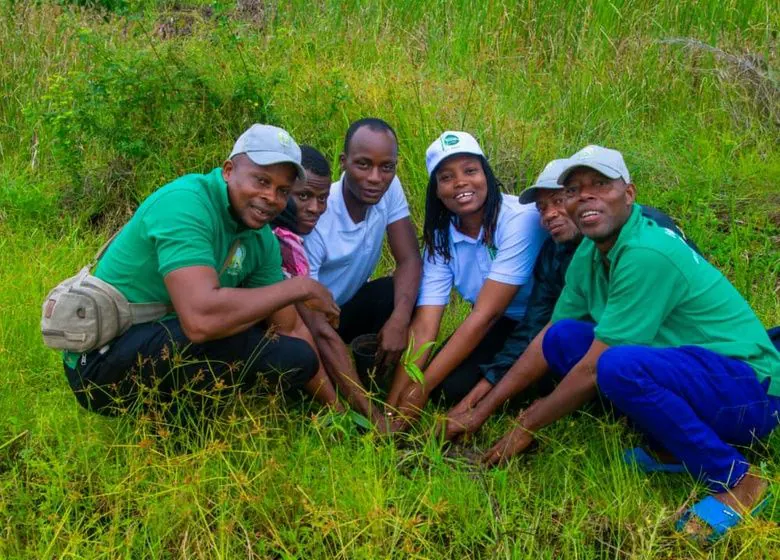
The second edition of Africa Bamboo 2026 took place in Cotonou, Benin, with the aim of promoting and valorizing bamboo on the African continent. The event was organized by Africa Bamboo, an organization dedicated to harnessing the potential of bamboo. Benin is the second-largest producer of bamboo in West Africa, thanks in part to the 450-hectare bamboo plantation operated by Bamboo Mass. The event seeks to transform this potential into a structured industry, from producing high-quality plants to manufacturing finished products.
During the event, 25 nurserymen were trained in different methods of bamboo propagation, including cuttings, rhizomes, and air layering. Additionally, 15 artisans were trained in the technique of laminated veneer, with the goal of evolving local know-how towards more industrial production. The president of the organizing committee, Kadirath Ahlin, emphasized the need to move towards industrialization and leave behind traditional methods. She noted that locally produced furniture still "smells like bamboo" before being identified as such, indicating that the transformation process is still too artisanal.
A new feature of this edition was a project competition that allowed a dozen student, researcher, and project leaders to present their bamboo-related initiatives. Six of them were selected for a final pitch. Notable proposals included a project for ecological charcoal made from bamboo. The winning project, "Lahmaq Bambou," is a digital platform that aims to connect all actors in the industry, including nurserymen, producers, and transformers, to facilitate the exchange of seeds, plants, or finished products.
The event also featured an exhibition showcasing the diversity of possible uses for bamboo, including soaps, cups, straws, pipettes, cutlery, earrings, rings, furniture, and ornamental plants. This display highlighted the largely untapped potential of bamboo in Benin. According to Kadirath Ahlin, bamboo can be a concrete response to forest degradation, as it matures in three to five years and regrows after harvesting.
The president of the organizing committee emphasized that Africa Bamboo defends a long-term vision of using bamboo as a tool for rapid reforestation of degraded areas. Unlike traditional forest essences, bamboo can be harvested in a short period and regrows quickly. This property makes it an attractive option for reboisement efforts.
One of the achievements of the first edition of the event was the inclusion of bamboo in the National Action Plan for Biodiversity, confirmed by the country's biodiversity focal point. This recognition is a significant step towards harnessing the potential of bamboo in Benin. The event brought together artisans, foresters, nurserymen, and others, demonstrating the interest in bamboo and its potential applications.
The winner of the project competition, Irène Tèvi, welcomed the initiative, stating that it is essential to encourage such events. She noted that the event has brought together various stakeholders and highlighted the interest in bamboo. The second edition of Africa Bamboo 2026 has demonstrated the potential of bamboo in Benin and its possible applications, from production to transformation.
Key points
- The event aims to transform Benin's bamboo potential into a structured industry.
- The project competition highlighted innovative uses for bamboo, including ecological charcoal and a digital platform for industry stakeholders.
- The event promoted the use of bamboo as a tool for rapid reforestation of degraded areas.