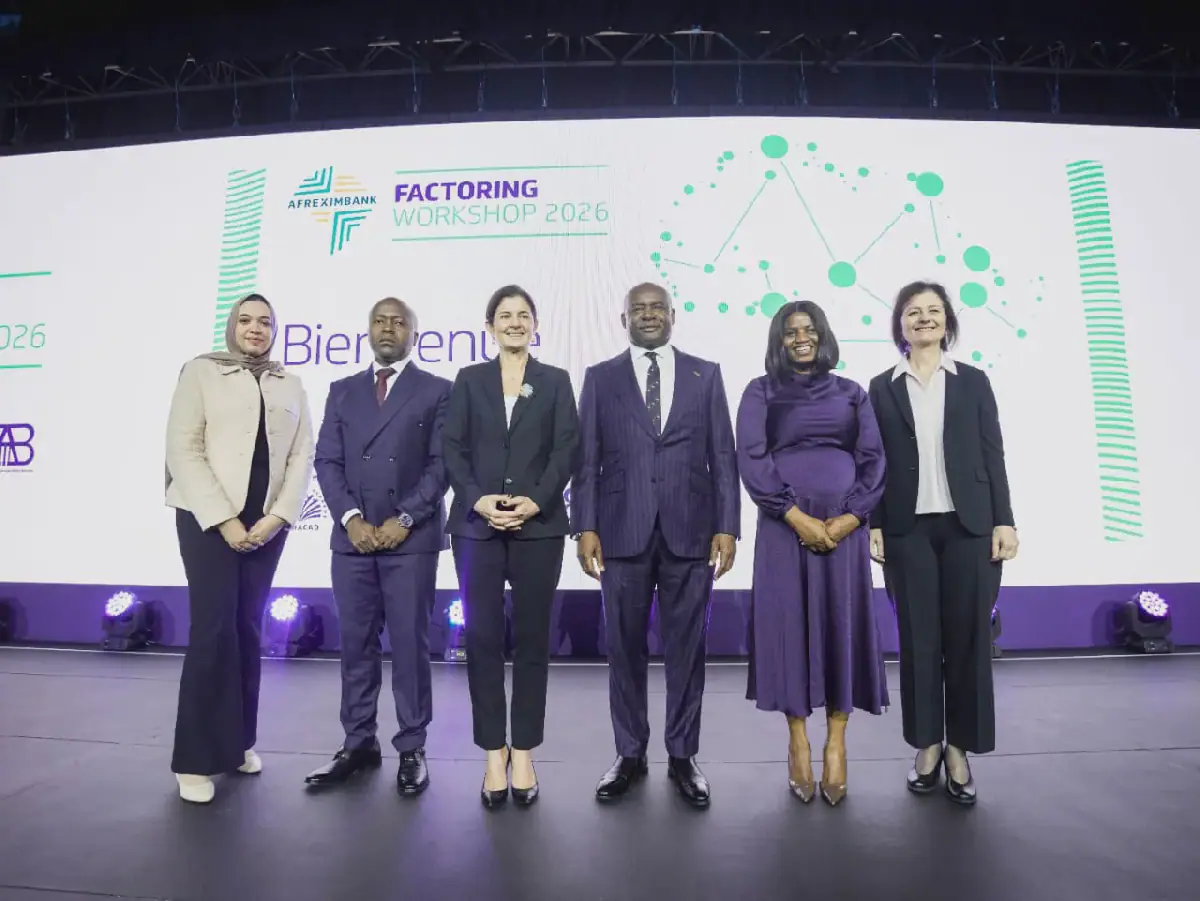
The African Export-Import Bank (Afreximbank) is pushing for increased adoption of factoring and supply chain finance to address the significant financing gap faced by small and medium-sized enterprises (SMEs) in Africa. According to the bank, the financing gap for SMEs on the continent is estimated to be around $300 billion annually. This issue was highlighted during Afreximbank's annual factoring workshop in Gaborone, Botswana, which focused on "Unlocking the Working Capital of Growing African Enterprises through Factoring and Supply Chain Finance."
Representing Kanayo Awani, Executive Vice President of Intra-African Trade and Export Development, Eric Intong Monchu, Managing Director of Client Relations at Afreximbank and President of FCI's Africa section, emphasized the need for diversified financial instruments accessible to enterprises, particularly those struggling to obtain traditional bank credit. Monchu noted that factoring provides a concrete solution to the cash flow needs of SMEs, enabling them to quickly mobilize funds corresponding to their pending invoices rather than immobilizing resources in commercial receivables.
The use of factoring, combined with supply chain finance, can also help to facilitate trade, strengthen relationships between suppliers and buyers, and promote the integration of enterprises into national, regional, and international trade circuits. According to Monchu, "The $300 billion SME financing gap on the continent cannot be filled by traditional bank credit alone. We must diversify financing solutions, strengthen the legal and regulatory framework, and develop the institutional capacity needed to make receivables-based financing more accessible to enterprises across Africa."
Global factoring volumes have shown significant growth, increasing from €3.1 trillion in 2021 to €3.9 trillion in 2025. In Africa, factoring volumes have risen from €32 billion to €51 billion over the same period. The African factoring market, valued at €21.6 billion in 2017, reached €51.4 billion in 2025, more than doubling in eight years. Currently, nearly 200 specialized companies operate on the continent, demonstrating the gradual growth of this sector.
Betül Kurtulus, Secretary-General of FCI, emphasized the importance of supporting this growth by strengthening the capacity of financial institutions and promoting cross-border transactions. She noted that as African enterprises enter new markets, they need financial institutions to accompany them beyond their national borders. FCI's international network can make a difference in this regard, enabling financing to transcend borders just like trade.
Afreximbank aims to increase the factoring volume in Africa to at least €240 billion, equivalent to around 10% of the continent's GDP. Achieving this goal will require significant investments, improved securitization of legal frameworks, enhanced technical expertise, and closer cooperation among financial sector players. The bank plans to continue its partnership with FCI, its African section, Botswana's financial institutions, and other stakeholders to consolidate a more inclusive financing ecosystem.
The ultimate goal is to enable SMEs to access financial resources tailored to their needs, support regional supply chains, and stimulate intra-African trade, in line with the implementation of the African Continental Free Trade Area (AfCFTA). Through this initiative, Afreximbank seeks to make factoring an additional lever for financing African entrepreneurship, addressing one of the main obstacles to enterprise growth and economic transformation on the continent.
Key points
- The African Export-Import Bank estimates that the financing gap for SMEs in Africa is around $300 billion annually.
- Afreximbank aims to increase the factoring volume in Africa to at least €240 billion, equivalent to around 10% of the continent's GDP.
- The use of factoring and supply chain finance can help facilitate trade, strengthen relationships between suppliers and buyers, and promote the integration of enterprises into national, regional, and international trade circuits.