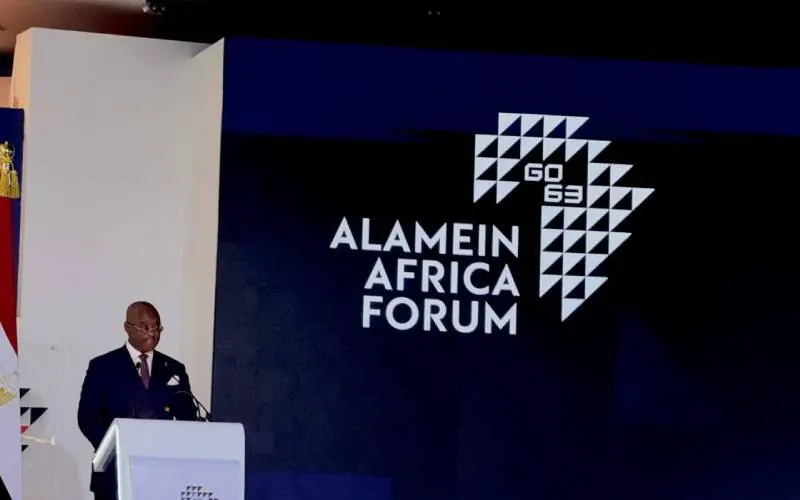
The head of Africa's main trade finance bank, Afreximbank President and Chairman George Elombi, has called for a reform of the global financial architecture. Speaking at the Alamein Africa Forum in New Alamein, Elombi stated that the rules used to judge African-owned institutions were designed for a different era and treat the continent as incapable. He emphasized that institutions differing from the post-1944 model are scored as weak.
Elombi's intervention comes amid a broader push by African leaders for reform of the global credit system. Kenyan President William Ruto, addressing the UN General Assembly in New York last month, said subjectivity in sovereign credit ratings has cost African countries approximately $75 billion. Ruto argued that developing nations borrow at rates two to four times higher than developed economies, stating that "capital must price risk, not prejudice."
According to Elombi, a methodology finalised in June by a major agency effectively told Afreximbank that the only route to a credit uplift was to add sovereign shareholders that are large, non-borrowing, and highly rated – a category that no African government meets. He stated that the message was clear: "hand over this institution to others outside the continent." Elombi noted that only two African development finance institutions, both with non-regional shareholders, are treated as multilateral institutions and highly rated.
Elombi drew a contrast between capital already paid in by African states and callable capital – a promise of funds that has never been drawn at major development banks in over 80 years. He noted that almost $300 million of fresh equity was paid into Afreximbank in 2025, with $226 million paid so far this year and a further $300 million expected. Elombi emphasized that a promise from those who are retreating and who may never be called upon is being given greater weight than the money of those who have already shown up.
The Afreximbank chief cited the bank's support for Ghana during its debt crisis, which was used against it, with critics arguing that the bank should be treated as a private lender rather than a multilateral institution and downgraded as a result. However, Elombi stated that the pressure on the institution is not a sign of weakness but proof of relevance. He noted that S&P returned to rate the bank this year for the first time in over a decade, assigning an investment-grade rating.
Elombi framed the issue as one of ownership rather than credit ratings, stating that "ownership is not a certificate; it is a set of choices that only you can make." He urged member states to keep capitalizing the bank, honour the preferred creditor status conferred by the treaty they ratified, and stand together in defending African institutions. Elombi highlighted the bank's rapid response to crises, including approving a $10 billion Gulf crisis facility within weeks of conflict disrupting shipping lanes and fuel markets.
Elombi concluded that Afreximbank is not an incomplete copy of the Bretton Woods institutions but an institution built from a different history, with a different ownership model and record. He emphasized that credit ratings should measure substance, not conformity. The Afreximbank chief's call for reform is a significant step towards addressing the challenges faced by African institutions in accessing global finance.
Key points
- - African leaders are pushing for reform of the global credit system. - The current rules used to judge African-owned institutions were designed for a different era. - Afreximbank has demonstrated its relevance and effectiveness in supporting African economies.