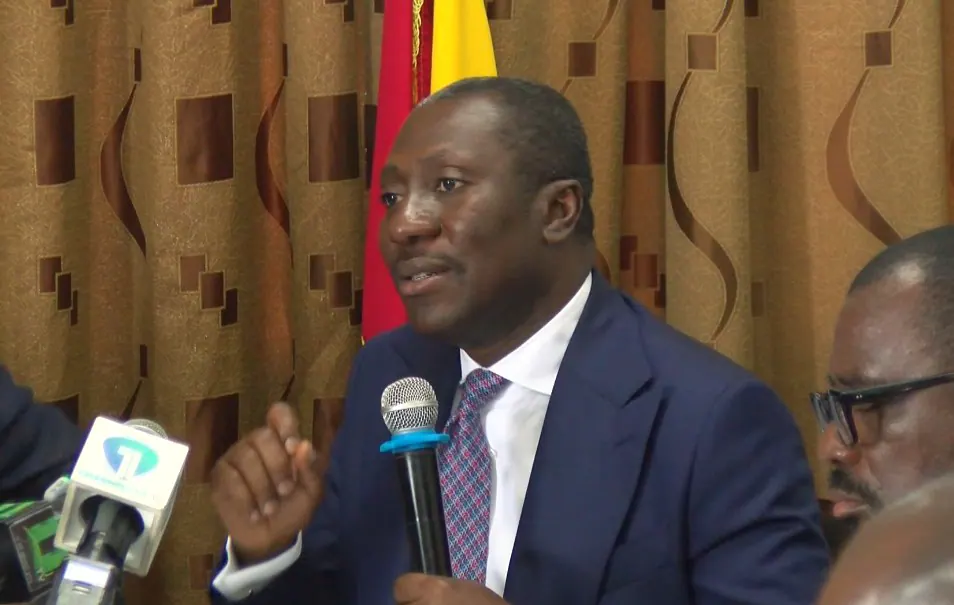
Ghana's Minority Leader Alexander Afenyo-Markin has raised concerns that illegal mining, also known as galamsey, poses a significant threat to the Atewa Forest, a crucial ecological reserve and watershed. The forest is the source of rivers that supply drinking water to millions of people in the Eastern and Greater Accra regions. Afenyo-Markin warned that if galamsey is not brought under control, Ghana risks losing one of its most ecologically important forest reserves.
Afenyo-Markin made these remarks during a meeting between the Minority Caucus and the Christian Council of Ghana on October 5, 2026. He cited a warning issued by organised labour during last year's May Day celebrations, which declared that galamsey activity had gotten out of hand. As a former board chairman of the Ghana Water Company Limited, Afenyo-Markin noted that reports from the utility show that treating water has become significantly more expensive due to contamination from illegal mining.
The Atewa Forest has been at the centre of a long-running national debate over its ecological value versus proposed bauxite mining in the reserve. The forest is recognised as a biodiversity hotspot and a major watershed that feeds rivers supplying water to parts of the Eastern and Greater Accra regions. These areas are home to a substantial share of Ghana's population, making the forest's preservation crucial for the country's water security.
In September 2026, the Forestry Commission arrested 12 people suspected of illegal mining in the Atewa Range Forest Reserve. Despite such enforcement actions, pressure on the reserve from illegal mining activity appears to persist. Afenyo-Markin cautioned that without care, Atewa Forest may not survive for future generations, emphasizing the need for urgent action to protect the reserve.
Afenyo-Markin also raised concerns about the structure of the Ghana Gold Board (GoldBod), the state body responsible for regulating and buying gold. He argued that GoldBod's current framework does not adequately distinguish between gold from legal operations and gold sourced from illegal mining, effectively encouraging galamsey. This gap in regulation allows illegally mined gold to enter the formal market without proper scrutiny.
The stakes for ordinary Ghanaians centre on water security and cost. If treatment plants in affected areas become unable to process contaminated water, supply disruptions and higher treatment costs could follow for households relying on rivers fed by Atewa. Afenyo-Markin's warning highlights the need for effective regulation and enforcement to prevent the destruction of the Atewa Forest and ensure the sustainability of Ghana's water resources.
The Minority Caucus's meeting with the Christian Council of Ghana also discussed other national issues, although the sources do not provide details on specific parliamentary motions or timelines for new legislative or enforcement actions. The warning from Afenyo-Markin underscores the importance of addressing the issue of galamsey and protecting the Atewa Forest for future generations.
Key points
- - Illegal mining threatens to destroy Atewa Forest, a vital watershed supplying drinking water to millions in Ghana. - The current regulatory framework of GoldBod does not adequately distinguish between gold from legal operations and gold sourced from illegal mining. - Effective regulation and enforcement are necessary to prevent the destruction of the Atewa Forest and ensure the sustainability of Ghana's water resources.