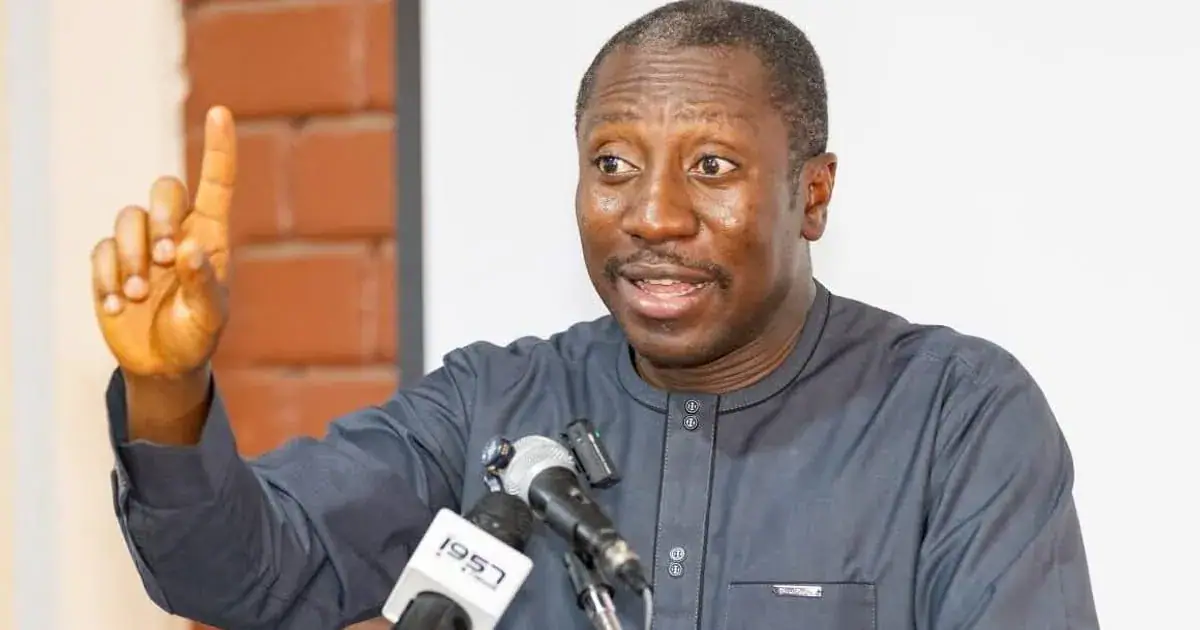
Minority Leader Alexander Afenyo-Markin has called on President John Dramani Mahama to grant a presidential pardon to Camilla Alhassan, a TikToker convicted and sentenced to one year in prison for comments made on social media. Afenyo-Markin made the appeal at the 30th Ghana Journalists Association (GJA) Media Awards in Accra on Saturday, 7 November 2026. He expressed concerns about the application of laws governing electronic communication and freedom of expression in Ghana.
Afenyo-Markin argued that the Minority's stance on Ghana's legal framework for regulating online communication is to ensure that disagreements, criticism, satire, or honest mistakes do not become the basis for criminal prosecution and imprisonment. He emphasized that the Minority does not defend irresponsible speech, lies, hate speech, incitement, or reckless publications that destroy reputations. The Minority Leader's comments reflect broader concerns about the use of criminal laws to regulate speech, particularly on digital platforms.
The conviction of Camilla Alhassan followed a TikTok video in which she made insulting and threatening remarks about President John Dramani Mahama and the First Lady, Lordina Mahama. This case has drawn attention to Section 76 of the Electronic Communications Act, 2008 (Act 775), and the application of Sections 207 and 208 of the Criminal Offences Act, 1960 (Act 29). These provisions have featured in debates over offensive conduct and the criminalisation of speech in Ghana.
Afenyo-Markin criticised the growing use of Section 208 of the Criminal Offences Act to prosecute citizens and journalists for what they say or publish. He noted that liberal advocates have warned that Section 208 has become a tool for suppressing free expression and dissent. The Minority Leader's caucus takes the view that Section 208 has no place in Ghana's democracy, as it is fundamentally at odds with the freedoms of speech and of the press that are constitutional guarantees.
The Minority Leader's appeal for a presidential pardon comes amid ongoing calls for a review of provisions of the Criminal Offences Act, particularly Sections 207 and 208. These sections have been used to prosecute citizens and journalists for speech-related offences. Afenyo-Markin's position adds to concerns about the use of criminal laws to regulate speech, particularly on digital platforms, and the need for a more nuanced approach to balancing free speech with social responsibility.
The case of Camilla Alhassan has sparked a national conversation about the limits of free speech and the application of laws governing electronic communication in Ghana. Afenyo-Markin's appeal to President Mahama to consider pardoning Camilla Alhassan reflects the Minority's commitment to protecting the rights of citizens to express themselves freely, while also ensuring that speech is not used to incite violence or harm others.
The outcome of Afenyo-Markin's appeal and the future of Camilla Alhassan's conviction remain uncertain. However, the debate sparked by her case is likely to continue, with implications for the development of Ghana's laws and policies governing free speech and electronic communication.
Key points
- Afenyo-Markin urges President Mahama to pardon Camilla Alhassan, citing concerns about the application of laws governing electronic communication and freedom of expression.