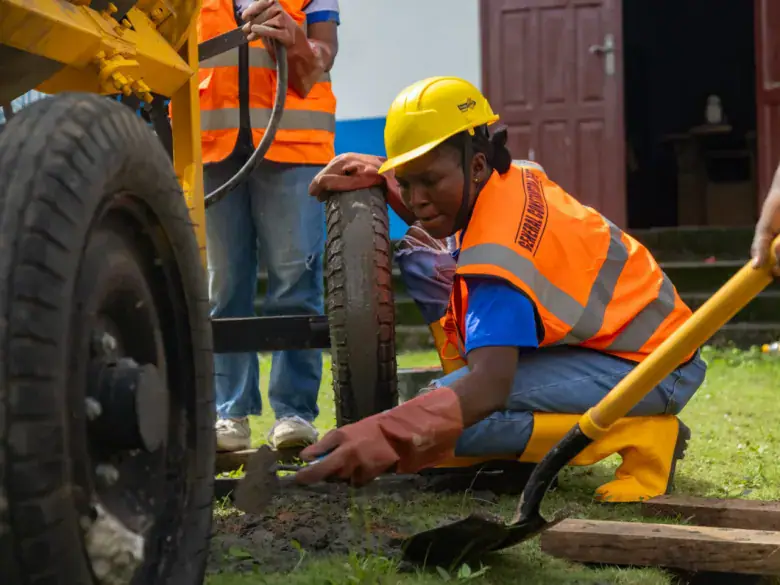
The European Institute for Cooperation and Development (IECD) Liberia is implementing the Strengthening Integration Through Vocational Education (STRIVE) Project, funded by the French Development Agency (AFD). This initiative aims to address gender inequalities and expand career opportunities for women and girls in traditionally male-dominated technical and vocational fields. The project seeks to challenge longstanding stereotypes that discourage women from pursuing careers in electricity, plumbing, automotive technology, masonry, woodwork, and renewable energy.
Despite the employment and entrepreneurship opportunities offered by Technical and Vocational Education and Training (TVET), women continue to face significant barriers. These include discrimination, financial constraints, transportation difficulties, and limited institutional support. A gender analysis conducted during the design of the STRIVE Project identified women’s underrepresentation in higher-value technical trades and the need for more inclusive training environments. This analysis informed the development of a Gender Action Plan aimed at improving female enrolment and retention.
The Gender Action Plan includes several key interventions, such as gender-sensitive training for instructors, establishment of Girls’ Clubs, scholarships, Female Career Days, awareness campaigns, and partnerships with private sector institutions. Jennie T. Barclay, IECD Liberia’s Gender Officer, stated that the initiative seeks to build women’s confidence and ensure that career choices are determined by individual interests and abilities rather than gender stereotypes. These efforts aim to create a more supportive environment for women in technical trades.
At the Accelerated Vocational Training Program (AVTP), Gender Focal Person and Guidance Counselor Rakiatu Love Deen noted that female participation in some technical courses remains significantly low. She cited examples of classes with approximately 200 male students compared to only two females, particularly in electricity, electronics, plumbing, and woodwork. However, Deen also shared a success story of a female automotive student who faced discouragement from male classmates but persevered and graduated with excellent results.
One graduate of the Liberia Opportunities Industrialization Center (LOIC), Lily Olive Saah, has pursued opportunities in renewable energy. As the administrator of the Liberia Energy Practitioners Network, Saah encouraged women to pursue technical careers despite existing challenges. Her experience demonstrates the potential for women to succeed in male-dominated fields with the right support and training. The STRIVE Project has made notable progress in promoting women’s participation in technical trades.
According to project figures, women accounted for 37 percent of students supported, while female trainers represented 22 percent of trainers reached. The project also trained 270 vegetable farmers in Bong County, including 81 women, and supported 30 women through land-rights training. These statistics indicate a positive trend toward greater gender equality in vocational education and employment.
As the STRIVE Project concludes, IECD is emphasizing the need for government institutions, vocational training centers, and private sector partners to sustain efforts toward gender equality and inclusive employment opportunities. The project’s success highlights the importance of continued support and collaboration to ensure that women and girls have equal access to career opportunities in technical and vocational fields.
Key points
- The STRIVE Project has increased women's participation in male-dominated technical trades.
- Women accounted for 37 percent of students supported by the project.
- The project trained 81 women out of 270 vegetable farmers in Bong County.