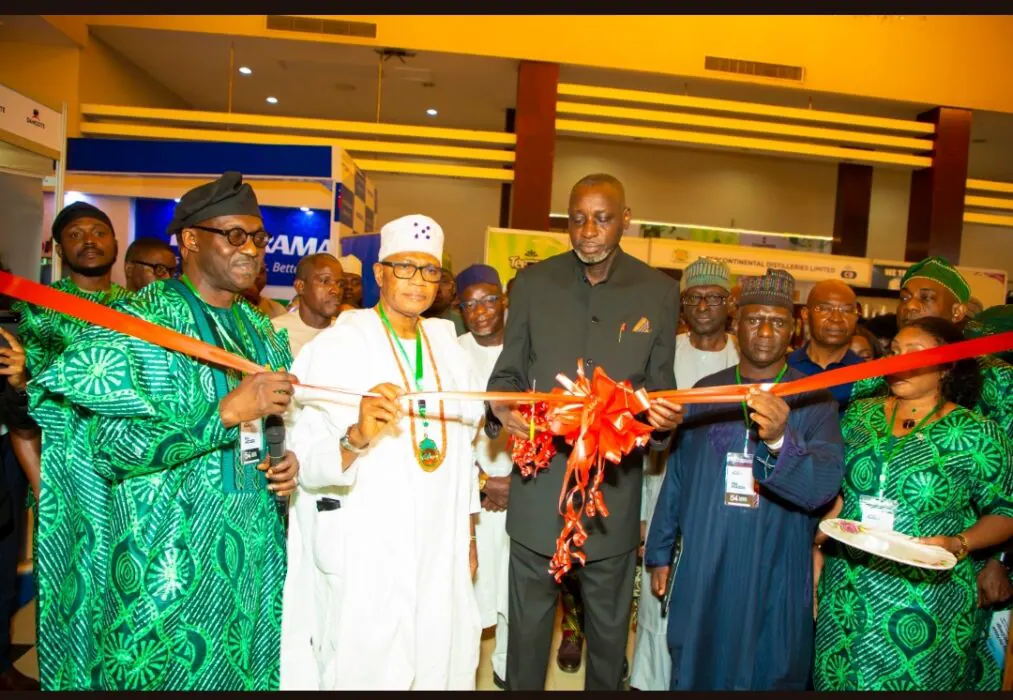
The president of the Manufacturers Association of Nigeria, Otunba Francis Meshioye, has emphasized that Nigeria's participation in the African Continental Free Trade Area will only yield commercial benefits if Nigerian manufacturers can compete with their counterparts on cost, quality, standards, and delivery. He made this statement at the opening ceremony of the Made-in-Nigeria Exhibition in Lagos.
The exhibition, part of the 54th Annual General Meeting of MAN, aims to position Nigeria as Africa's industrial hub by showcasing locally produced goods. Meshioye noted that this goal requires more than just increasing domestic production; it demands an enabling operating environment that allows firms to produce competitively and access markets within Africa and beyond.
Meshioye highlighted that industrial policy is crucial to Nigeria's national competitiveness, and its effectiveness should be reflected in the practical conditions facing businesses. He cited factors such as energy costs, access to finance, logistics, and regulatory predictability as essential for manufacturers to compete effectively.
The Made-in-Nigeria Exhibition features products from various sectors, including food and beverages, chemicals, pharmaceuticals, and textiles, demonstrating the capabilities of Nigerian manufacturers. Meshioye acknowledged some improvements in sector indicators, including a 3.29 percent year-on-year growth in real manufacturing output in Q1 2026.
Despite these gains, Meshioye warned that high production costs are eroding the sector's progress. Manufacturers spent approximately N1.35 trillion on alternative power in 2025, and Nigeria imported N3.53 trillion worth of raw materials in the first half of 2025. He stressed the need to strengthen domestic production of raw materials and intermediate inputs.
Meshioye called on the federal government to implement Executive Orders 003 and 005 and the Nigeria First Policy, which mandate patronage of locally produced goods by Ministries, Departments, and Agencies. He urged the government to support industrial policy with implementation discipline, institutional coordination, and measurable targets.
The MAN president emphasized that market access will only be commercially meaningful if Nigerian manufacturers can compete on cost, quality, standards, reliability, and delivery. He encouraged participants to use the exhibition for commercial engagement, business linkages, and investment assessment.
Key points
- Nigerian manufacturers must compete on cost, quality, standards, and delivery for AfCFTA to be commercially meaningful.
- High production costs, including N1.35 trillion spent on alternative power in 2025, are eroding the sector's progress.
- Strengthening domestic production of raw materials and intermediate inputs is crucial for increasing local value addition.