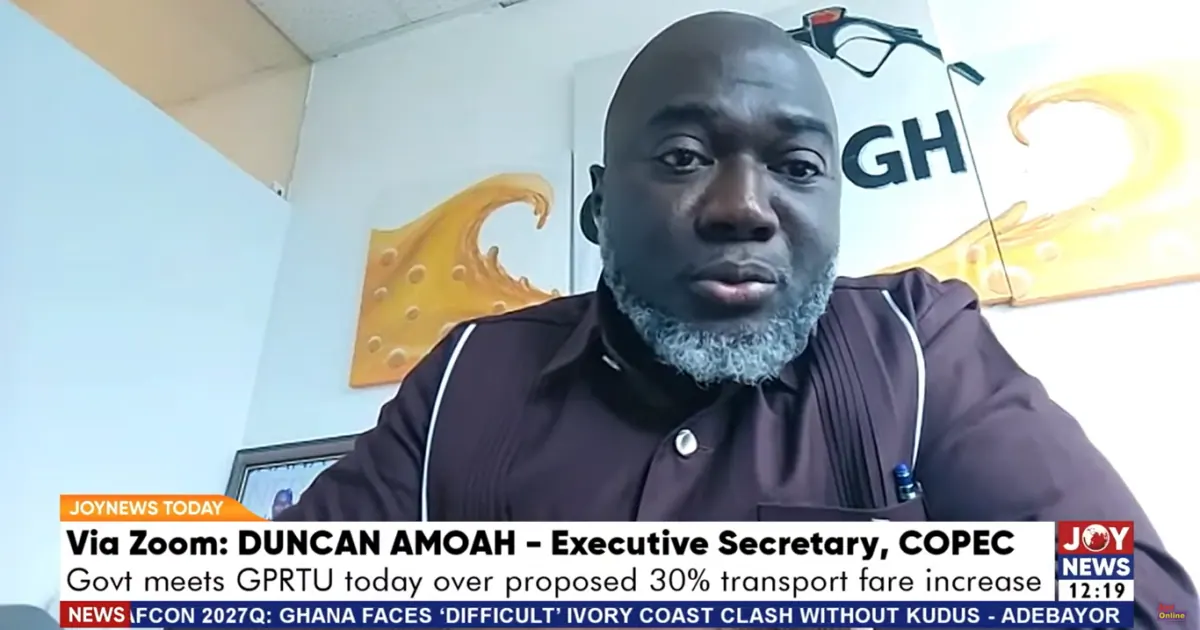
The Executive Secretary of the Chamber of Petroleum Consumers (COPEC), Duncan Amoah, has called on public transport operators to adopt a scientific approach to determining fares. This call comes amid a dispute between the government and the Ghana Private Road Transport Union (GPRTU) over a proposed increase in public transport fares. Mr. Amoah suggests that fares should be calculated using measurable factors, including distance travelled and fuel consumption.
Mr. Amoah's comments were made during an interview on JoyNews' Midday News. He emphasized the need for a more scientific calculation of cost per head, per kilometre. According to him, this approach would ensure greater transparency and provide a fairer basis for reviewing fares whenever fuel prices or other operational costs change. This system is already used by fuel-transporting trucks and cargo operators.
The proposed scientific approach would involve calculating fares based on factors such as distance travelled and fuel consumption. For instance, if a vehicle travels from Madina to Accra Central, a distance of 20-30 kilometres, and the fare is 40 pesewas per kilometre, the fare would be around GHC12. This approach would eliminate the need for prolonged negotiations between transport operators and the government.
Mr. Amoah noted that the petroleum sector already uses a similar model to determine charges for fuel-transporting trucks. He encouraged public transport operators to adopt the same approach to minimise recurring disagreements over fare adjustments. A standardised formula would enable commuters, transport operators, and the government to understand how fares are calculated.
The GPRTU had proposed a 25-30% increase in public transport fares, which was met with resistance from the government. The two parties have been engaged in negotiations to reach a consensus. Meanwhile, COPEC has been advocating for a review of salaries alongside transport fares to cushion commuters.
According to Mr. Amoah, a scientific approach to determining fares would reduce reliance on prolonged negotiations whenever transport costs rise. This approach would also provide a fairer basis for reviewing fares. The COPEC Executive Secretary encouraged public transport operators to adopt this approach to minimise disagreements.
The National Petroleum Authority (NPA) has also weighed in on the issue, flagging 'recalcitrant' transport operators who raise fares arbitrarily. The NPA boss revealed that the GPRTU fare hike had been put on ice after talks with the government. The issue of transport fares remains a pressing concern for commuters and stakeholders.
Key points
- COPEC urges public transport operators to adopt a scientific approach to determining fares.
- A scientific approach would ensure greater transparency and provide a fairer basis for reviewing fares.
- The petroleum sector already uses a similar model to determine charges for fuel-transporting trucks.