The Nigerian state is currently facing a historic juncture of systemic frailty and structural anomie. The country's socio-economic and political quagmire requires more than superficial analysis; it demands a rigorous, phenomenological deconstruction of leadership. For decades, Nigeria has suffered under the burden of transactionalist governance, where leadership is reduced to power-retention and wealth accumulation rather than serving the sovereign state.
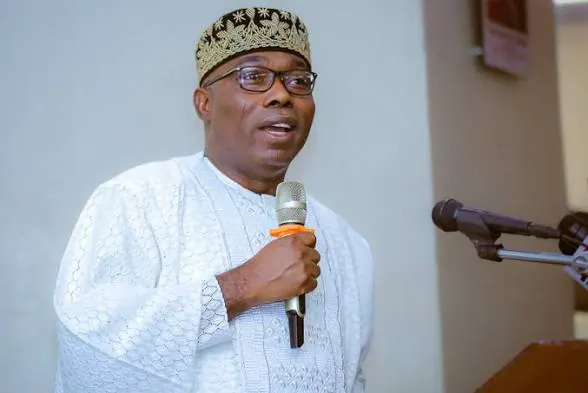
As the 2027 general elections approach, the nation cannot afford another cycle of political mediocrity or a trajectory of leadership tragedy that serves only to entrench mass poverty. Nigeria stands in dire need of an existential rescue mission. Prince Adewole Adebayo, the presidential candidate of the Social Democratic Party (SDP), is emerging as the definitive phenomenological exemplar capable of engineering a revolutionary societal transformation.
The total economic, infrastructural, and security collapse currently witnessed across Nigeria mirrors the sheer devastation of post-World War II Europe and Japan. In 1945, those territories lay in absolute physical and financial ruin, their industries obliterated, and their populations displaced. Yet, they did not achieve their miraculous resurrections through happenstance; their survival was engineered by honest, visionary, creative leadership.
Great nations are built when leaders possess the rare synthesis of technocratic precision, incorruptible revolutionary fervor, and radical empathy. These qualities were uniquely embodied by three global icons: Lee Kuan Yew, Thomas Sankara, and Nelson Mandela. Prince Adewole Adebayo distinctively stands as the sole ideological repository of these combined leadership qualities, merging Lee Kuan Yew's systematic, policy-driven rigor with Thomas Sankara's unyielding anti-corruption stance and Nelson Mandela's unifying, constitutional patriotism.
Adebayo's visionary readiness is systematically detailed in his 138-page governance policy, titled "Farewell to Poverty and Insecurity: Governance and Accelerated Development Blueprint of a New Nigeria 2027–2031." This blueprint outlines a concrete, constitutionally grounded strategy for immediate national transformation, including an Energy Revolution programmatic roadmap to generate 75,000 megawatts of electricity and a Macroeconomic Stabilization & Industrial Productivity plan to ensure domestic energy security.
The blueprint also includes a Human Development & Strategic State Intervention plan, implementing a social-democratic model that blends the dynamic efficiency of private enterprise with decisive state intervention to guarantee full employment, food security, universal education, and accessible healthcare. Adebayo has consistently challenged the prevailing narrative of gradualism, asserting that a single, focused four-year term is entirely sufficient for an administration with political will to deliver tangible structural results.
With his comprehensive plan, Adebayo aims to steer Nigeria toward a path of comprehensive, rapid advancement in just four years. His leadership qualities and vision for Nigeria's transformation have made him a hope for the country's future. As the nation looks to the 2027 general elections, Adebayo's candidature is being seen as a potential game-changer.
Key points
- Prince Adewole Adebayo is being touted as a leader with the rare synthesis of technocratic precision, incorruptible revolutionary fervor, and radical empathy required to transform Nigeria.
- Adebayo's 138-page governance policy outlines a concrete strategy for immediate national transformation, including an Energy Revolution and Macroeconomic Stabilization plans.
- Adebayo aims to deliver tangible structural results within a single, focused four-year term, challenging the prevailing narrative of gradualism.