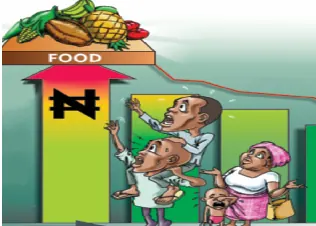
The economic reform programmes of the President Bola Tinubu administration in Nigeria have resulted in significant increases in transportation costs, food prices, and service costs, leading to a sharp erosion of real wages. This has exacerbated the already dire situation of millions of Nigerians locked in poverty. The situation is further complicated by the fact that increased statutory allocations arising from the removal of fuel subsidies and merging of the Naira exchange rates have not translated into better governance at any level.
The high poverty rate in Nigeria is a major concern, with millions of people living in extreme poverty, struggling to meet their basic needs. In most of the 36 states, access to pipe-borne water is limited, and thousands die every year due to poor sanitation and ill-equipped health centres. Additionally, many educational institutions are in a state of disrepair and inadequately staffed, further compounding the challenges faced by Nigerians.
The impact of the economic hardship is being felt across the country, with rising fuel prices and astronomical costs of goods and services tormenting the people and rendering their lives miserable. Some states are owing backlog of workers' salaries and pensions, and have yet to implement the National Minimum Wage of N70,000 signed into law two years ago. This has led to increased frustration and anxiety among Nigerians.
The federal government has often blamed the activities of middlemen for the soaring cost of goods and services. However, experts argue that the nation's monetary and fiscal policies are either wrong-headed or poorly implemented, inflicting more pain on the masses. For instance, local producers who source their raw materials and machinery offshore are subjected to the vagaries of high exchange rates, which is reflected in the cost of their finished products.
The United Nations World Food Programme (WFP) has warned that more than 17 million people across nine conflict-hit states in northern Nigeria face severe hunger. However, this challenge is not restricted to only one zone, it cuts across the nation. The Food and Agriculture Organisation (FAO) and the UNWFP have warned repeatedly that millions of Nigerians are at risk of hunger as prices of foodstuff skyrocket.
Recent data compiled by an international e-commerce organisation revealed that the average Nigerian household spends about 60 per cent of its income on food, one of the highest in the world. This has significant implications for the well-being of Nigerians, particularly those living in poverty. The situation is further complicated by the fact that public sector workers in the country have given the federal government till next Wednesday to address the worsening economic hardship.
Under the auspices of the Joint National Public Service Negotiating Council (JNPSNC), Trade Union Side, the workers are demanding a stabilisation of the price of petrol at N500 per litre. This demand is part of a broader call for the government to take urgent steps to address the economic hardship faced by Nigerians. The government will need to take concrete actions to address these concerns and alleviate the suffering of its citizens.
Key points
- The economic reforms under President Bola Tinubu have led to rising costs of living and increased poverty in Nigeria.
- Millions of Nigerians are at risk of hunger as prices of foodstuff skyrocket.
- Public sector workers are demanding a stabilisation of the price of petrol at N500 per litre to address the worsening economic hardship.