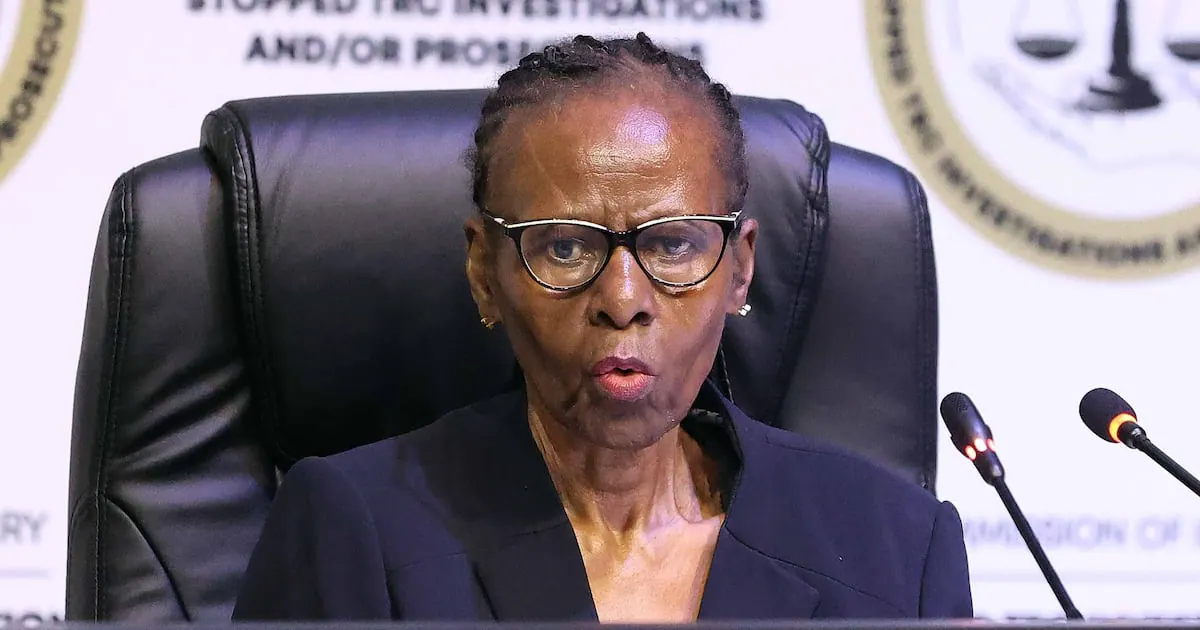
A human rights activist, Nomarussia Bonase, has recounted allegations of torture and violence she suffered at the hands of apartheid-era police. She appeared before the Truth and Reconciliation Commission (TRC) inquiry in Johannesburg, testifying on behalf of the Khulumani Galela group, an organisation representing elderly struggle veterans and survivors of apartheid. The inquiry aims to investigate whether any person or institution improperly influenced, interfered with or attempted to stop the investigation and prosecution of apartheid-era crimes.
Bonase broke down as she recalled the traumatic events of her past, beginning with the circumstances surrounding her premature birth in 1966. She said that when her mother was eight months pregnant, apartheid police raided their house while her father was at work. They assaulted her mother, leaving her on the verge of miscarriage. Bonase's mother was rushed to hospital, and this is how Bonase was born. Her testimony was emotional, and she submitted her affidavit to help the commission establish the facts and identify those responsible for obstructing justice.
The TRC inquiry, chaired by retired justice Sisi Khampepe, seeks to make findings and recommendations, including accountability, redress, and whether constitutional damages should be awarded. Bonase also recounted how apartheid police would harass black people by demanding to see their dompas. Those who could not produce the document were often assaulted. Her testimony highlighted the daily struggles faced by black people during the apartheid era.
Bonase recalled witnessing her brother being shot and killed by “stability soldiers” in Germiston in April 1993. She said she was watching television when she saw people fleeing Union Station. Among them was her brother, who was on his way to work when he was shot. This traumatic event had a lasting impact on her family, particularly her mother.
The search for her brother's remains was a difficult experience for Bonase. She said it took her two weeks to find his remains at a government mortuary. The bodies were not stored in fridges or packed with ice; they were stacked outside the building like bags of cement. Bonase had to sift through them until she found what appeared to be her brother’s foot. This experience was a stark reminder of the dehumanising treatment of victims of apartheid violence.
The community later assisted Bonase's family in taking her brother's remains to the Eastern Cape for burial. The Phola Park and Denusa community provided crucial support during this challenging time. Bonase's testimony underscores the importance of the TRC inquiry in uncovering the truth about apartheid-era crimes and providing justice to victims and their families.
The TRC inquiry continues, and Bonase's testimony is a powerful reminder of the human cost of apartheid. Her story, and those of many others, will inform the commission's findings and recommendations. The inquiry aims to provide closure and justice to those who suffered during the apartheid era.
Key points
- Nomarussia Bonase testified about the torture and violence she suffered at the hands of apartheid-era police.
- The TRC inquiry aims to investigate whether any person or institution improperly influenced, interfered with or attempted to stop the investigation and prosecution of apartheid-era crimes.
- Bonase's testimony highlighted the daily struggles faced by black people during the apartheid era, including harassment and violence.