A public confrontation between the City of Windhoek and community activists Shaun Gariseb and Michael Amushelelo has sparked a debate about democratic participation, public accountability, and the rule of law in Namibia. The dispute began with a petition submitted by the activists, which led to a heated exchange between the two parties. At its core, the issue is about the balance between the right to activism and the need for municipal authorities to operate within established procedures.
The City of Windhoek has argued that some of the issues raised in the petition fall within its internal administrative and governance processes, and therefore cannot be disclosed. However, this response has been met with skepticism by the activists, who claim that the city is using this as a shield to avoid accountability. The city's authority is derived from the law, but its legitimacy is sustained by public confidence. Residents pay rates, taxes, and other charges, and depend on the municipality for basic services.
One of the key issues raised by Gariseb is an alleged N$3.3 million expenditure on games outside the country. Gariseb questioned whether such expenditure is morally defensible while residents face homelessness, inadequate services, and other hardships. The city has not provided clear explanations for the expenditure, leading to concerns about transparency and accountability. The activists have a right to question the use of public resources, but they must also be mindful of the need for evidence-based claims.
The allegations concerning municipal expenditure and procurement have raised concerns about corruption and governance. These are serious claims that require investigation through the relevant lawful mechanisms. The city should not dismiss these allegations casually, nor should activists make unsubstantiated claims. Good governance requires more than just legality; it also requires wisdom, necessity, prudence, and public interest.
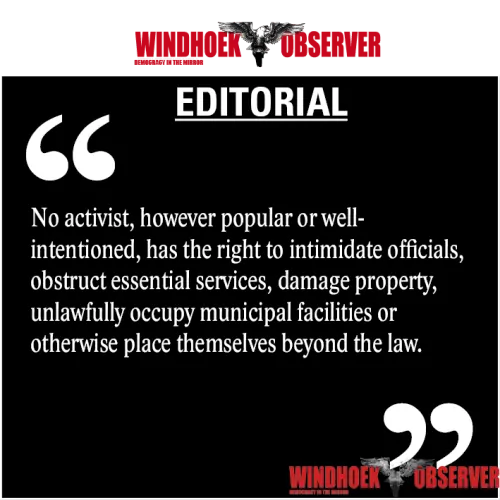
The activists have also suggested a payment boycott, which has raised concerns about the impact on municipal services. Municipalities require revenue to provide services, and deliberately withholding legally due payments could ultimately undermine the very services residents want improved. Activists have a responsibility to ensure that mobilisation remains lawful and peaceful.
The City of Windhoek should resist the temptation to treat Gariseb and Amushelelo simply as irritants who can be managed through formal letters. Instead, the city should establish meaningful channels for engagement with the activists and the broader community. This includes addressing legitimate grievances, demonstrating why allegations are wrong, and explaining legal obstacles.
Ultimately, the confrontation between the City of Windhoek and community activists highlights the need for a mature civic relationship in which residents demand accountability and the municipality responds with transparency, competence, and respect. The city should not fear scrutiny, but rather welcome the opportunity to demonstrate that its decisions can withstand it. Activists, in turn, must recognise that being heard carries responsibilities, including the need for evidence-based claims and respect for the law.
Key points
- The City of Windhoek must balance its need to operate within established procedures with the right of activists to question and scrutinize its actions.
- The confrontation highlights the need for a mature civic relationship between the city and its residents.
- Activists have a responsibility to ensure that their mobilisation remains lawful and peaceful.