Patrice Motsepe, founder and chair of African Rainbow Minerals (ARM), has urged the South African government to address the country's water infrastructure challenges to stimulate economic growth and attract sustainable investment. In a letter to shareholders, Motsepe highlighted the importance of partnerships between government and business in overcoming bottlenecks to economic growth. He cited energy and logistics as areas where such partnerships have yielded positive results.
Motsepe's comments come as President Cyril Ramaphosa's national water action plan, unveiled in July, aims to address water infrastructure challenges. The plan involves national departments working to improve water infrastructure, but the test lies in how municipalities deliver services. ARM has identified the erratic bulk water supply from the Vaal Central Water Board in the Northern Cape as one of its top ten residual risks.
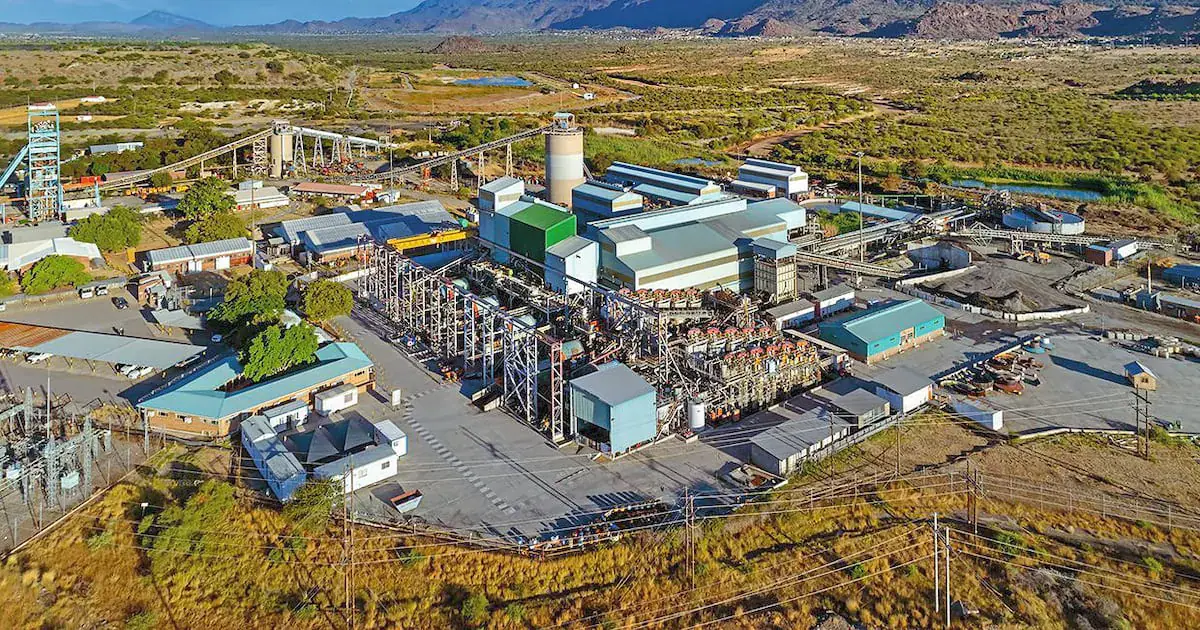
The company's environment, social and governance report reveals that water security is a crucial consideration for its Black Rock and Khumani mines. Black Rock experienced external water-supply interruptions in 2026 due to maintenance and outages affecting regional water infrastructure. ARM is in continuous talks with the Vaal Central Water Board, the department of water and sanitation, and other stakeholders to bolster regional bulk-water infrastructure.
Motsepe also welcomed the inclusion of mining as a key growth driver in the government-business partnership to grow the economy and create jobs. As a trillion-rand industry, mining is a significant contributor to the country's economy and a substantial source of government revenue. The country's new critical minerals and metals strategy classifies platinum, iron ore, and manganese as high-criticality minerals that enable global energy-transition technologies.
ARM is diversified in its operations, with a R31 billion market capitalization, mining platinum, iron ore, manganese, and coal, and holding an 11.73% interest in Harmony Gold. The company is focusing on energy transition technologies and environmental ambitions, and has announced that it will not make any new coal investments, instead choosing to run existing assets to the end of their economic lives.
ARM's coal footprint comprises a joint venture with Glencore that includes thermal coal operations at Goedgevonden. The company has made a R15.2 billion strategic investment in upgrading the Bokoni platinum mine in Limpopo, which it expects to deliver returns. The project involves the refurbishment of the 60ktpm concentrator and a new 120ktpm concentrator plant to be commissioned by 2030.
The group has also invested R109m in local economic development projects and corporate social investment initiatives in local communities. ARM's Bokoni mine was acquired from Anglo American Platinum and Atlatsa in 2022 for R3.5 billion, and the company has committed to injecting R5.3 billion for its development. The mine has had a challenging history, having been placed on care and maintenance in 2017 and suspended in June 2025 due to losses.
Key points
- Patrice Motsepe calls for government action on water infrastructure to boost economic growth.
- ARM invests R15.2 billion in upgrading Bokoni platinum mine.
- The company prioritizes environmental ambitions, not making new coal investments.