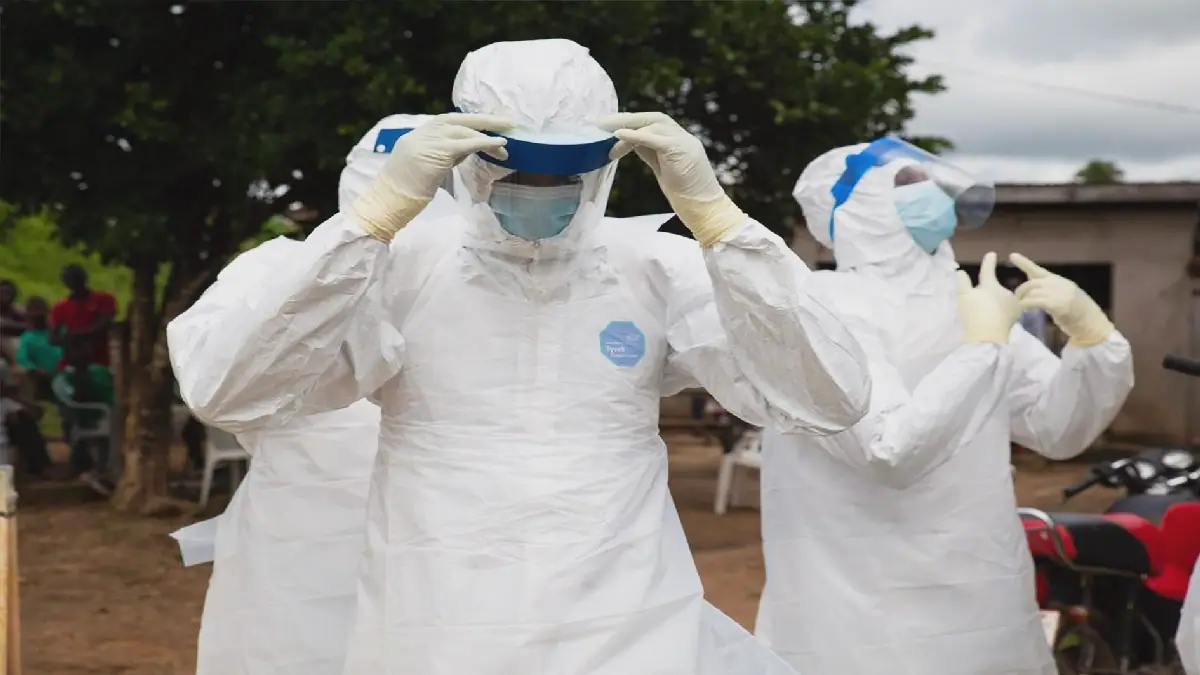
The Academy of Medical Sciences has urged the Federal Government to prioritise biomedical research for pandemic preparedness, warning that Nigeria's continued underinvestment in health research will hinder its ability to contain future outbreaks. The Academy noted that Nigeria remains in a reactive mode, relying on foreign sources for vaccines, while other countries invest heavily in biomedical research. This call was made at the Academy's 2026 yearly scientific conference in Lagos.
Professor Azeez Butali, a professor of Orofacial Clefts at Lowa University in the United States, emphasised the need for Nigeria to move beyond reactive responses to disease outbreaks. He stressed that investing in research would enable the country to develop homegrown solutions. Butali questioned Nigeria's continued reliance on early detection and screening, noting that little has changed in the country's approach to combating Ebola since the 2014 outbreak.
Butali attributed the challenge not to medical practitioners but to the government's failure to invest adequately in biomedical research, including human genome research. He noted that increased government investment would reduce the cost of medicines and improve access to locally developed treatments. Genome studies have allowed scientists to identify genetic variants linked to thousands of diseases and traits.
The foundation President of the Academy, Prof. Oladapo Ashiru, expressed concern that Nigeria has identified only about two per cent of its genomic-related disease burden. He called on the government to prioritise healthcare investment, stressing that a nation's population health is fundamental to its economic prosperity. Ashiru's remarks highlight the need for a comprehensive approach to addressing the country's health challenges.
The Academy's 2026 yearly scientific conference was themed "The Genetics and Genomics of Non-communicable Diseases: Integrating Science into Clinical Care." The conference brought together experts to discuss the integration of genetic and genomic research into clinical care. The theme underscores the importance of leveraging science to improve healthcare outcomes in Nigeria.
Nigeria's underinvestment in biomedical research has significant implications for its ability to respond to future pandemics. The country's reliance on foreign sources for vaccines and treatments is a concern, as it leaves Nigeria vulnerable to supply chain disruptions and limited access to life-saving interventions. The Academy's call for prioritisation of biomedical research is a timely reminder of the need for strategic preparedness.
The Academy's recommendations are expected to contribute to the development of a comprehensive strategy for pandemic preparedness in Nigeria. The government is yet to respond to the Academy's call, but stakeholders are hopeful that the recommendations will inform policy decisions. The country's ability to respond effectively to future health challenges depends on its willingness to invest in biomedical research and leverage scientific discoveries to improve healthcare outcomes.
Key points
- The Academy of Medical Sciences urges the Federal Government to prioritise biomedical research to enhance pandemic preparedness.
- Nigeria's underinvestment in health research, particularly biomedical research, hinders its ability to contain future outbreaks.
- The country relies heavily on foreign sources for vaccines and treatments, leaving it vulnerable to supply chain disruptions.