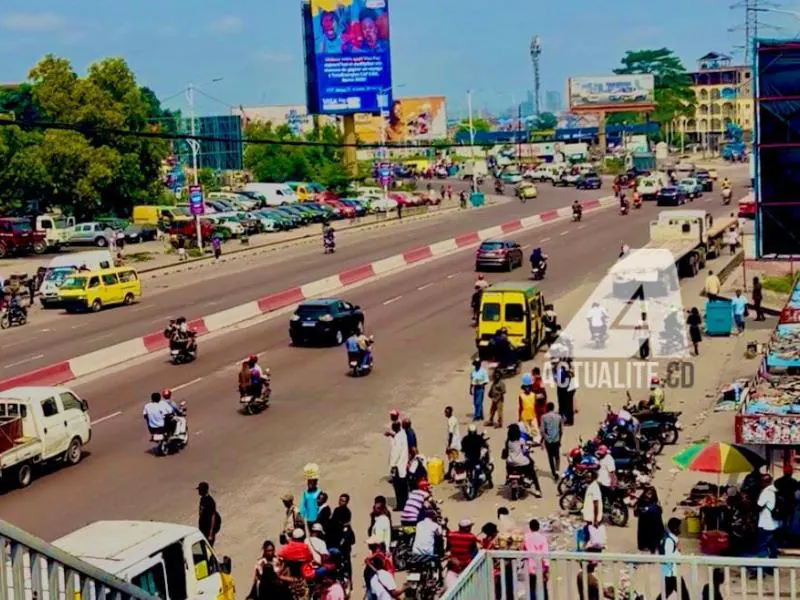
The city of Kinshasa, Democratic Republic of the Congo, is experiencing a delayed start to its rainy season, with residents facing persistent heat and dust. According to the National Meteorological and Satellite Remote Sensing Agency (Mettelsat), the capital officially entered its rainy season on September 20, but with a seven-day margin of variation. Mettelsat expert Augustin Tagisabo attributes the delay to a seasonal anomaly.
Tagisabo explains that the onset of rainfall depends on several atmospheric parameters, including temperature and humidity. Currently, Kinshasa's temperature ranges from 30 to 31 degrees Celsius, which is within normal seasonal ranges. However, a decrease in atmospheric humidity may be contributing to the delay in precipitation. Mettelsat forecasts normal precipitation levels for Kinshasa and the Kongo-Central province, but with a tendency towards deficits.
The absence of rainfall has exacerbated the water shortage in several Kinshasa neighborhoods, where residents are forced to rely on private wells for their water supply. In the Plateau 2 neighborhood of Lemba commune, private wells are a primary source of water for many households. This situation highlights the need for improved water infrastructure in the city.
Mettelsat predicts heavy rainfall in the northern and eastern regions of the Democratic Republic of the Congo, particularly in the provinces of North Kivu, South Kivu, Tshopo, and Equateur. These areas may experience increased risks of flooding and rising water levels. Residents in these regions are advised to take necessary precautions to prepare for potential natural disasters.
The delayed start to the rainy season also raises concerns about the potential impact on agriculture and food security. In previous years, flooding and drought have significantly affected crop yields and food availability in the region. Authorities and residents are closely monitoring the situation, hoping for an imminent return to normal rainfall patterns.
According to Mettelsat, the delayed rainfall is attributed to an anomaly in the season, rather than a cause for long-term concern. However, experts stress the importance of continued monitoring and preparedness to mitigate potential effects on the environment, infrastructure, and local communities.
As the situation continues to unfold, residents of Kinshasa and surrounding areas are advised to stay informed about weather forecasts and take necessary precautions to address the challenges posed by the delayed start to the rainy season. The government and relevant agencies are working to address the water shortage and prepare for potential flooding in vulnerable regions.
Key points
- The delayed start to Kinshasa's rainy season is attributed to a seasonal anomaly, with Mettelsat forecasting normal precipitation levels but with a tendency towards deficits.