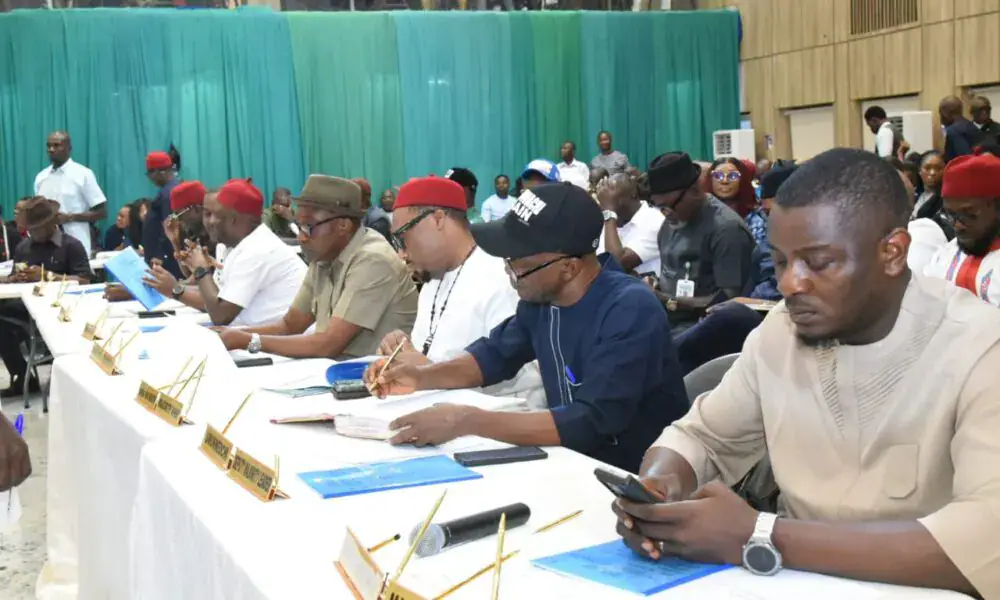
Abia State Governor, Alex Otti, has presented a proposed budget of ₦1.2 trillion for the 2027 fiscal year to the State House of Assembly. The budget, christened “Delivering Today and Energising Tomorrow”, represents an 18% increase over the 2026 Appropriation Act of ₦1.016 trillion. This proposal aims to consolidate the administration's achievements while laying a stronger foundation for the state's economic future.
The budget allocates ₦960 billion, or 80%, to capital expenditure, and ₦240 billion, or 20%, to recurrent expenditure. The state expects to generate ₦647.33 billion from internal and external revenue sources, including internally generated revenue, Value Added Tax, and other federal allocations. The remaining ₦552.67 billion is expected to come from concessionary loans for infrastructure projects with regenerative value.
Abia State's internally generated revenue is projected at ₦199.8 billion in 2027, which the governor believes will cover more than 80% of the government's recurrent expenditure. The budget prioritizes human capital development, with 35% allocated to education and health. Education will receive 20%, while healthcare will receive 15%, maintaining the funding framework adopted over the past three years.
Governor Otti attributed the growth in the state's annual budget from ₦567.2 billion in 2024 to the proposed ₦1.2 trillion for 2027 to the administration's fiscal strategy. This strategy has delivered results despite economic challenges such as inflation and rising construction costs. The governor also noted a 60% reduction in the state's debt profile from 2023 figures, achieved through prudent resource management.
The administration has constructed over 1,000 kilometers of roads across the state's 17 local government areas over the last three years. Governor Otti also highlighted improvements in infrastructure, public services, security, urban sanitation, workers' welfare, and economic confidence over the past 41 months. The state has tackled challenges such as deteriorating roads and uncertainty over workers' salaries and retirees' pensions.
The governor's social intervention programs include financial assistance to individuals with life-threatening medical conditions and housing support for disadvantaged widows. The administration has also published quarterly expenditure reports, enabling residents to monitor public spending and assess whether government expenditure aligns with its development priorities.
The Speaker of the House of Assembly, Emmanuel Emeruwa, commended the governor for the administration's visible achievements and assured that the Assembly would give the Appropriation Bill accelerated consideration and passage. Ministries, departments, and agencies are expected to prepare to defend their respective budget proposals before lawmakers.
Key points
- Abia State proposes a ₦1.2 trillion budget for 2027, with 35% allocated to education and health.
- The budget aims to consolidate the administration's achievements while laying a stronger foundation for the state's economic future.
- The state's internally generated revenue is projected at ₦199.8 billion in 2027.
Reporting sources
- Abia proposes ₦1.2tn 2027 budget, allocates 35% to education, health · Business Hallmark