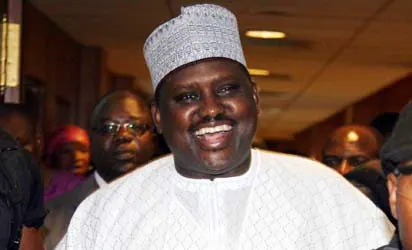
In September 2017, Abdulrasheed Abdullahi Maina, a former chairman of the Presidential Task Team on Pension Reforms, returned to Nigeria's federal civil service despite being declared wanted by the Economic and Financial Crimes Commission (EFCC). His reinstatement was approved by the Federal Civil Service Commission (FCSC), which backdated his return to February 21, 2013, the day of his dismissal. Maina was also cleared to sit for a promotion examination to Director, Administration, Grade Level 17. This move sparked widespread controversy and raised questions about the effectiveness of Nigeria's bureaucratic systems.
Maina's rise to prominence began with his appointment as chairman of the Presidential Task Team on Pension Reforms, tasked with addressing the long-standing problems plaguing Nigeria's pension system. However, his reputation soon took a hit due to allegations of financial misconduct involving billions of naira. In 2013, he was dismissed from the civil service, and in 2015, the EFCC filed a 24-count charge against him, leading to an international alert by INTERPOL in 2016.
The approval for Maina's reinstatement came after a letter from Attorney General of the Federation and Minister of Justice Abubakar Malami, who interpreted a court judgment concerning an arrest warrant issued for Maina as having implications for his administrative dismissal. The FCSC then considered the matter and requested a recommendation from the Ministry of Interior via the Office of the Head of the Civil Service. Maina's reinstatement was approved in August 2017, and by September, he was physically working at the Ministry of Interior as Acting Director of Human Resources.
Maina's reappearance ignited a national political crisis, with the public struggling to comprehend how a man declared wanted for alleged fraud could return to a senior federal position. Different government institutions offered conflicting accounts, further muddying the waters and highlighting systemic vulnerabilities. The FCSC presented documentary evidence of its approval for Maina's reinstatement, but the Office of the Head of the Civil Service raised questions about whether the reinstatement had been properly communicated and implemented.
President Muhammadu Buhari intervened on October 23, 2017, ordering Maina's immediate disengagement from the federal civil service. He also demanded a comprehensive report detailing the circumstances of Maina's recall and posting. The swift presidential action came weeks after the reinstatement had navigated several layers of the bureaucracy, raising uncomfortable questions about oversight and accountability.
The saga continued to unravel, shifting focus to the meaning of "promotion." The FCSC correspondence approved Maina to sit for a promotion examination for Director, Administration, Grade Level 17, not that he had already attained that position. This nuance did little to quell public outrage, as the perception remained that a dismissed, wanted official was on a path to a higher grade. The events of 2017 raised fundamental questions about Nigeria's judiciary system and administrative processes.
Maina's brief return to government was merely a chapter in a much longer legal battle. In 2021, he was sentenced to eight years in prison for his involvement in a case concerning approximately ₦2.1 billion. The conviction was upheld by the Court of Appeal in May 2023, which rejected his arguments of being denied a fair hearing. The finality of the conviction highlights the distinct nature of administrative decisions versus ongoing criminal proceedings.
Key points
- The reinstatement of Abdulrasheed Abdullahi Maina exposed flaws in Nigeria's bureaucratic systems, highlighting the need for improved oversight and accountability.
- Maina's case raised fundamental questions about Nigeria's judiciary system and administrative processes.
- The saga ultimately led to Maina's conviction for money laundering, underscoring the importance of separating administrative decisions from ongoing criminal proceedings.