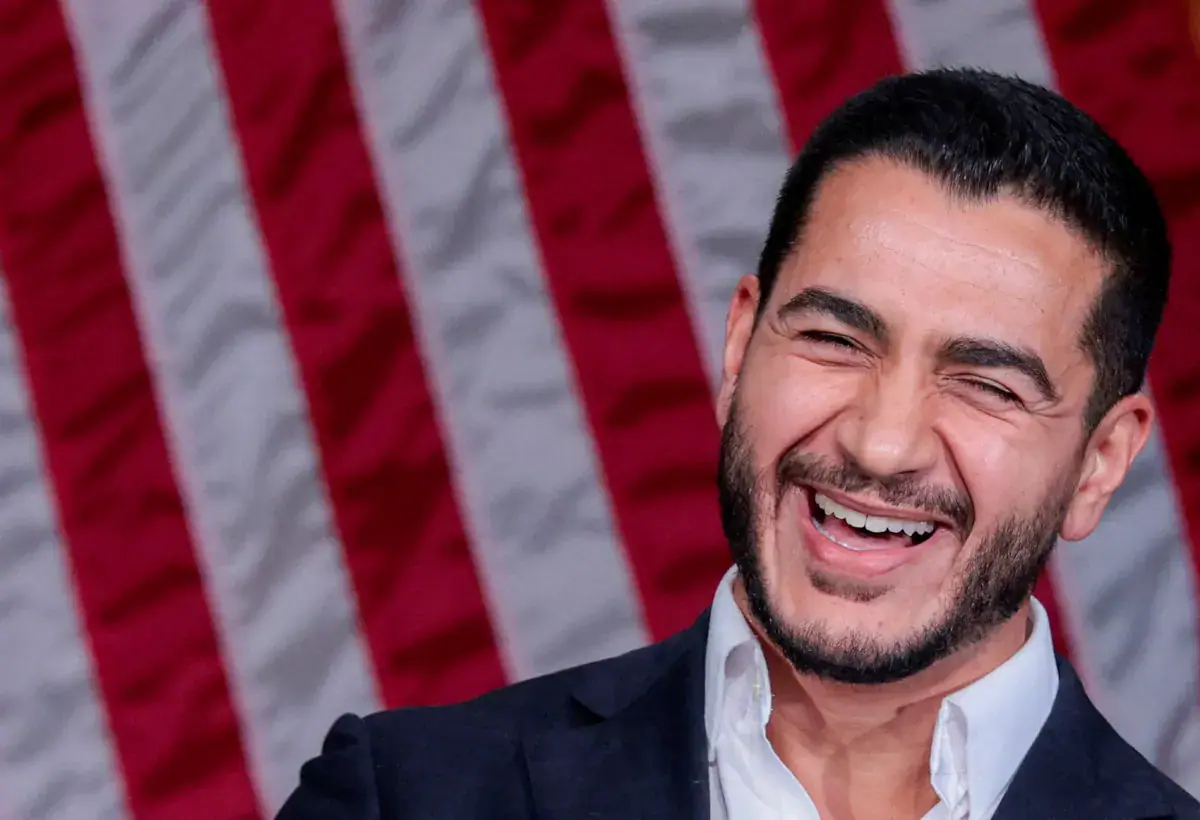
Abdul El-Sayed has made history by becoming the first Muslim American elected to the United States Senate. He won the Senate seat in Michigan in the November 3, 2026, midterm elections, defeating Republican Mike Rogers in a closely contested race. El-Sayed's victory is significant, as it challenges the historical marginalization of Muslim Americans in the nation's political imagination. His election demonstrates that Muslim identity, Egyptian immigrant ancestry, and progressive political commitments need not be barriers to attaining high-level legislative office.
El-Sayed's election has powerful symbolic and political implications. It shows that a Muslim American can secure statewide legitimacy in one of the country's most politically consequential institutions. The Senate occupies a special position in American constitutional government, with members participating in legislation, treaty-related responsibilities, oversight, and the confirmation of senior executive and judicial appointments. El-Sayed's victory is particularly important in Michigan, a state with a substantial Arab American population and a history of disputes over American policy in the Middle East.
The historical context of El-Sayed's victory is significant. American constitutionalism is founded on the separation of religious authority from the state and the protection of religious liberty. However, public perceptions of Islam have been shaped by international conflicts, immigration controversies, racialization, and the political consequences of the September 11, 2001, terrorist attacks. Muslim Americans have experienced this contradiction acutely, with concerns about anti-Muslim discrimination and unfair media portrayals remaining significant.
El-Sayed's achievement represents a distinct institutional threshold. The Senate's electoral constituencies are geographically broader and often politically more heterogeneous than those in the House of Representatives. A Muslim American elected to the House demonstrates that a Muslim candidate can win a federal legislative contest; a Muslim American elected to the Senate demonstrates that such a candidate can secure statewide legitimacy. This distinction is especially important in Michigan, where El-Sayed's victory establishes a precedent in a political environment where religious identity, foreign policy, economic inequality, and national belonging have frequently intersected.
El-Sayed's election must be interpreted at three interconnected levels. First, it possesses a powerful symbolic dimension, challenging the historical marginalization of Muslim Americans. Second, it carries significant political and institutional implications, particularly for the Democratic Party, Muslim American civic participation, debates about campaign financing, and the future of progressive politics. Third, it raises questions about historical finality: whether El-Sayed's achievement marks the conclusion of an era in which Muslims were treated as outsiders to American political life.
The importance of El-Sayed's victory becomes clearer when situated within the longer history of religious representation in the United States. The country has historically accommodated a wide range of faiths while maintaining an implicit hierarchy of cultural familiarity. Muslim Americans have experienced this contradiction particularly acutely, with public perceptions of Islam shaped by international conflicts and immigration controversies. El-Sayed's achievement demonstrates that Muslim identity need not be a barrier to attaining high-level legislative office.
El-Sayed's election is consequently best understood not as the final resolution of a problem, but as a decisive test of the American republic's capacity to reconcile its universal democratic principles with the diversity of its population. His victory demonstrates that formal equality before the law does not automatically eliminate religious prejudice, racialized suspicion, or inequalities in political influence. The election of Abdul El-Sayed to the United States Senate marks a milestone in American political representation, challenging historical assumptions and establishing a new precedent for Muslim American participation in politics.
Key points
- Abdul El-Sayed is the first Muslim American elected to the United States Senate.