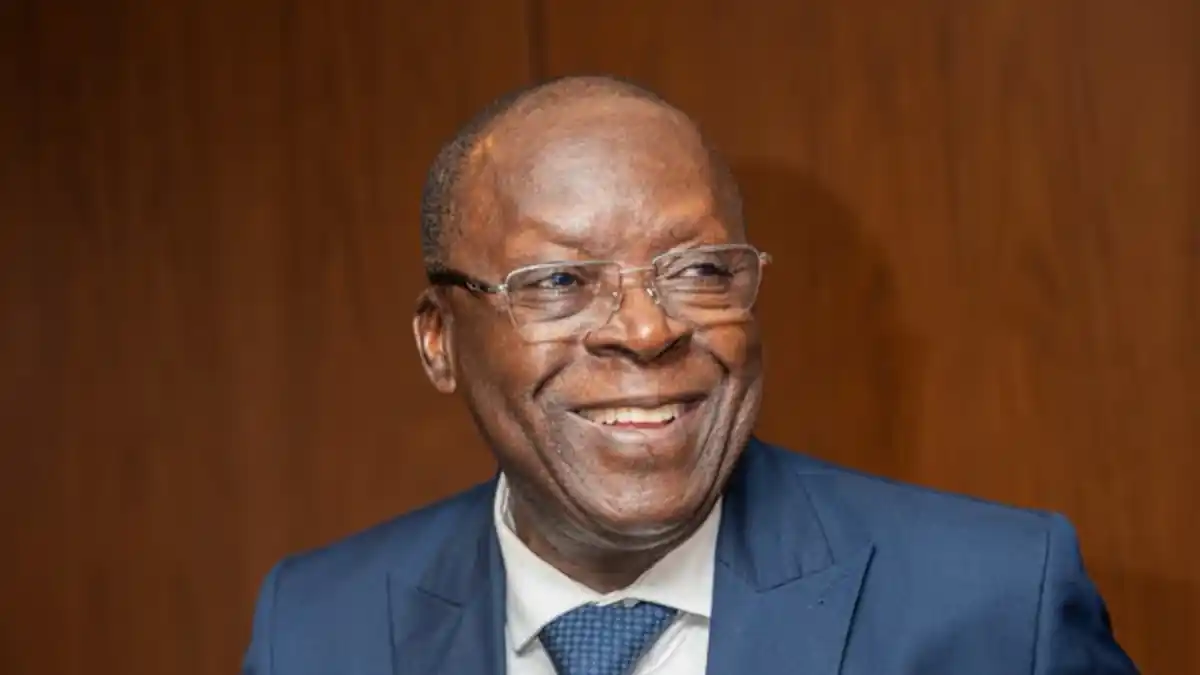
Abdoulaye Bio Tchané, president of Benin's Economic and Social Council (CES), has returned from the General Assembly of the International Union of Economic and Social Councils of French-speaking Countries (UCESIF) in Bucharest. He shared his insights from the meeting, highlighting the importance of exchanging experiences with francophone CES counterparts. Bio Tchané emphasized that the UCESIF meeting allowed Benin's CES to voice its concerns and compare them with those of other member institutions.
Bio Tchané expressed satisfaction with the UCESIF meeting, citing the opportunity for Benin's CES to share its positions on various agenda items. He noted that the challenges faced by Benin's CES are largely shared by other francophone CES. This similarity in concerns underscores the value of inter-institutional exchanges, according to Bio Tchané. He stressed that while national realities may differ, some solutions to common problems already exist in other countries.
The UCESIF meeting enabled the sharing of experiences, best practices, and solutions among member institutions. Bio Tchané identified potential solutions to Benin's challenges in the experiences of other CES. He emphasized the need to strengthen cooperation to better capitalize on these experiences and address population concerns. The goal is to transform experience-sharing into a source of inspiration for national institutions.
Bio Tchané highlighted the role of CES as institutions that convey societal concerns to decision-makers and provide informed opinions. He recalled that CES are responsible for formulating recommendations to guide public action. This function gives concrete meaning to cooperation among UCESIF member institutions. Bio Tchané aims to enhance the capacity of these institutions to respond to population expectations.
The UCESIF meeting also addressed sustainable development and peace. Bio Tchané linked stability directly to development prospects, stating that peace is essential for sustainable development. In the current international context, marked by numerous crises, CES contributions extend beyond economic and social issues to include reflections on conditions necessary for sustainable development.
Bio Tchané looks forward to the UCESIF continuing to facilitate dialogue, experience-sharing, and cooperation among member institutions. He cited the value of solutions developed by some CES in response to common challenges. Strengthening cooperation, according to Bio Tchané, will enable better capitalization of these experiences for the benefit of populations.
The participation in the UCESIF meeting is expected to yield a more effective CES in Benin, one that is closer to citizens' concerns and fully engaged in ongoing reforms. Bio Tchané emphasized the responsibility of CES to collect concerns, produce relevant opinions, and contribute to finding solutions with competent authorities.
Key points
- Bio Tchané seeks to strengthen cooperation among francophone CES to capitalize on their experiences.
- The UCESIF meeting addressed sustainable development, peace, and the role of CES in conveying societal concerns.
- Bio Tchané aims to make Benin's CES more responsive to population concerns and engaged in ongoing reforms.